blog - Part 102
Categories
Techniques

A Typical Investigative lucid dreaming

I awoke at 6 AM, turned on CNN, and had a bite to eat, as is my custom. After catching the latest news, I turned off the television. I then began to attentively review my plan of action for the day’s upcoming lucid dreams and add in new details. The morning’s first lucid dreaming was to be devoted to an experiment on maintaining by means of assuming an extremely uncomfortable or even painful position with the perceived (subtle) body. The second lucid dreaming would be needed to undertake an experiment on the consistency of bodily perception: somehow separate or cut off an arm and see what happens with sensations. Other items on the plan of action for this and subsequent lucid dreams consisted of more down-to-earth and everyday goals.

At 6:20 AM I closed the balcony door, inserted earplugs, and put on a sleeping mask to keep sunlight from interfering. After lying down in a comfortable position on my stomach, I once again thought about my plan of action. I decided to enter lucid dreaming using a direct technique. I didn’t start off with the technique right away. Instead, I decided to reach the edge of sleep first. I got lost in thought at some point, and my imaginings turned into episodes that enveloped me. My mind was then abruptly returned to the body, and I tried to separate, but unsuccessfully. I then began to do the rotation technique quite slowly and passively. My awareness once again began to fade, and another shallow lapse in consciousness took place. On the way back up, neither standing up, nor levitating, nor rolling out were successful as separation techniques. Meanwhile, I could clearly sense an approaching lucid dreaming. I started doing sensory-motor visualization, imagining that I had already separated and was walking about the room while deepening lucid dreaming. Those imagined sensations started becoming real after another micro-lapse in conscious awareness about three minutes in.

As soon as the sensations had become true-to-life, I rapidly made them hyper-realistic through a mix of palpation, peering, and focused intention. Then, I fell backwards to the floor and folded my legs underneath, trying to recreate a pulling feeling in my hips that had once helped me to stay in lucid dreaming for a long time. This time, however, my legs bent quite flexibly, and so no pain or strain arose. Feeling that lucid dreaming would soon end anyway, I began to twist my legs even more intensely. Mild pain finally came. Realizing that I couldn’t hope for much more at that point, I decided to see whether such weak sensations were enough for maintaining lucid dreaming. Now fading, I kept my legs in as painful a position as possible. I started counting the seconds that went by, all the while enjoying a tranquility uncharacteristic of lucid dreaming. After all, staying in lucid dreaming for as long as possible usually requires chaotic action in order to stimulate all of the senses. At 26 seconds in, the sensations abruptly began to dissipate, as did the pain. Several seconds later, I was back in my body. I was unable reenter lucid dreaming state, which meant that it had fully run its course.

I began falling back asleep with the intention of repeating the test during my next lucid dreaming experience, and only then moving on to the other activities on my plan of action. The indirect method would bring me twice more into lucid dreaming that morning, allowing me to continue on with the experiment. Yet another lucid dreaming would come thanks to becoming conscious while dreaming, and all this by 9:30 AM.

Categories
Techniques

RECOMMENDATIONS FOR USING THE GUIDEBOOK

During classroom instruction at the School of Out-of-Body Travel, several key factors are known to produce positive and negative effects on the likelihood of success during individual practice:

Positive Effect on Practice

Negative Effect on Practice

Attentive, thorough study of the course material.

Hasty and inattentive study of course materials.

Consistent work with practical elements.

Inconsistent application of techniques.

Diligent completion of technical elements.

Approximating the techniques outside of recommended guidelines.

A relaxed approach to the subject matter.

A hysterical approach to the matter, “idée fixe”.

Keeping a journal of all initial attempts, followed by recording successful lucid dreaming entrances.

A lack of personal analysis when problems or a lack of success are encountered.

Adhering to the recommended number of daily entrance attempts.

Excessive number of attempts per day.

Regular attempts and practice.

Sporadic practice regimen.

Understanding that the author knows his field well.

“I also know everything I need to and will do as I want". This attitude is good only for those who have a great amount of real practical experience. Reading a lot on the subject or simply having knowledge of it is not experience.

Categories
Techniques

PRIMARY DEEPENING TECHNIQUES

The goal of primary deepening is to achieve complete separation from the body, allowing further actions within lucid dreaming. Primary deepening entails achieving two principal objectives: complete separation from the physical body and anchoring the perceived body within lucid dreaming space.

When separation from the body occurs through the use of a separation technique, a posture must be assumed that is completely different from the posture of the real, physical body. The greater the degree of postural similarity between the physical and perceived bodies, the more shallow and brief lucid dreaming will be. For example, in the case of horizontal levitation, a 90 degrees turn must immediately be performed, arms and legs spread, adopting a vertical posture. Under no circumstances should a practitioner in lucid dreaming remain in a posture identical to that of the physical body.

If a practitioner is pulled back toward the body after separation, anchoring should be initiated that facilitates standing or sitting in lucid dreaming. Resisting the gravity of the physical body is paramount to remaining in lucid dreaming. The result of willful resistance is directly proportional to the degree of applied effort. It will help to grab hold of surrounding objects and hold on to them; any means of anchoring the perceived body within lucid dreaming are appropriate. It is possible to start rotating around an axis; not simply imagining the rotation, but performing it with the perceived body as well.

Categories
Techniques

Selecting the Right Techniques

The next step to mastering indirect techniques is choosing the right techniques that suit individual predispositions. There is no point in going for one technique or another only because they look interesting and because someone wrote a lot or spoke a lot about them. The choice should be based strictly upon what suits an individual practitioner.

Out of all of the enumerated primary indirect techniques, practically only straining the brain works easily and quickly for 95% of practitioners. All other techniques work immediately for only about 25% to 50% of practitioners during initial training. However, after several training sessions, each technique yields results for 75% of engaged practitioners.

One way or another, every practitioner should identify a certain set of techniques that works best. A set should consist of no less than three techniques; four or five is even better to allow more options and practical combinations. Non-working techniques should not be discarded wholesale by the individual, because they afford an opportunity to achieve success through new, previously unresponsive experiences.

To ensure the correct selection of techniques, each should be separately practiced over a period of at least three days. To this end, one should experiment with each of the primary techniques for 2 to 10 minutes during the day. This regimen allows a precise determination of the techniques that will yield the best results for the practitioner. During the process of selecting personalized techniques, a practitioner learns and retains the techniques in an intimate, personal way, which positively affects how techniques are used during critical moments. Don’t put off attempts to enter lucid dreaming on weeks when you’re training. Instead, do both in parallel.

However, before going to sleep, never ever train if that you plan to use techniques the next morning. In this case, it’s much better to train techniques during the day or in the morning. This is one of the most critical errors that novices commit. Training the night before an attempt brings internal exhaustion in its wake and dissipates intention. After a result, a practitioner will have far fewer attempts at night and in the morning, and they will be much less focused and of lower quality.

It is worth noting that the final selection of techniques should be varied. For example, choosing both straining the brain and straining the body without using muscles is pointless because they are practically one and the same. More often than not, they will both either work or not work. This is why techniques should involve various types of sensory perception: visual, audio, kinesthetic, vestibular, imaginary sense perception, and internal strain. Remember that priorities and goals change with time, and that a technique that fell flat during initial attempts may unexpectedly prove valuable later on. Be flexible. No set of techniques should be carved in stone. In fact, the set may change several times over the first few weeks as the practitioner discovers what produces the best individual results.

To close this section, a list detailing the most effective indirect techniques has been provided. This list was compiled with classroom data from the School of Out-of-Body Travel and may prove helpful in determining an effective set of indirect techniques.

The Most Effective Indirect Techniques at School of Out-of-Body Travel Seminars

(2010-2011)

Swimming Techniques (Imagined Movements)

25%

Phantom Wiggling

20%

Observing Images

20%

Rotation

20%

Other Techniques

15%

Categories
Techniques

SsergiuReşiţa, Romania

I don’t think that I needed to realize that I was dreaming because as soon as I fell asleep, I became lucid. I couldn’t see anything but the screen of an iPhone and I knew I had to choose the place I wanted to be in. I chose a weird place that I had never seen before and then I saw a white door. I opened the door, wondering where it would bring me to (M.R.: no deepening and no plan of action). I got in a weird room and there were a lot of skeletons on the floor, so I freaked out and then teleported somewhere else.

I remembered having been in many other places when I woke up next to my bed. I wasn’t sure what had actually happened, I thought it was still a lucid dream.

I was next to my bed and could see almost everything in my room, even the turned-out TV – but I couldn’t bring myself to look in my bed’s direction. I didn’t want to do that at all.

After a while, I started to feel my breath. I was scared because I was breathing too slowly and I thought I was going to die if I didn’t start breathing faster (M.R.: wrong logic).

I wanted to wake up, but each time I tried I got back in my body but only for a second (in SP) and then again next to my bed. I had tried to wake up about 7 times before I finally woke up (M.R.: wrong action). I was scared but also amazed of what had happened to me. However, I could consider myself "lucky" because I had experienced sleep paralysis before and I knew how to get out of it.

After the experience I didn’t even bother trying lucid dreaming again, I got all interested in OOBEs.

Our posts


Staying Awake in Dreams?

ES | PT | FR | DR | IT | ND | CN | JP | KR | RU | UA | PL | BL | CZ | TH | VN | TR | AR | PR | RM | HU | IL | AM | GR Lucid Dreaming and REM sleep technologies Love lucid dreaming, REM sleep, and sleep paralysis? Here, we share cool tech and methods with you Our new mask Lucid Dream Tonight? A perfect […]

MORE

REMspace Forecast for 2026: Top 10 Dream Abilities We May Gain This Year

At REMspace, we believe that 2026 will mark a turning point for sleep technologies. According to our CEO, Michael Raduga, a new era is emerging – one that opens an entirely new experiential space within sleep

MORE

LucidMe Mask Reviews | Real Lucid Dreaming Experiences

People using the LucidMe mask say it really helps them notice when they’re dreaming. Many describe clear signals, sudden moments of lucidity, and vivid dream experiences — flying, meeting people, exploring strange places. Not every attempt works, and sometimes lucidity fades fast, but users feel the mask pushes them closer to stable lucid dreams. It’s […]

MORE

The Indirect Method: Step-by-Step Instructions

Lucid Dreaming Mask — Practice Effectively Lucid Dreaming App — Dream Journal, Dream Tracker & Lucid Dreaming Community So, you have decided to experience out-of-body sensations and want to achieve this as quickly as possible. To that end, here we present a brief description of the easiest method – cycles of indirect techniques. This is […]

MORE

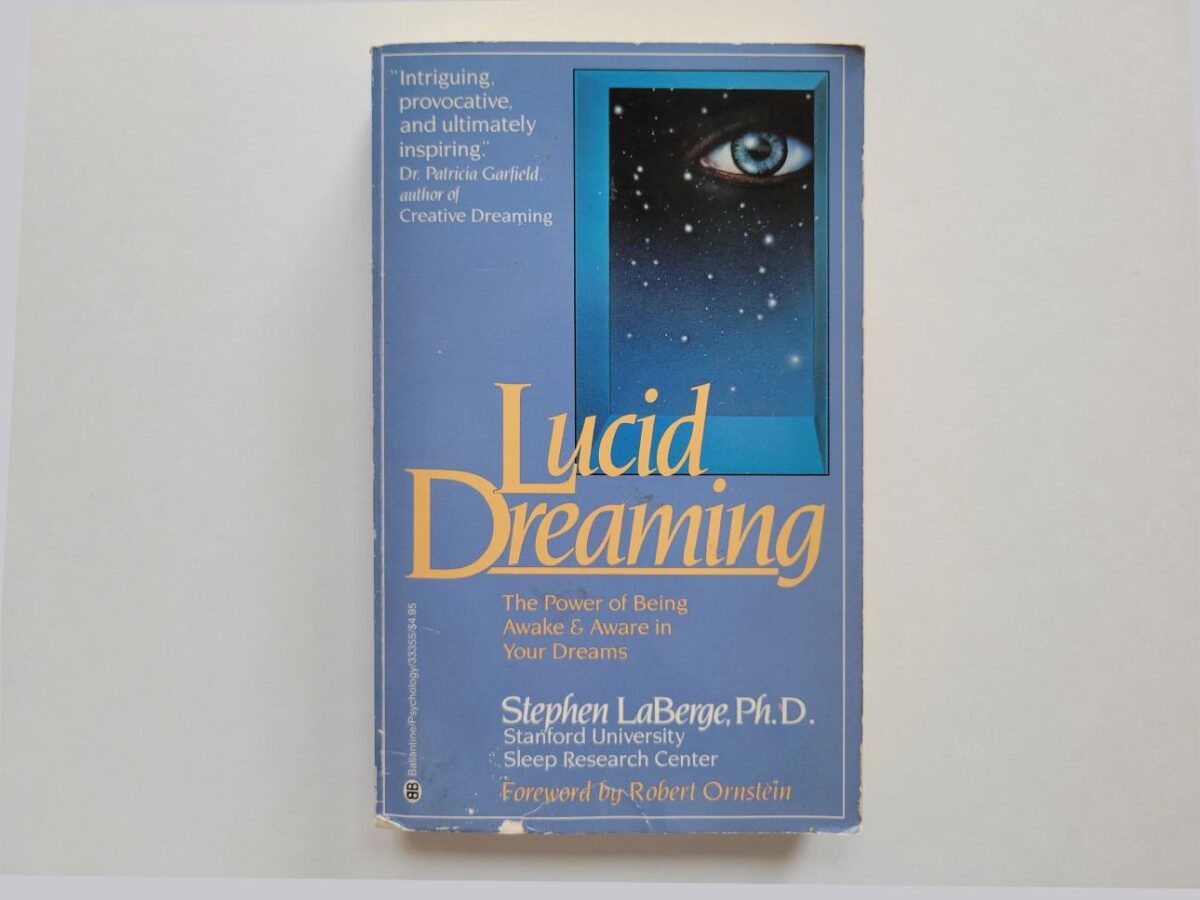
Lucid Dreaming Book by Stephen LaBerge

Lucid Dreaming Mask — Practice Effectively Lucid Dreaming App — Dream Journal, Dream Tracker & Lucid Dreaming Community The mystery of lucid dreams is hidden deep within human consciousness. Questions about their origin have been pondered by hundreds of people, including distinguished scientists. Therefore, it would be a mistake to assume that this topic is […]

MORE

Stephen LaBerge and Lucid Dreaming

Lucid Dreaming Mask — Practice Effectively Lucid Dreaming App — Dream Journal, Dream Tracker & Lucid Dreaming Community Dreams are an area that captivates many people. Even if only unintentionally, every second person has asked themselves, “What do my dreams mean?” Scientists are no exception to this. Lucid dreaming — a state during which a […]

MORE

The Art of Dreaming – Carlos Castaneda

Lucid Dreaming Mask — Practice Effectively Lucid Dreaming App — Dream Journal, Dream Tracker & Lucid Dreaming Community History provides many outstanding names, and Carlos Castaneda has firmly taken his place among them. His personality is full of mysteries, and his philosophy and worldview are multifaceted. The books he wrote, such as “The Art of […]

MORE

Robert Monroe: “Journeys Out of the Body” and Lucid Dreaming

Lucid Dreaming Mask — Practice Effectively Lucid Dreaming App — Dream Journal, Dream Tracker & Lucid Dreaming Community Robert Monroe was an engineer by profession who worked as a scriptwriter and director for radio stations. He later founded his own radio station, which, under his leadership, achieved tremendous success in a short time. Starting in […]

MORE

Lucid Dreaming Movies – Top 20 Most Popular Movies

Lucid Dreaming Mask — Practice Effectively Lucid Dreaming App — Dream Journal, Dream Tracker & Lucid Dreaming Community There are more films about lucid dreaming than you might think. Some fully explore the concept, while others just touch upon it. Experienced lucid dreamers have compiled a list of films that, although often classified as science […]

MORE

Transmitting Music from Lucid Dreams

This is how we transmitted a simple melody from lucid dreams about a year and a half ago. The paper has been published recently. Next year, anyone will be able to find brilliant melodies in lucid dreams and then record or even stream them online. Join the waiting list for the device Details about the […]

MORE

Two-way control of a virtual avatar from lucid dreams

Lucid Dreaming Mask — Practice Effectively Lucid Dreaming App — Dream Journal, Dream Tracker & Lucid Dreaming Community Researchers at REMspace have achieved the first two-way control of a virtual object from a lucid dream. The results of the experiment were approved for publication in the scientific journal International Journal of Dream Research.

MORE
Other news
😴 LucidMe — lucid dreaming mask