
blog - Part 115
Categories
Techniques

Alexander Lelekov

Saint Petersburg, Russia

When I’m dreaming I usually move by taking great leaps, much further than a kangaroo, about 100-300 yards. This happens regularly in my dreams, and I usually immediately realize that I’m in a dream. During one of the leaps, I realized while airborne that I was dreaming and also realized that I was able to land in a small dirty pond. As expected, I landed right in the pond and went deep under the water (M.R.: no deepening). And at that very moment, I found myself in the stencil, with my hands and head half stuck in it.

I got a little nervous that this attempt would also be unsuccessful, and so I immediately tried to separate from my body. I was unable to get my head or hands out, and for the first time I tried to turn around round my axis and managed to get out. Then I either slipped down or fell from the bed, but I did not feel any pain. I crawled for 1-2 meters and then felt that I could go back. I started to touch the rug and some other thing, though I don’t know exactly what it was as it was dark, and, lo and behold: within 20-30 seconds I probably felt what small kittens feel when their eyes open for the first time. Everything was foggy and blurry at first, but then a picture started to appear, the room filled with light, and colors became bright and vivid. I tried very hard to restrain my excitement, and, to my surprise, was able to.

I walked around my apartment thinking about what I should do (M.R.: no plan of action). Realizing that I did not have that much time, I decided to talk to an elderly man who would answer my questions. I decided that there would be an omniscient elderly man behind the apartment’s front door, which I was about to open. And there he was, half-bald, about 60 years old, in a grey coat waiting for me. I asked him the question, “What should I do to get into lucid dreaming more often?” But he started to tell me about how he was raped as a child. And to be more precise, this was already not an elderly man, but an elderly woman. I was not very interested in hearing her story, thus I tried to move away from her, suggesting that we could talk later. But the elderly woman was persistent, and I did not want to offend her, because I thought that this was an unusual lucid dreaming with its own set of rules, and namely that once you have asked an old woman a question, you are supposed to be courteous and listen to the entire answer (M.R.: wrong logic).

I went with her to the kitchen of my apartment. The telephone suddenly rang. I got scared that the telephone was ringing in my apartment and would wake me up, which is why I immediately started to look at my hand in order to maintain. But the sensations were quite stable, and I stopped doing that. Then, me and this lady wanted to cook something in my kitchen. She said that I could heat a frying pan without gas. But I instead decided to try the technique of putting the hands together and blowing on them, and returned back into my body (M.R.: no re-entering).

Categories
Techniques

The Place of the Practice in Life

A high level lucid dreamingr lives in proper balance between the practice and real life. This is reflected in a successful and content physical life that neither interferes with the practice nor detracts from it, but instead enriches it with emotion. lucid dreaming enriches physical life, and physical life enriches lucid dreaming. Problems in day-to-day life have a catastrophic effect on one’s practice. Thus, even when in pursuit of a better lucid dreaming practice, one should never forget the real world, where consciousness first arose. In the same vein, lucid dreaming itself can be used with wide application for one’s career or business.

An experienced practitioner always knows when it’s time for real life and when it’s time for lucid dreaming. Everything goes best when the two are kept separate, and not intertwined. For example, during the working day one must try not to think of lucid dreaming, but instead concentrate on more vital matters. When the time comes to enter into one’s practice, it is necessary to turn one’s attention to only it, and put aside any pressing problems. A practitioner will feel most comfortable when he clearly separates his two lives, and thus avoid the gaps in practice that inevitably occur unless this philosophy is followed.

However, this is not to give the impression that advanced lucid dreamingrs must enter lucid dreaming every day without exception. They too take breaks, whether by choice or due to external circumstances. They’re sometimes simply not up to it for physical reasons. On a good week they’ll devote maybe 3-5 days to it, and be able to enter lucid dreaming from 3 to 6 times or more on each of those days. That’s about five hundred full-fledged lucid dreaming experiences per year, enough to take long strides towards mastering the phenomenon.

Categories
Techniques

Periodic Analysis of Awareness

Periodically asking the question, “Am I dreaming?” while in lucid dreaming helps appraise situations and the quality of the actions being performed at any moment. If everything meets the standards of full lucid dreaming awareness, actions may be continued. Asked on a regular basis, this question becomes habit automatically used while transitioning to lucid dreaming state. If you keep asking this question regularly, sooner or later it will arise automatically at the moment when you are actually transitioning into a dream. This will then help one to “wake up”, after which it is possible to continue to remain in a full-fledged lucid dreaming.

The frequency of the question should be based on a practitioner’s ability to consistently remain in lucid dreaming. If a lucid dream usually lasts five to 10 minutes or more, it is not necessary to ask the question more than once every 2 minutes; otherwise, this question has to be asked frequently, literally once a minute, or just a little less often.

Categories
Techniques

Use of lucid dreaming by the Disabled

While practicing lucid dreaming may still be viewed by the majority as entertainment or an element of self-development at best, lucid dreaming practice takes on a whole new meaning for the physically disabled. For them, lucid dreaming may be the only place where the handicaps of reality dissolve and disabled practitioners experience a range of possibility greater than that of the life experienced in reality.

A blind person will see again in lucid dreaming, even more clearly than seeing people do in reality. Someone who is paralyzed will be able walk, run, and also fly. A deaf person will hear the murmur of streams and the chirping of birds. For the disabled, lucid dreaming practice is a chance to discover new, incomparable worlds free of physical limitation.

Naturally, there are some nuances that must be understood. First, for example, if a person was born blind, then there is the question as to whether or not they would be able to see in lucid dreaming in the same way ordinary people see. However, this issue has not been fully studied, and blind people should simply carry out their own independent research. Second, some types of disabilities can negatively affect the practice of lucid dreaming states. For example, people who have gone blind have greater difficultly catching the intermediate state between sleep and wakefulness since, unlike seeing people, they may awaken without opening their eyes to the perception of sound. Third, psychological factors may play a pronounced negative role. Certain beliefs and attitudes that may present an obstacle.

Whatever the individual issues, this particular area of lucid dreaming applications requires additional study. It deserves significant attention because it is a valid tool for the rehabilitation of the disabled. It is workable, unique, and extremely surprising in terms of the experiences that it offers.

Categories
Techniques

EXERCISES 3

Questions

Which techniques should be mastered before proceeding to direct techniques?

Should results from the use of direct techniques be expected after several days or a week?

Is it better to practice direct techniques during the day or in the evening?

Is it correct to perform three direct attempts per day?

Which body position should be assumed when suffering from insomnia?

Which body position should be used by a person who falls asleep quickly?

How much time should be spent on a single direct attempt?

When can direct attempts be made for a longer period of time than usual?

What is the best way for an inexperienced practitioner to relax?

Can direct techniques substitute relaxation techniques?

Can relaxation techniques substitute direct techniques?

How many variations for performing direct techniques are there?

In what case is the variation of sequencing with direct techniques employed?

Which technique may not be used for direct entrance to lucid dreaming with the goal of creating a free-floating state of mind?

What happens to consciousness while in a free-floating state during direct techniques?

Should awakening be attempted if falling asleep occurred while using direct techniques?

What is the probability of entering lucid dreaming without a free-floating state of consciousness?

What do unsuccessful attempts using direct techniques most often end in?

Is sexual activity before an evening attempt using a direct technique beneficial?

Task

When performing direct techniques, try to achieve no less than three lapses in consciousness before 20 minutes elapse, or before you fall asleep. Repeat this challenge until lucid dreaming entrance is achieved.

Our posts


Staying Awake in Dreams?

ES | PT | FR | DR | IT | ND | CN | JP | KR | RU | UA | PL | BL | CZ | TH | VN | TR | AR | PR | RM | HU | IL | AM | GR Lucid Dreaming and REM sleep technologies Love lucid dreaming, REM sleep, and sleep paralysis? Here, we share cool tech and methods with you Our new mask Lucid Dream Tonight? A perfect […]

MORE

REMspace Forecast for 2026: Top 10 Dream Abilities We May Gain This Year

At REMspace, we believe that 2026 will mark a turning point for sleep technologies. According to our CEO, Michael Raduga, a new era is emerging – one that opens an entirely new experiential space within sleep

MORE

LucidMe Mask Reviews | Real Lucid Dreaming Experiences

People using the LucidMe mask say it really helps them notice when they’re dreaming. Many describe clear signals, sudden moments of lucidity, and vivid dream experiences — flying, meeting people, exploring strange places. Not every attempt works, and sometimes lucidity fades fast, but users feel the mask pushes them closer to stable lucid dreams. It’s […]

MORE

The Indirect Method: Step-by-Step Instructions

Lucid Dreaming Mask — Practice Effectively Lucid Dreaming App — Dream Journal, Dream Tracker & Lucid Dreaming Community So, you have decided to experience out-of-body sensations and want to achieve this as quickly as possible. To that end, here we present a brief description of the easiest method – cycles of indirect techniques. This is […]

MORE

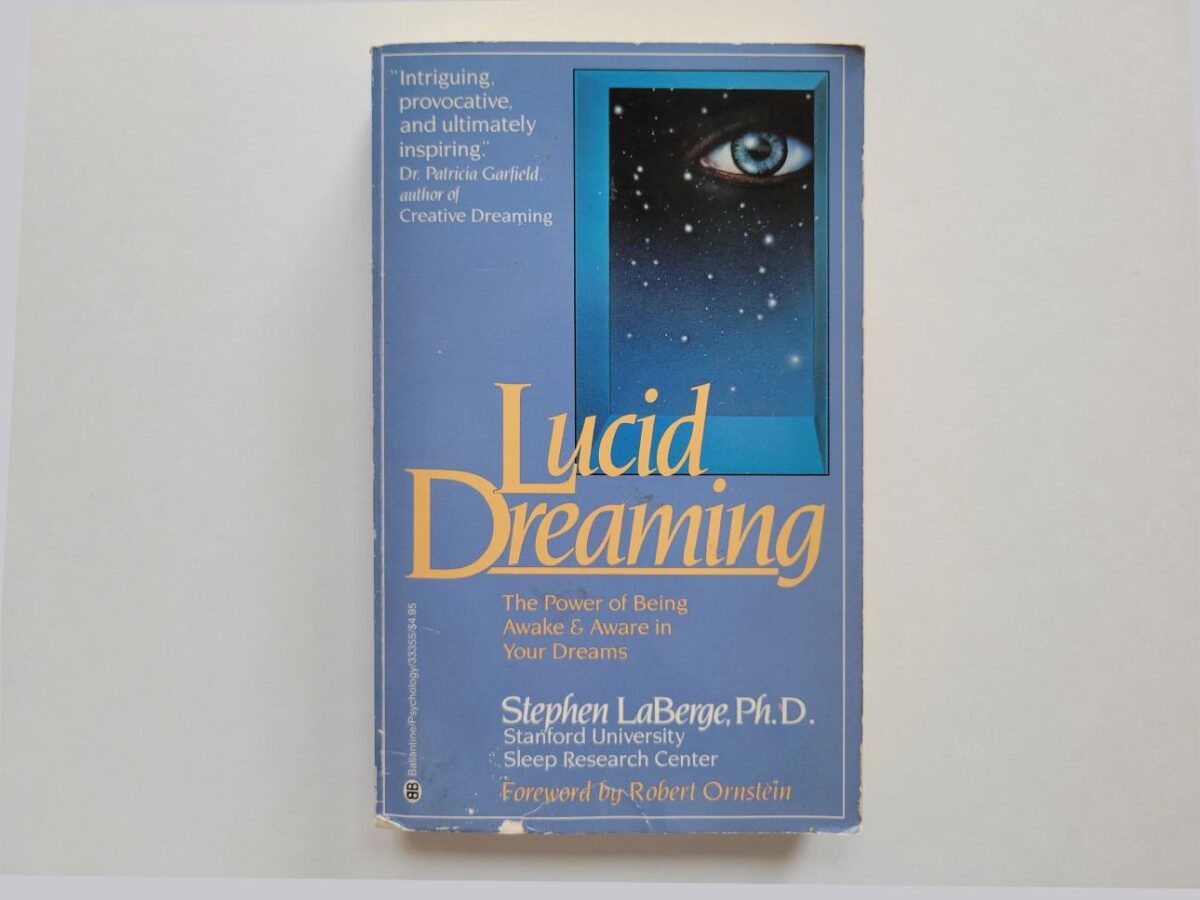
Lucid Dreaming Book by Stephen LaBerge

Lucid Dreaming Mask — Practice Effectively Lucid Dreaming App — Dream Journal, Dream Tracker & Lucid Dreaming Community The mystery of lucid dreams is hidden deep within human consciousness. Questions about their origin have been pondered by hundreds of people, including distinguished scientists. Therefore, it would be a mistake to assume that this topic is […]

MORE

Stephen LaBerge and Lucid Dreaming

Lucid Dreaming Mask — Practice Effectively Lucid Dreaming App — Dream Journal, Dream Tracker & Lucid Dreaming Community Dreams are an area that captivates many people. Even if only unintentionally, every second person has asked themselves, “What do my dreams mean?” Scientists are no exception to this. Lucid dreaming — a state during which a […]

MORE

The Art of Dreaming – Carlos Castaneda

Lucid Dreaming Mask — Practice Effectively Lucid Dreaming App — Dream Journal, Dream Tracker & Lucid Dreaming Community History provides many outstanding names, and Carlos Castaneda has firmly taken his place among them. His personality is full of mysteries, and his philosophy and worldview are multifaceted. The books he wrote, such as “The Art of […]

MORE

Robert Monroe: “Journeys Out of the Body” and Lucid Dreaming

Lucid Dreaming Mask — Practice Effectively Lucid Dreaming App — Dream Journal, Dream Tracker & Lucid Dreaming Community Robert Monroe was an engineer by profession who worked as a scriptwriter and director for radio stations. He later founded his own radio station, which, under his leadership, achieved tremendous success in a short time. Starting in […]

MORE

Lucid Dreaming Movies – Top 20 Most Popular Movies

Lucid Dreaming Mask — Practice Effectively Lucid Dreaming App — Dream Journal, Dream Tracker & Lucid Dreaming Community There are more films about lucid dreaming than you might think. Some fully explore the concept, while others just touch upon it. Experienced lucid dreamers have compiled a list of films that, although often classified as science […]

MORE

Transmitting Music from Lucid Dreams

This is how we transmitted a simple melody from lucid dreams about a year and a half ago. The paper has been published recently. Next year, anyone will be able to find brilliant melodies in lucid dreams and then record or even stream them online. Join the waiting list for the device Details about the […]

MORE

Two-way control of a virtual avatar from lucid dreams

Lucid Dreaming Mask — Practice Effectively Lucid Dreaming App — Dream Journal, Dream Tracker & Lucid Dreaming Community Researchers at REMspace have achieved the first two-way control of a virtual object from a lucid dream. The results of the experiment were approved for publication in the scientific journal International Journal of Dream Research.

MORE
Other news
😴 LucidMe — lucid dreaming mask