blog - Part 117
Categories
Techniques

Technologies for Inducing lucid dreaming

The ambition to create a device that facilitates quick and easy lucid dreaming entrance has led to the appearance of assorted technologies that claim to fulfill such a role. As already stated, none of these devices has been proven effective.

The most famous of these is the Hemi-Sync system, which purports to synchronize the two hemispheres of the brain. Hemi-Sync was developed by Robert Monroe, an American esotericism expert and researcher. The idea behind Hemi-Sync is that out-of-body sensations may be induced by achieving synchronization of the brain’s two hemispheres. However, this type of approach yields a paradox for the lack of scientific (or pseudo-scientific) evidence that hemispheric synchronization influences sensory perception. Actually, it is the cerebral cortex and constituents that are primarily responsible for sensory perception. At the beginning of the 20th century, it became clear that the key roles in sensory processes are played by varying levels of inhibition and activity in the cerebral cortex. Synchronization devices have no effect on the operation of the cerebral cortex.

The idea of using sounds of various frequencies to induce a specific level of electrical activity in the brain is, so far, considered impossible. Thus, the sounds and noises used to assist separation from the body cannot directly affect the process, but merely serve as cueing signals. Such a system works only after having been used for a long time, if it works at all. Moreover, it might only work once or twice. Usually, it never works at all. Nevertheless, synchronization systems are able to help practitioners reach a free floating state of consciousness since the systems prevent sleep or induce wakefulness, providing fertile ground for direct lucid dreaming entry.

The idea of inducing various lucid dreaming states through sound has gained wide attention. Many other programs and technologies have appeared as a result, including, for example, the Brain Wave Generator (BWG), which allows the practitioner to independently experiment with a wide array of sounds and frequencies and various methods of transmission. The effect is the same: cueing during sleep or the maintenance of a transitional state. Thus, there is no noticeable difference between using machines and listening to similar sounds or musical compositions.

Inasmuch as the devices described above have not delivered notable result, the search for new technologies continues unhindered. The number of ideas for exerting noninvasive influence over the brain and its constituent parts is increasing. For example, there is a theory that lucid dreaming experiences may be induced by electromagnetically stimulating the left angular gyrus. However, this, like all other non-autonomous methods, is strictly based on theory. At present, consistent, focused, and unassisted practice is the simplest and only guaranteed means to achieving lucid dreaming entrance.

Categories
Techniques

Matthew Shea

Canada

I was having a dream, and at the end of the dream, I could feel the shift in consciousness as I came back to my bed (M.R.: no separation). I attempted rubbing my hands together, and I decided to incorporate rubbing my face as well. It began to start to feel realistic, so I starting putting more work into it. Then, I tried to get up. Immediately after trying to get up, I questioned whether this was the physical world or not. Regardless, I kept on trying. I had to put in a large amount of effort into it, but I eventually managed to get myself out of bed.

I couldn’t open my eyes. I tried to force them open with my hands and got a little bit of light in. Then I remembered that sometimes you don’t have vision, and that you need to do grounding techniques. I began feeling the walls and soon enough my vision began to come to me. In the process, I could hear a woman I know giving orders to someone. When my vision came, she was gone. I projected into my brother’s room instead of my own, but now the whole house was different. There were people everywhere dressed in hunting uniforms. I walked into one room and there was a desk with a girl I know behind it (M.R.: no plan of action). She seemed to be in charge of what was going on around there. We talked for a minute and then someone came in with a dead moose in a huge bag. It was quite strange.

I proceeded to walk somewhere else, but I don’t know how I got there. It was a huge room, with shelves full of VHS tapes on one side and someone playing the piano. They were playing Jewish music, I think, and people were all around, listening. We walked into another room and someone started dancing. I began to dance with them, just fooling around. Everybody came into the room and watched us dance or joined us. I started to lose lucid dreaming, and could partially feel myself lying in my bed. I felt around trying to ground myself again but it was too late. I could feel the sides of my bed. I tried to get out of my body once again but it never worked.

Categories
Techniques

Self-Analysis

Consistent analysis of dreams helps to ascertain reasons for an absence of conscious awareness: these analyses are significant to attaining dream consciousness. Over the course of a lifetime, the mind grows accustomed to the paradoxical nature of dreams and pays less attention to them. This becomes apparent while trying to understand that a red crocodile is not only unable to talk to us, but that it also cannot be red, nor can it rent an apartment. While dreaming, these impossibilities are never called into question. The essence of self-analysis is remembering dreams and thinking hard about why their paradoxical features had not been adequately recognized in the dream state.

With experience, the everyday analysis of the correspondence of dreams to reality begins to have an effect on a practitioner’s reasoning within the dream state. For example, that red crocodile’s presence in a rented apartment could cause doubts that give pause for reflection, which could in turn lead to the understanding that everything happening is just a dream.

Categories
Techniques

Sports

In many spheres of human activity, skill at complex physical movements is quite important – sometimes everything can depend on it. Meanwhile, motor skills are the most important factor in the majority of sports, from martial arts of any kind to fencing, gymnastics, weightlifting, figure skating, and so on. In many ways, playing these sports depends on learning to perform certain moves automatically. And so, gymnasts perform somersaults or some other feat dozens of times over the course of a training session, and boxers devote half of their workouts for months on end to practicing one and the same punch.

For such people, there is one additional type of movement training that may be performed in lucid dreaming. The potential for such training in lucid dreaming may not initially be obvious, but movement in lucid dreaming sets off the same brain activity as it does in wakefulness, only nerve impulses are not sent to the muscles. Accordingly, any movement that has been well practiced in lucid dreaming will remain almost equally well practiced in the real world. This phenomenon allows the training routine to be supplemented, or even substituted when injured or unable to train for any reason.

Of course, one will never become an Olympic champion by training exclusively in lucid dreaming, but doing so is still extremely effective.

It turns out that practitioners of East Asian martial arts are especially drawn to lucid dreaming. Thus, many karate enthusiasts either perfect techniques while in lucid dreaming, or simulate going up against stronger rivals. Even more interestingly, some find world-renowned masters for personal instruction. Especially popular lucid dreaming trainers are Steven Seagal, Jackie Chan and, of course, Bruce Lee.

Sport in lucid dreaming can be combined with the technique for obtaining information, which is described in this book. The student can use that very technique to find out exactly how to train, and which technologies and opportunities can be taken advantage of in order to improve and become more successful at a given sport. This assumes, of course, that the student plays sports, something always recommended.

Categories
Techniques

The Author’s Experiences

Below, the author presents the most interesting excerpts from his lucid dreaming travel log: it happened to him for the first time in the fall of 1999, when he was a senior in high school. One of the interesting things about these excerpts is that they describe the development of a personal practice from the teenage years through the present day.

It’s worth noting that my many years of experience and thousands of lucid dreams logged have had a strong effect on the practical side of my practice. I long ago realized those desires and wants that everyone has, and at that – many times over. Nowadays, I mostly do technical experiments, research, and hone my skills, all while obtaining elementary satisfaction from the practice itself and the vividness of sensation in it. That’s why even the most recent excerpts from my log are not characteristic of lucid dreaming as it is usually practiced. They are merely the most illustrative examples. An unprepared audience would simply not understand ordinary lucid dreams.

As with the previous section, the reader is encouraged to exercise his theoretical knowledge by undertaking an independent and critical analysis of the experiences described.

Our posts


Staying Awake in Dreams?

ES | PT | FR | DR | IT | ND | CN | JP | KR | RU | UA | PL | BL | CZ | TH | VN | TR | AR | PR | RM | HU | IL | AM | GR Lucid Dreaming and REM sleep technologies Love lucid dreaming, REM sleep, and sleep paralysis? Here, we share cool tech and methods with you Our new mask Lucid Dream Tonight? A perfect […]

MORE

REMspace Forecast for 2026: Top 10 Dream Abilities We May Gain This Year

At REMspace, we believe that 2026 will mark a turning point for sleep technologies. According to our CEO, Michael Raduga, a new era is emerging – one that opens an entirely new experiential space within sleep

MORE

LucidMe Mask Reviews | Real Lucid Dreaming Experiences

People using the LucidMe mask say it really helps them notice when they’re dreaming. Many describe clear signals, sudden moments of lucidity, and vivid dream experiences — flying, meeting people, exploring strange places. Not every attempt works, and sometimes lucidity fades fast, but users feel the mask pushes them closer to stable lucid dreams. It’s […]

MORE

The Indirect Method: Step-by-Step Instructions

Lucid Dreaming Mask — Practice Effectively Lucid Dreaming App — Dream Journal, Dream Tracker & Lucid Dreaming Community So, you have decided to experience out-of-body sensations and want to achieve this as quickly as possible. To that end, here we present a brief description of the easiest method – cycles of indirect techniques. This is […]

MORE

Lucid Dreaming Book by Stephen LaBerge

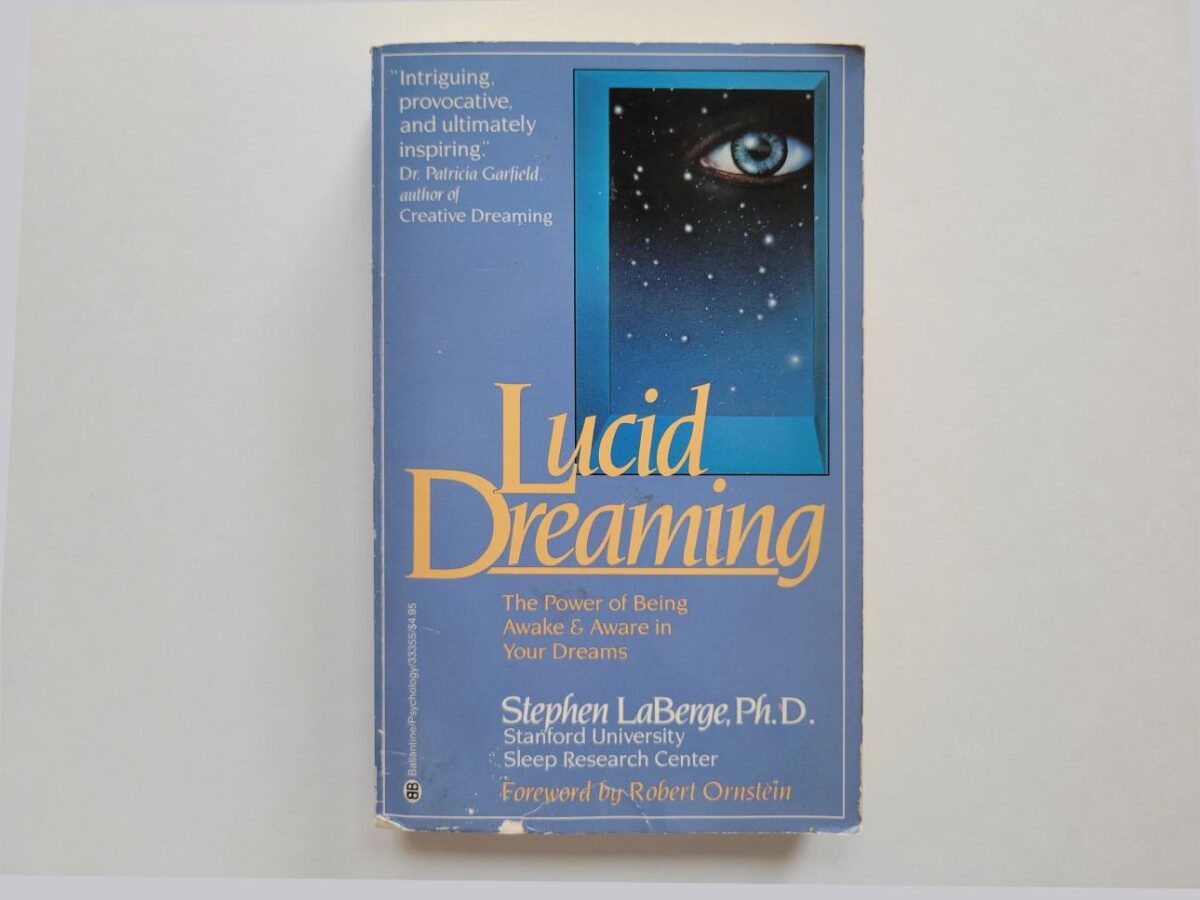
Lucid Dreaming Mask — Practice Effectively Lucid Dreaming App — Dream Journal, Dream Tracker & Lucid Dreaming Community The mystery of lucid dreams is hidden deep within human consciousness. Questions about their origin have been pondered by hundreds of people, including distinguished scientists. Therefore, it would be a mistake to assume that this topic is […]

MORE

Stephen LaBerge and Lucid Dreaming

Lucid Dreaming Mask — Practice Effectively Lucid Dreaming App — Dream Journal, Dream Tracker & Lucid Dreaming Community Dreams are an area that captivates many people. Even if only unintentionally, every second person has asked themselves, “What do my dreams mean?” Scientists are no exception to this. Lucid dreaming — a state during which a […]

MORE

The Art of Dreaming – Carlos Castaneda

Lucid Dreaming Mask — Practice Effectively Lucid Dreaming App — Dream Journal, Dream Tracker & Lucid Dreaming Community History provides many outstanding names, and Carlos Castaneda has firmly taken his place among them. His personality is full of mysteries, and his philosophy and worldview are multifaceted. The books he wrote, such as “The Art of […]

MORE

Robert Monroe: “Journeys Out of the Body” and Lucid Dreaming

Lucid Dreaming Mask — Practice Effectively Lucid Dreaming App — Dream Journal, Dream Tracker & Lucid Dreaming Community Robert Monroe was an engineer by profession who worked as a scriptwriter and director for radio stations. He later founded his own radio station, which, under his leadership, achieved tremendous success in a short time. Starting in […]

MORE

Lucid Dreaming Movies – Top 20 Most Popular Movies

Lucid Dreaming Mask — Practice Effectively Lucid Dreaming App — Dream Journal, Dream Tracker & Lucid Dreaming Community There are more films about lucid dreaming than you might think. Some fully explore the concept, while others just touch upon it. Experienced lucid dreamers have compiled a list of films that, although often classified as science […]

MORE

Transmitting Music from Lucid Dreams

This is how we transmitted a simple melody from lucid dreams about a year and a half ago. The paper has been published recently. Next year, anyone will be able to find brilliant melodies in lucid dreams and then record or even stream them online. Join the waiting list for the device Details about the […]

MORE

Two-way control of a virtual avatar from lucid dreams

Lucid Dreaming Mask — Practice Effectively Lucid Dreaming App — Dream Journal, Dream Tracker & Lucid Dreaming Community Researchers at REMspace have achieved the first two-way control of a virtual object from a lucid dream. The results of the experiment were approved for publication in the scientific journal International Journal of Dream Research.

MORE
Other news
😴 LucidMe — lucid dreaming mask