If you veer off the path I have shown you, you’ll be either completely depriving yourself of a rewarding experience, or at least making such an experience a very rare event. I often have to fight with one very strange aspect of human psychology: the desire to do things in one’s own way in a field that one knows nothing about.
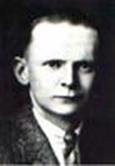
Sylvan Muldoon was born in the United States in 1903. He is considered to be the American pioneer in the study of the phase, although he used the esoteric term astral. He inadvertently woke up in the phase at the age of 12, where he saw a cord connecting his perceived body to his real body.
Read terms befor OBE troubleshooting
The Phase = Out-of-Body experience (OBE) + lucid dreaming (LD) + astral projection a number of terms united by the phase that refer to the state in which a person, while being fully conscious, realizes consciousness outside the normal range of physical perception.
Indirect techniques – entry into the phase within five minutes of awakening from sleep of any duration – provided there has been minimal physical movement.
Direct techniques – entry into the phase without any prior sleep, after excessive physical movement upon awakening, or having been awake for at least five minutes.
Dream Consciousness – entry into the phase through becoming consciously aware while a dream episode is happening.
Deepening the phase – methods for making the phase as realistic as possible by stabilizing the surrounding space.
Maintaining the phase – methods for maintaining the phase state by preventing a lapse into sleep, a return to reality, or an imagined return to reality.
OBE troubleshooting
From”School of Out-of-Body Travel-1. A Practical Guidebook”
TYPICAL MISTAKES
WITH INDIRECT TECHNIQUES
• Internal certainty that nothing will happen instead of believing in positive results.
• Stopping the performance of techniques after an unsuccessful cycle when a minimum of four cycles should be practiced.
• Constantly awakening to movement instead of remaining still.
• Performing direct techniques in the evening. Total concentration on indirect techniques is required from the morning on if a practitioner’s goal is access to the phase.
• Performing indirect techniques for an extremely long period of time (2 minutes or more). This is a complete waste of time in most cases.
• Switching from techniques that have begun to work when practice should be followed through to the end.
• Passively performing techniques instead of being determined and aggressive.
• Performing each technique separately for too long a period of time, even if the technique does not work, instead of switching to another technique within several seconds.
• Excessive thinking and analysis while performing indirect techniques, which require mental tranquility and inner stillness.
• Stopping and concentrating on unusual sensations when they arise versus continuing the technique that brought them about in the first place.
• Extremely long anticipation upon awakening instead of immediately performing techniques.
• Premature attempts at separating, instead of performing phase creation techniques through to the end of progress.
• Holding the breath when unusual sensations appear. Be calm instead.
• Opening the eyes when the only recommended movement is breathing or moving the eyes behind closed lids.
• Being agitated instead of relaxed.
• Ceasing attempts to separate even when partial success is met.
• Straining the physical muscles while performing the techniques versus remaining physically motionless.
• Not practicing after an alert awakening, when techniques are best applied – especially in the event of waking without movement.
• Merely imagining the techniques instead of really understanding them and performing them, if, of course, one is not performing rotation or other imagined techniques.
• Simply wiggling phantom limbs instead of employing a fixed determination to increase the range of movement
• Falling right asleep during forced falling asleep, instead of having the firm intention of continuing efforts within only 5 to 10 seconds.
• Scrutinizing the details of images when using the technique of observing images; the whole image should be observed panoramically lest it disappear.
• Intentionally trying to force pictures when observing images, instead of looking for what is naturally presented.
• Simply hearing noise when employing the technique of listening in, instead of attentively trying to pay attention, catch something, and listen in.
TYPICAL MISTAKES
WITH DIRECT TECHNIQUES
• Assuming an incorrect position when lying down.
• Performing direct techniques during the day when a practitioner is inexperienced, instead of in the evening or at night;
• Performing more than one attempt per day.
• Performing protracted relaxation before the techniques, even when this may play a negative role.
• Performing the techniques for too long when they should be exercised for no more than 20 minutes.
• Forgetting to affirm a strong intention of awakening during a lapse of consciousness.
• Lack of a free-floating state of mind. This is mandatory
• Falling asleep during lapses in a free-floating state of mind, instead of working toward multiple lapses while awakening.
• Forgetting separation techniques and awaiting some unknown event upon emergence from a lapse, instead of taking advantage of the moment.
• Excessively alternating the techniques in a primary repertoire, instead of testing them in a planned and systematic manner.
• Holding the breath when unusual sensations are encountered. Always be calm.
• Halting practice when unusual sensations occur when it is necessary to continue what brought about the sensations.
• Excessive excitement while performing direct techniques.
• Lack of aggression during attempts due to fatigue and sleep deprivation.
• Lack of a clear plan of action. Understanding and planning the use of distinct variations of the techniques beforehand is crucial to the analysis of subsequent errors in practice.
TYPICAL MISTAKES WHEN PRACTICING
BECOMING CONSCIOUS WHILE DREAMING
• Perceiving the state of dream consciousness as a non-phase state even though this phenomenon is one and the same with the phase.
• Attempting dream consciousness while performing other phase entrance techniques when it is better to focus on dream consciousness alone.
• When falling asleep, lacking sufficient desire to experience conscious dreaming even though this is critical.
• Continuing to yield to the plot of a dream even after achieving dream consciousness, whereas subsequent actions must be independent and based on free will.
• Incorrectly answering the question “Am I dreaming?” while dreaming.
• Forgetting to immediately begin deepening techniques when dream consciousness has been achieved.
• When exercising memory development, recalling the most vivid dreams instead of every dream.
• Inconsistent concentration while practicing dream consciousness techniques.
TYPICAL MISTAKES
WITH NON-AUTONOMOUS TECHNIQUES
• The belief that devices are able to phase entrance if autonomous techniques fail, even though it is much easier to enter the phase through strictly individual efforts.
• Wasting a large amount of time and effort on various technologies to create a phase state. No such technology exists.
• Using cueing technologies on a daily basis, even though they aren’t supposed to be used more than twice a week.
• Using cueing technologies all night long, when it is much better to use these in conjunction with the deferred method.
• Using cueing technologies without affirming a personal intention of appropriate reaction to the signals: this is crucial to cue effectiveness.
• Working in pairs during the first hours of nighttime sleep, even though REM sleep occurs infrequently, and then for only short periods of time.
• While working in pairs, the helper giving an active practitioner too strong a signal. Signals should be kept discreet to prevent waking the sleeper.
• Employing an amateur hypnotist to increase the frequency of dream consciousness.
• The use of hypnotic suggestion to a practitioner who is not susceptible to hypnosis.
• Using physiological signals on a daily basis, causing physical discomfort versus getting enjoyment out of the practice.
• The belief chemical substances promote dissociative experiences. Acting on this belief is equivalent to drug abuse.
TYPICAL MISTAKES DURING DEEPENING
• Forgetting to perform deepening techniques when necessary.
• Carrying out unnecessary deepening while at a sufficient depth.
• Halting deepening techniques before reaching maximum realism in the phase.
• Carrying out main deepening techniques prior to having become completely separated from the body, although at this time only primary deepening should be used.
• Continuing deepening techniques when results have already been achieved.
• Alternating too quickly between deepening techniques instead of concentrating on each of them for at least five to 10 seconds.
• Performing the techniques slowly and calmly instead of aggressively.
• Applying techniques of sensory amplification while stuck in a shapeless, dark space when these should only be performed in a vivid and realistic place.
• Observing objects located too far from the eyes during visual sensorization instead of the required four to five inches.
• When peering, scrutinizing a single detail of an object for too long when it is necessary to quickly switch from one detail to another.
• Taking in a whole object when peering while only parts of it should be observed.
• Concentrating too long on the details of a single object instead of focusing on different objects in quick succession.
• Long palpation of a single object during sensory amplification instead of rapidly switching from one object to another.
• Deepening while standing in place when it is important to maintain constant motion.
• Falling headfirst with the eyes open, although the eyes must be shut to avoid crashing into the floor.
• Falling headfirst without the desire or intention of falling far and quickly.
• Forgetting to use translocation techniques after hitting a dead end.
• Forgetting to alternate deepening techniques if some of them are not working.
• Fear of the hyperrealism of the experience and halting deepening instead of calmly continuing with the technique.
TYPICAL MISTAKES WITH MAINTAINING
• Forgetting to try to re-enter the phase after it is over, although doing so greatly helps to increase number of experiences had.
• Staying focused on techniques for “maintaining” instead of performing them as background tasks.
• Getting distracted by events and dropping phase maintenance techniques instead of continually performing what’s needed to maintain the phase.
• Succumbing to the idea that maintaining is not necessary when the phase appears very deep and stable, even though these could be false sensations.
• Using the necessary techniques too late.
• Stopping due to uncertainty about further actions, while there must always be a plan.
• Forgetting that it is possible to fall asleep in the phase without realizing it. Recognizing the risk of falling asleep must be a primary focus.
• Getting pulled into events occurring in the phase instead of observing and controlling them from the outside.
• Forgetting that techniques for “maintaining” must always be used to remain in as deep a phase as possible, and not just for maintaining any odd state.
• Stopping the use of techniques for “maintaining” during contact with living objects, when the techniques must be used constantly.
• Counting without the desire to count as high as possible.
• Performing imagined rotation instead of real rotation.
• Passiveness and calmness instead of constant activity.
• Excessive thinking and internal dialogue when these should be kept to an absolute minimum.
TYPICAL MISTAKES WITH PRIMARY SKILLS
• When trying to discern whether or not a phase is intact, a judgment is based on a similarity to the departed physical environment. In the phase, physical attributes are simulations.
• Hyper-concentrating on an object for too short a time while trying to determine whether the surroundings are in the phase or in the physical world.
• Deliberately attempting to end the phase prematurely when the entire natural length of the phase should be taken advantage of.
• Panic in case of paralysis instead of calm, relaxed action.
• Refusal to practice the phase because of fear, though this problem is temporary and resolvable.
• Opening the eyes at the initial stages of the phase since this frequently leads to a foul.
• Premature attempts to create vision in the phase, whereas separating from the body and deepening should occur.
• Excessive haste while creating vision although in the majority of cases vision appears naturally.
• While concentrating on the hands to create vision, doing so at an excessive distance versus the recommended four to six inches.
• Forgetting about the techniques for “maintaining” while in contact with living objects.
• Forgetting to shut the eyes or defocusing vision when translocating through walls or other solid objects.
• Desiring to do something superhuman in the phase without the required internal desire and confidence.
• Fear of experiencing pain in the phase instead of learning to control it.
• Observing moral standards in the phase when they do not apply.
• A tendency to immediately use the phase for something practical instead of first thoroughly exploring and interacting with the surroundings.
TYPICAL MISTAKES WITH TRANSLOCATION
AND FINDING OBJECTS
• Applying translocation and object finding techniques without the precondition of a steady phase.
• Insufficient concentration on a desire to travel to a location or to find an object.
• Doubting that results will be achieved instead of having complete confidence.
• Passive performance of the techniques instead of a strong desire and high level of aggression.
• Forgetting to repeat translocation or object finding techniques when the technique did not work or worked incorrectly during the first attempt.
• Getting distracted by extraneous thoughts during the lengthy process of teleporting with eyes shut. Total concentration is required at all times.
• Applying the technique of teleportation with eyes open without adequate experience.
• Failing to immediately translocate when using the closed eyes technique; this may induce flying a la the teleportation technique.
• Glossing over minute details or only observing the broad features of a remote object while applying translocation by concentration.
• A delayed desire to move while translocating during separation. An instantaneous desire to immediately move is necessary.
• Forgetting to first shut a door completely when using translocation through a door; otherwise, there will be contact with what is already behind it.
• Using a translocation technique to go through a wall without knowing how to pass through solid objects.
• Paying too much attention to the process of translocation through a wall; this leads to being trapped in the wall.
• Forgetting to shut the eyes while translocating diving headfirst. The eyes should remain closed until after the technique is complete.
• Insufficient internal association with an animate object while finding it by calling its name.
• Trying to find an object via interrogation instead of passively communicating with living objects of the phase.
• Using distant corners when applying the technique of finding an object around the corner. Choose nearby corners to avoid wasting precious travel time.
• Applying transmutation techniques without possessing sufficient experience in managing (“maintaining”) the phase space.
TYPICAL MISTAKES
WHEN USING APPLICATIONS
• Attempting an applied use of the phase without reaching a good depth. Deepening must always be performed before applications are attempted.
• Being so involved in phase applications that “maintaining” techniques are forgotten.
• Forgetting to consider how to breathe when traveling through Outer Space or underwater, which may lead to asphyxiation.
• Concentrating on a certain object while traveling through time instead of concentrating on time travel, which should be the focus since it is the point of performing the applications.
• Forgetting techniques for “maintaining” when animate objects are encountered when these techniques must always be kept in mind.
• An inability to overcome fear during contact with deceased people. This fear must be overcome once and it will never resurface again.
• Limiting desires while practicing the phase. There is no limit to desire within the phase.
• Limiting the performance of certain actions, although there are no customary norms of behavior in the phase, unless the practitioner decides upon specific limits.
• While looking for information in the phase, attempting to obtain knowledge which clearly exceeds the scope of the subconscious mind.
• Applying the technique of obtaining information from animate objects without knowing how to communicate with them.
• Forgetting to check the ability of an object to convey valid knowledge. The probability of bad information is much higher if it is not verified.
• Failing to verify information in the phase before using it in reality.
• Forgetting to verify serious information obtained in the phase in reality before using it. Verification absolutely must be performed to avoid using bad information in reality.
• A single attempt to influence the physiology through the phase. In the majority of cases, results are gained through repeated effort.
• An attempt to cure some disease only using the phase, whereas it is compulsory to seek medical advice.
• Initially believing that the phase is the exit of the soul from the body, while this is easily refuted in practice.
• Concentrating only on unproven applications, despite all the evidence out there that this is most likely a waste of time.
All methods for controlling the phase space stem from a primary law: the degree of changeability of the phase space is inversely proportionate to the depth of the phase and the stability of its objects. That is, the deeper and more stable the phase, the more difficult it is to perform something unusual in it because in a deep, stable phase, the laws of it begin to closely resemble those of the physical world.
All translocation and finding objects techniques are based on the knowledge of methods that bypass the primary law. The secret lies in the fact that not only phase depth affects the controllability of the phase, but so does phase stability, which in turn depends to a large extent on the number of sensations experienced in the phase. The techniques for translocation and finding objects are used when these experienced sensations are weakened through certain actions.
In other words, if a practitioner located in the phase holds a red pencil and examines it, tactile and visual perceptions are engaged, which under sharp agitation cause the object to exist in its complete form. However, as soon as the eyes are shut, the stability of pencil image weakens. In this situation, it will be enough for the practitioner (after sufficient training) to concentrate on believing that the pencil is dark-blue in order for it to appear dark blue after opening the eyes. This phenomenon occurs because the color of the pencil is no longer determined by perceptual areas of the brain and, therefore, it is possible to change it.
If a red pencil is placed on a table and the practitioner’s eyes are shut, and there is concentration on a thought that the pencil is no longer on the table, then after opening the eyes, the practitioner will find that the pencil has disappeared. In essence, when the pencil is lying on the table and the practitioner’s eyes are closed, and the pencil is not being held, no perception is being invested in the pencil, which the practitioner deletes using autosuggestion.
Using certain technique-related methods, a practitioner may cause the stability of the phase state to remain in flux using techniques that best suit the practitioner’s individual personality.
Translocation through Teleportation
This is one of the simplest and most accessible techniques that beginners should use right away. To apply it, shut the eyes (if vision is present), and then concentrate attention on a thought-form or image of a location elsewhere in the phase. At this moment, there will be a string sensation of swift flight and within two to 10 seconds, the destination will be reached.
The success of this technique depends on a strong concentration upon a single goal: the desired location. Practice must be performed very clearly, confidently, aggressively, and without distractions. Any unrelated thoughts have a profoundly negative influence on the performance of this technique. They unnecessarily prolong the flight, cause a foul, or result in arriving at an undesired location.
Translocation through a Door
In order to use this technique, approach any door with the strong belief that it leads to the required location. After opening the door, the practitioner will see and be able to step into the destination. If the door was originally open, it must be completely shut before applying the technique.
A drawback to this technique is that its practice always requires a door. If there is no door, users of this translocation technique should create one using an object finding technique.
Translocation with Closed Eyes
This is one of the easiest techniques. To use this technique, the practitioner simply needs to shut the eyes and have an intense desire that, when the eyes are next opened, the required location will be reached. In order to considerably increase the effectiveness of this technique, it would be useful to imagine, at the moment you close your eyes, that you have already reached the desired location. Translocation must occur then, and it has to happen without the flight sensations that occur during teleportation with closed eyes. Translocation must occur right then, and it has to happen without the flight that occurs in teleportation with closed eyes, which must be avoided.
Translocation by Concentration on a Remote Object
To perform this technique, the practitioner should peer from a distance at a minor detail of the desired location. The greater an intention to see an object’s detail, the quicker the arrival at the object’s location.
A drawback to this technique is that this type of translocation is possible only for places that are already visible, albeit from a great distance.
Translocation during Separation
The simplest way to translocate is to do so while separating from the body. Employing this technique is extremely simple and very convenient. It may be combined with almost any separation technique and is performed by focusing on the image and feel of a desired location during the initial stages of exiting the body. It is even better to imagine that phase entry will occur and separation will complete in a chosen location.
A drawback of this technique is that separation occurs only in the beginning of the phase experience and, therefore, can only be used once. Other options should be considered after the first translocation.
Technique of Translocation
All translocation techniques are also applicable to object finding techniques since the use of both techniques requires altering the surrounding the space. Instead of concentrating on a location, the practitioner is to focus on the specific detail of a space that is to be found or changed. As a result, finding the necessary object (provided this technique has been mastered) is guaranteed, but maintaining the original location where the action begins is not guaranteed.
If the goal is to find an object while remaining in the present location, use the specialized techniques described later on: techniques that change only a portion of the phase space.
Finding by Calling a Name
This technique is only used to find living objects. The practitioner must call a person or an animal by name to cause the animate phase resident to enter or appear nearby. The call should be loud, nearly a shout, otherwise it will not always work. Generally, it is often enough to pronounce a name several times to achieve results.
If the desired animate object does not have a name or the practitioner does not know it, then any name or general summoning will do, like, ”Come here!” This should be done while mentally focusing on a clear image of the desired person or animal.
Finding by Inquiry
To perform this technique, approach any person in the phase and ask him (or her) where to quickly find a desired object. An accurate answer is usually given straight away, and it should be followed. However, to avoid wasting time, do not forget to mention that the object must be found ”quickly”, or specify that the object should be ”nearby”. During this communication, under no circumstances should there be a doubt about the accuracy of the information, since otherwise it may lead to a simulation of what is expected.
The drawback of this technique is that it requires the presence of an animate person and good skill at communicating with objects in the phase, which can prove difficult.
Finding by Turning Around
In order to use this technique, the practitioner must concentrate and imagine that the required object is located somewhere behind his back, and after turning around he will actually see it there, even if it was not there just a moment earlier. This works best if the practitioner, prior to turning around, did not view the place where the object is expected to appear.
Finding Around a Corner
When approaching any corner, concentrate and imagine the required object is just around the corner. Then, after turning the corner, the object will be found. Anything that limits space visibility may be regarded as a corner. This does not have to be the corner of a house or another type of building; it could be the corner of a wardrobe, the corner of a truck, etc.
The drawback of this technique is that it requires the availability of a sufficiently large corner that blocks the view of anything around the other side of it.
Finding in the Hand
This technique is, in essence, only applicable to finding objects that can fit in or be held by the hand. To perform this technique, concentrate on the idea that the object is already in hand. At that moment, the practitioner must not look at it. Soon after beginning to concentrate on this idea, the practitioner will at first feel a slight sensation of the object lying in his hand, followed by a full sensation and appearance of the desired object.
Lucid Dreaming Mask — Practice Effectively Lucid Dreaming App — Dream Journal, Dream Tracker & Lucid Dreaming Community The mystery of lucid dreams is hidden deep within human consciousness. Questions about their origin have been pondered by hundreds of people, including distinguished scientists. Therefore, it would be a mistake to assume that this topic is […]

Lucid Dreaming Mask — Practice Effectively Lucid Dreaming App — Dream Journal, Dream Tracker & Lucid Dreaming Community Dreams are an area that captivates many people. Even if only unintentionally, every second person has asked themselves, “What do my dreams mean?” Scientists are no exception to this. Lucid dreaming — a state during which a […]
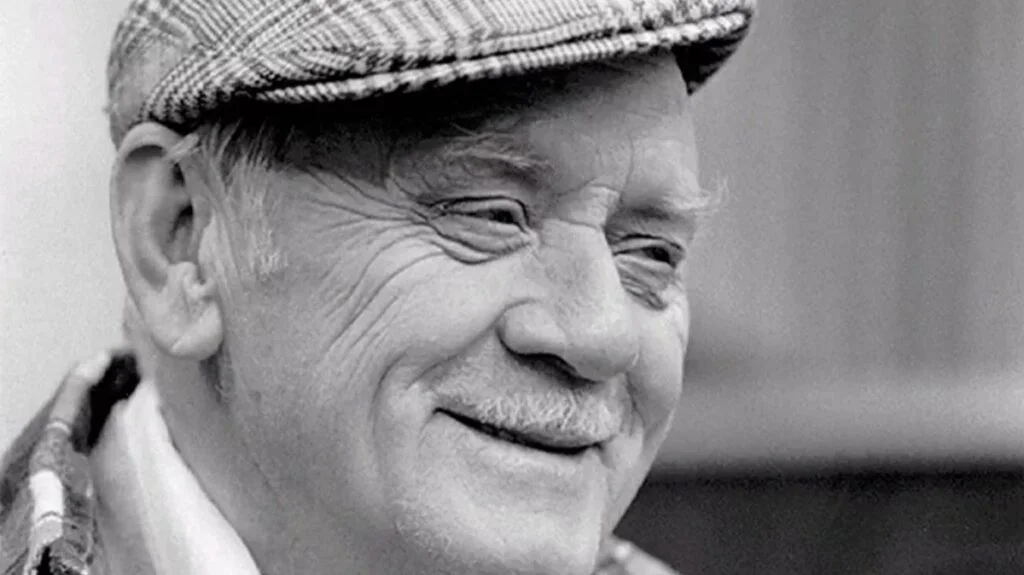
Lucid Dreaming Mask — Practice Effectively Lucid Dreaming App — Dream Journal, Dream Tracker & Lucid Dreaming Community Robert Monroe was an engineer by profession who worked as a scriptwriter and director for radio stations. He later founded his own radio station, which, under his leadership, achieved tremendous success in a short time. Starting in […]

Lucid Dreaming Mask — Practice Effectively Lucid Dreaming App — Dream Journal, Dream Tracker & Lucid Dreaming Community There are more films about lucid dreaming than you might think. Some fully explore the concept, while others just touch upon it. Experienced lucid dreamers have compiled a list of films that, although often classified as science […]