
blog - Part 27
Categories
Teaching

Make the Audience Think

One of primary rules of rhetoric is that the audience should move together with the orator towards the specific aim of his speech. However, teaching out-of-body travel and lucid dreaming means more than simply giving speeches. It means teaching a full-fledged skill. The aim is not only to impart certain knowledge, but also to instill certain procedures into the conscious and subconscious mind. To that end, this rule of rhetoric can be fine-tuned and made even more effective: have the audience independently discover the necessary steps and their sequence.

At first glance, this approach might seem unrealistic. However, not only is it possible, but it also makes the lessons truly interesting for all. Nearly every procedure for mastering out-of-body experience makes sense at an intuitive level. They are by and large easy to guess if you are given the right hints. The instructor’s job is to give people those hints and point them in the right direction. Thus, don’t simply rephrase the contents of the practical modules in this book. Doing so makes little sense and will hardly sink in for the average person. Say "A" and wait until somebody says "B". Say "C" and wait until somebody guesses "D", and so on.

To illustrate, let’s go through several specific examples of playing this game with the audience. Example one: at the very beginning of the lesson, you need to lead students to the conclusion that indirect techniques are best performed in the morning when the body is in less need of non-REM sleep and enters REM more often, which is just what is necessary for out-of-body experience. To accomplish this, start by asking, "What time of day is best for making indirect attempts? Why?" Someone is sure to know or guess the answer. If not, then (and only then) may you give the answer. But before you do so, give people the opportunity to discuss it and come up with as many ideas as possible. That’s the whole idea – TO FORCE PEOPLE TO THINK!

Example two: "We have the greatest chances of entering out-of-body experience while we are awakening, as that’s when we are already in out-of-body experience or are practically already in it. If this is the case, what action should you start an attempt to enter out-of-body experience with?" The answer is seemingly simple: you should separate. However, the audience will put forward all kinds of conjectures if they haven’t read our Research Center’s book. Even if the correct answer is given right away, don’t let you face show it. Let people keep on thinking and come up with other ways. Of course you’ll eventually say the correct one, but by then the audience will already be wound up and fully enthralled with the process of opening doors to a parallel world.

Example three: "What will happen if I come to a halt while in out-of-body experience and start thinking?" After a bit of discussion, the right answer will be hit upon: a return to the body is what will happen. That’s when you should ask the next question, i.e., "Right, so you need to always be active. But what then do you always need to have or do so that you never come to a stop?" – hint at "plan of action".

Questions can sometimes be asked sequentially so that people starting from a "blank state" are able to arrive at the answer using their intuition and logic alone. For example: "How do you think it’s possible to obtain information in out-of-body experience?" Even a group of 10 people will find three primary methods on its own, and all that it remains for you to do is write them on the board. The same holds true for self-healing and other matters where people can arrive at answers by simply going through various possibilities.

There’s no sense in making the game too complicated. Make the hints clear and quickly elicit opinions from the room. As soon as you hear the right answer, praise the person who gave it and move right on ahead. Don’t drag out the process forever. The end result should be that the audience comes up with the correct procedure on its own without you giving it to them.

Of course, it’s not always possible to play such games with the audience. Responsiveness will occasionally be lacking. Unresponsive students make for quite boring lessons since you will have to resort to giving lectures on the methods.

Categories
Teaching

Typical Student Questions

– What does it mean if I cannot stand firmly on my feet in out-of-body experience?

It’s a sign of insufficient deepening.

– I get tunnel vision in out-of-body experience. Is that normal?

Although normal, it’s a sign of an out-of-body travel that’s not full-fledged. Your sense of sight should be at least that of everyday reality.

– I rolled out of my body, got stuck in the wall, and almost couldn’t breathe. What should I do in such situations?

What happened was deepening inside the wall via the sensations of going through it. It’s no big deal. You need to try to breathe anyway, as the shortness of breath is purely psychological. Also, try to gradually get out of the wall or return to your body and roll out of it towards the other side.

– What should I do if various beings constantly attack me?

The most important thing is to never run away. Accommodate them instead, and their aggression will disappear. Also keep in mind that they are your own materialized fears.

– out-of-body experience ends quickly for me when I’m flying. How do I solve this problem?

Try to employ procedures for maintaining while you’re flying. For example, rub your hands together and look at them periodically. It’s also beneficial to not merely fly about, but to fly from place to place with a destination firmly in mind.

– An irrepressible sexual attraction arises when communicating with objects. How do I solve this problem?

Allow yourself to indulge such weaknesses, but only on the condition that you first accomplish your previously-determined objectives.

– When I jump in out-of-body experience in order to fly out of the window or from some other height, I am often tormented by doubts as to whether or not it’s in real life. Could I actually jump out of a window in real life having thought that I was in out-of-body experience?

From a purely theoretical standpoint, it’s possible. It’s therefore best for novices not to jump from windows when entering out-of-body experience. It’s best to do a reality check if doubts arise in other cases.

– Should every exit from the body be accompanied by vibrations?

No. Vibrations don’t have to be there, and this is especially true for experienced practitioners. For many practitioners, they never occur.

– What actually are the vibrations?

Science has yet to determine the nature of this phenomenon.

Categories
Teaching

Module No. 9: Translocation and Finding Objects

Aim

Teach techniques for finding objects in out-of-body experience and ways to translocate throughout it. This will help practitioners to fully employ the phenomenon to various practical ends instead of being confined to the space they find themselves in at the beginning of the experience.

Key Concepts

Mandatory: Definition, translocation techniques, and object-finding techniques.

Non-Mandatory: The basic property of out-of-body experience space, simulations of translocation and object-finding techniques, and examples.

Lesson Plan

Definition Techniques for translocating and finding objects consist in the ability to use the properties of out-of-body experience space for the purpose of translocating throughout it to any place one wishes and finding any desired animate or inanimate object in it. These skills will come in handy for your students on multiple times during practically every phase experience. They will also allow them to use out-of-body experience for productive and practical applications.

Categories
Teaching

Typical Student Questions

– Should I record my analysis of my attempts in the journal I keep for my practice?

If you keep a journal of phase experiences, then you should record all of your mistakes in it.

– Is it possible to do everything right but still not obtain success?

Only in exceptional cases. If the practitioner does everything right, he should be successful. Actually, success will be practically unavoidable.

– Does out-of-body experience of the moon or the position of the body relative to due north affect the quality of out-of-body experiences or lucid dreams?

It doesn’t, as a matter of fact. However, it may have an influence if you believe that it will.

– Although I see and realize all of my mistakes when analyzing my attempts, I still repeat those mistakes afterwards. What should I do?

This is normal in case of irregular practice, at the beginning stages, or after long breaks. Performance of all of the actions involved with the techniques should become automatic. This will come with practice and regular attempts. The most important thing is to continue to analyze them and note your mistakes each time.

– Can the conclusion I come to regarding my mistakes differ from those suggested by the instructions and still be right?

It may be, considering that it’s impossible to describe every possible situation and every variation thereof. However, you should try to keep to the tried-and-true procedures.

– When is it best to analyze attempts: immediately after an attempt or later on during the day?

The sooner, the better. You can recall the details later, especially if you fall asleep after out-of-body experience. However, in that case you’ll have to go back over everything in order to come up with a good analysis.

– I don’t remember my OBEs well, and that makes it difficult for me to analyze them later on. How do I resolve this issue?

You are most likely falling asleep immediately after out-of-body experience or during it. Meanwhile, out-of-body experience itself often arises while in a drowsy state, or from becoming conscious while dreaming. All of these factors are on par with insufficient deepening in their ability to cause significant memory loss (and sometimes complete amnesia) regarding an out-of-body travel experience. If this problem is recurring, then it’s best to record all one’s recollections on paper or commit them to memory immediately after each phase experience, and then go back to sleep.

Categories
Teaching

Format 4

Day 1:

Module No. 1: Introduction: General theory and motivation

– Break

Module No. 2: The indirect method

Day 2:

Module No. 11: Analysis

– Break

Module No. 6: Deepening the state

Module No. 7: Maintaining the state

Module No. 8: Primary skills

Day 3:

Module No. 11: Analysis

– Break

Module No. 9: Translocation and finding objects

Module No. 10: Practical applications

Day 4:

Module No. 11: Analysis

– Break

Module No. 3 The direct method

Day 5:

Module No. 11: Analysis

– Break

Module No. 4: Becoming conscious while dreaming

Module No. 5: Non-autonomous methods

Day 6 (1)

Module No. 11: Analysis

– Break

Module No. 2: The indirect method

Day 7 (2)

Module No. 11: Analysis

– Break

Module No. 6: Deepening the state

Module No. 7: Maintaining the state

Module No. 8: Primary skills

etc.

Our posts


Staying Awake in Dreams?

ES | PT | FR | DR | IT | ND | CN | JP | KR | RU | UA | PL | BL | CZ | TH | VN | TR | AR | PR | RM | HU | IL | AM | GR Lucid Dreaming and REM sleep technologies Love lucid dreaming, REM sleep, and sleep paralysis? Here, we share cool tech and methods with you Our new mask Lucid Dream Tonight? A perfect […]

MORE

Protected: Email

There is no excerpt because this is a protected post.

MORE

REMspace Forecast for 2026: Top 10 Dream Abilities We May Gain This Year

At REMspace, we believe that 2026 will mark a turning point for sleep technologies. According to our CEO, Michael Raduga, a new era is emerging – one that opens an entirely new experiential space within sleep

MORE

LucidMe Mask Reviews | Real Lucid Dreaming Experiences

People using the LucidMe mask say it really helps them notice when they’re dreaming. Many describe clear signals, sudden moments of lucidity, and vivid dream experiences — flying, meeting people, exploring strange places. Not every attempt works, and sometimes lucidity fades fast, but users feel the mask pushes them closer to stable lucid dreams. It’s […]

MORE

The Indirect Method: Step-by-Step Instructions

Lucid Dreaming Mask — Practice Effectively Lucid Dreaming App — Dream Journal, Dream Tracker & Lucid Dreaming Community So, you have decided to experience out-of-body sensations and want to achieve this as quickly as possible. To that end, here we present a brief description of the easiest method – cycles of indirect techniques. This is […]

MORE

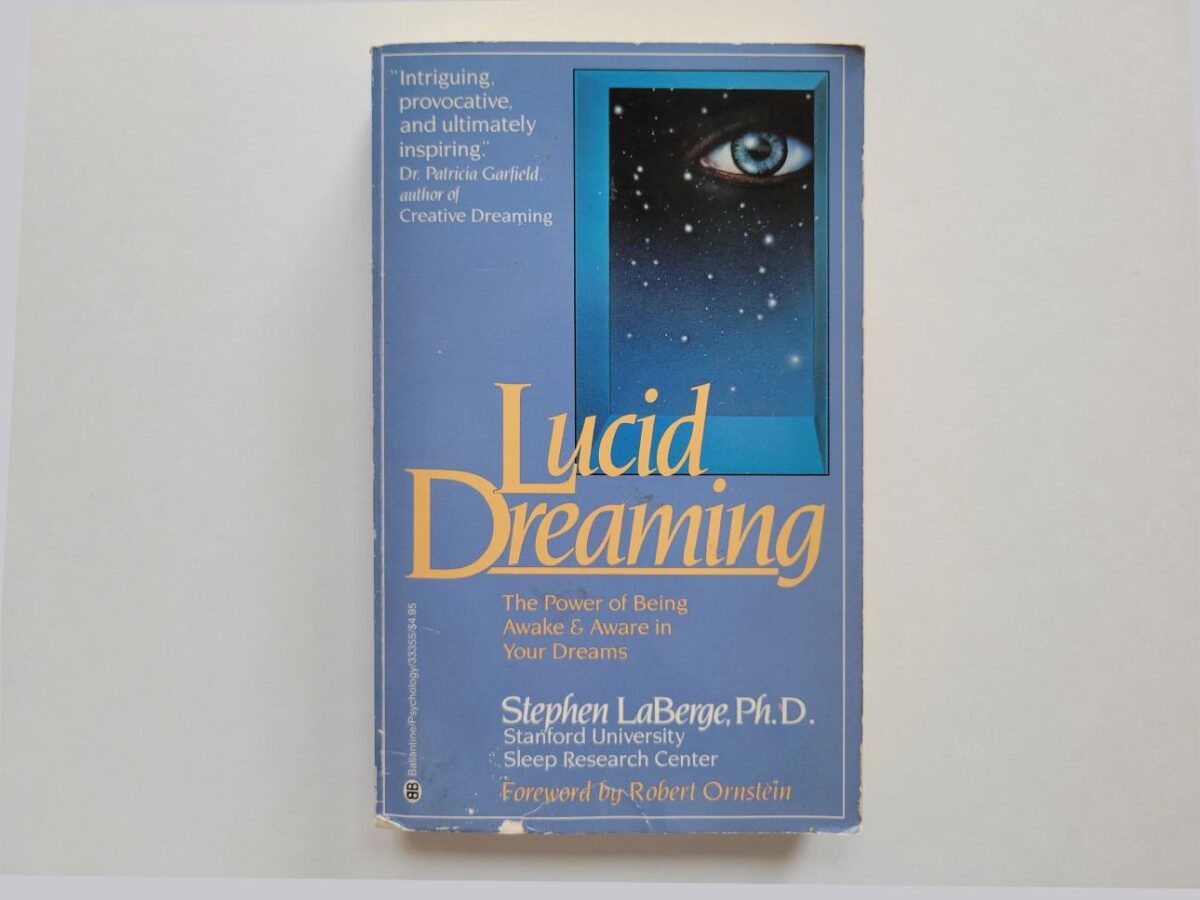
Lucid Dreaming Book by Stephen LaBerge

Lucid Dreaming Mask — Practice Effectively Lucid Dreaming App — Dream Journal, Dream Tracker & Lucid Dreaming Community The mystery of lucid dreams is hidden deep within human consciousness. Questions about their origin have been pondered by hundreds of people, including distinguished scientists. Therefore, it would be a mistake to assume that this topic is […]

MORE

Stephen LaBerge and Lucid Dreaming

Lucid Dreaming Mask — Practice Effectively Lucid Dreaming App — Dream Journal, Dream Tracker & Lucid Dreaming Community Dreams are an area that captivates many people. Even if only unintentionally, every second person has asked themselves, “What do my dreams mean?” Scientists are no exception to this. Lucid dreaming — a state during which a […]

MORE

The Art of Dreaming – Carlos Castaneda

Lucid Dreaming Mask — Practice Effectively Lucid Dreaming App — Dream Journal, Dream Tracker & Lucid Dreaming Community History provides many outstanding names, and Carlos Castaneda has firmly taken his place among them. His personality is full of mysteries, and his philosophy and worldview are multifaceted. The books he wrote, such as “The Art of […]

MORE

Robert Monroe: “Journeys Out of the Body” and Lucid Dreaming

Lucid Dreaming Mask — Practice Effectively Lucid Dreaming App — Dream Journal, Dream Tracker & Lucid Dreaming Community Robert Monroe was an engineer by profession who worked as a scriptwriter and director for radio stations. He later founded his own radio station, which, under his leadership, achieved tremendous success in a short time. Starting in […]

MORE

Lucid Dreaming Movies – Top 20 Most Popular Movies

Lucid Dreaming Mask — Practice Effectively Lucid Dreaming App — Dream Journal, Dream Tracker & Lucid Dreaming Community There are more films about lucid dreaming than you might think. Some fully explore the concept, while others just touch upon it. Experienced lucid dreamers have compiled a list of films that, although often classified as science […]

MORE

Transmitting Music from Lucid Dreams

This is how we transmitted a simple melody from lucid dreams about a year and a half ago. The paper has been published recently. Next year, anyone will be able to find brilliant melodies in lucid dreams and then record or even stream them online. Join the waiting list for the device Details about the […]

MORE
Other news
😴 LucidMe — lucid dreaming mask