blog - Part 42
Categories
Teaching

Distance Learning

Description

Distance learning is a form of instruction whereby a student or group of students is taught by an instructor using various means of remote communication. All other process-related specifics are determined by the given instructional sub-format (e.g. one-time lecture, three-day seminar, regular lessons, or one-on-one lessons), which is in turn shaped by the medium of communication, be it the telephone, the Internet, or even written letters. Neither student enrollment, payment, nor learning take place in-person.

There are several common variations on this form of instruction. The first is instruction via e-mail. The instructor e-mails methods to employ in-sequence and tasks to accomplish. The student performs them on his own and then writes back with an account of his attempts. The instructor then responds with an analysis of the student’s mistakes and provides the next tasks to accomplish and methods to learn. Another, easier way is for the instructor to send pre-prepared general methods and tasks to a group of several students at once, regardless of their current level of progress.

The second variation on distance learning is one-time, three-day, or regular webinars. Here, the instructor conducts training sessions online using a webcam. Although the instructor cannot see his students (and he might have a thousand of them at once), they can ask him questions by instant-message chat or e-mail.

Third, distance learning can take place via regular telephone or videoconference using free online tools like Skype, which allow for computer-to-computer video calls. Internet-enabled mobile phones running Skype can be used to make free phone-to-phone video calls. In this case, one would be having a one-on-one lesson with all that it entails.

Categories
Teaching

5

I awoke without movement and tried to separate. It worked: I rolled out of my body and fell onto the floor. I stood up and turned around to have a look at my body, and saw myself asleep (lack of deepening). I began to walk about the room (lack of a plan of action). I went to the balcony and wanted to jump from it (dangerous activity), but was afraid to do so since everything was still so realistic. I then sat down in a chair and began just admiring the room (loss of activeness; lack of maintaining) I was soon returned to my body (lack of secondary separation from the body).

Categories
Teaching

Advantages 4

– Moderate to high rate of success

– Unhurried and relaxed instruction

– Long-term student retention (important for small towns)

– Opportunity to cover all topics in detail

– A lot of time for attempts

– Close familiarity with the audience

Disadvantages

– It can be challenging to hold the audience’s attention over the course of weeks or months

– High rate of audience turnover

– Moderate to low return on investment

– Mixed groups of novices and already-experienced practitioners at the same lesson

Categories
Teaching

Typical Student Questions

– With the deferred method, can you try to separate immediately after the alarm goes off at 6 o’ clock in the morning?

You may, but it’s much more effective to wake up at a predetermined time and then catch subsequent natural awakenings.

– Do I need to employ the deferred method if I sleep only 6 hours and this is all my body needs?

You can try to shorten the first period of sleep from 6 hours to 4. You might have to catch any awakening you can.

– If I was planning to use the deferred method but woke up in the middle of the night, could I have used that awakening?

Basically, you can make an attempt if you feel that the moment is right. The most important thing is that the night doesn’t turn into a constant string of attempts, as it’s important to get the sound sleep your body needs.

– I don’t normally wake up until I have to. Are the indirect techniques something I should try out?

This is a learnable skill. The main thing is to do everything correctly and better affirm your desire while falling asleep. Many often fear this problem, though it’s actually rarely encountered.

– Will my spouse who shares the bed with me interfere?

It depends on how you look at it. Some are happy to get extra opportunities to make attempts when their partners accidentally wake them up. Others find this bothersome and try to sleep alone, perhaps in another room.

– If I go to bed at 4am (or say 8pm), should I still set my alarm for 6am?

No. 6 hours refers to the length of time that you should sleep rather than the time that you should get up. You should therefore decide for yourself when to have an awakening for the deferred method. You need to get most but not all of the sleep that your body needs.

– Should I count down seconds (i.e. down from 3 to 5 seconds) while performing the techniques in order to know when to switch them?

No. 3 to 5 seconds is about how long it should take you to realize whether or not a technique is working.

If several techniques immediately start working upon awakening, which one should I choose?

If the techniques aren’t interfering with each other, you can intensify the sensations in all of them at once. Alternatively, you might choose the technique that’s working the best and stick with that one. It depends on the situation and your preference.

– If the sensation of having a double body arises upon separation, what should I do?

Try to transfer all of the sensations into the body that you perceive in out-of-body experience. Simply focus on its sensations.

– Can you do more than 4 cycles?

You can, but there’s no point in dragging out an indirect-method attempt for too long. It’s best to go back to bed and catch the next awakening.

– I find myself in a void upon awakening. What should I do?

It’s best to immediately employ a translocation technique by focusing on your destination or attempting to create vision by trying to scrutinize your hands from a close distance without opening your eyes.

– All of the techniques work, but why am I unable to separate?

The problem lies in your understanding of the separation process and some internal psychological blocks. At that moment, you were lying down in bed in out-of-body experience. All that you had to do was simply get up out of bed.

– Can I employ both direct and indirect techniques at the same time?

It’s best for novices not to combine those methods. Otherwise, they risk dissipating their attention and desire.

– I always wake up to physical movement. What should I do?

It’s no big deal. The most important thing is to make attempts anyway. It might be worth it to skip separation and immediately move on to cycling techniques. It’s also worth it to consider forced falling asleep and its variations.

– If I am awoken by my cat or a loud noise, may I try indirect techniques upon that awakening?

Yes, you may, as long as the distraction will no longer bother you.

– How do I get out of out-of-body experience?

You don’t have to worry about that. Issues related to maintaining the state will be studied separately, as initial experiences are usually quite brief.

Categories
Teaching

Module No. 2: The Indirect Method

Aim

Students learn the easiest method for mastering out-of-body travel and lucid dreaming – one that accounts for 60 to 70% of the results people get at seminars of all formats. The indirect method is performed while awakening from sleep.

Key Concepts

Mandatory: Definition, when to perform the techniques, conscious awakening, intensity and confidence, separation techniques, indirect techniques, and cycles of indirect techniques.

Non-Mandatory: When to practice, awakening without movement, hints, forced falling asleep, overcoming barriers, auxiliary factors, plan of action, a brief discussion of deepening and maintaining, practicing the techniques, practicing the procedure by playing a game, simulating attempts, and examples.

Our posts


Staying Awake in Dreams?

ES | PT | FR | DR | IT | ND | CN | JP | KR | RU | UA | PL | BL | CZ | TH | VN | TR | AR | PR | RM | HU | IL | AM | GR Lucid Dreaming and REM sleep technologies Love lucid dreaming, REM sleep, and sleep paralysis? Here, we share cool tech and methods with you Our new mask Lucid Dream Tonight? A perfect […]

MORE

Protected: Email

There is no excerpt because this is a protected post.

MORE

REMspace Forecast for 2026: Top 10 Dream Abilities We May Gain This Year

At REMspace, we believe that 2026 will mark a turning point for sleep technologies. According to our CEO, Michael Raduga, a new era is emerging – one that opens an entirely new experiential space within sleep

MORE

LucidMe Mask Reviews | Real Lucid Dreaming Experiences

People using the LucidMe mask say it really helps them notice when they’re dreaming. Many describe clear signals, sudden moments of lucidity, and vivid dream experiences — flying, meeting people, exploring strange places. Not every attempt works, and sometimes lucidity fades fast, but users feel the mask pushes them closer to stable lucid dreams. It’s […]

MORE

The Indirect Method: Step-by-Step Instructions

Lucid Dreaming Mask — Practice Effectively Lucid Dreaming App — Dream Journal, Dream Tracker & Lucid Dreaming Community So, you have decided to experience out-of-body sensations and want to achieve this as quickly as possible. To that end, here we present a brief description of the easiest method – cycles of indirect techniques. This is […]

MORE

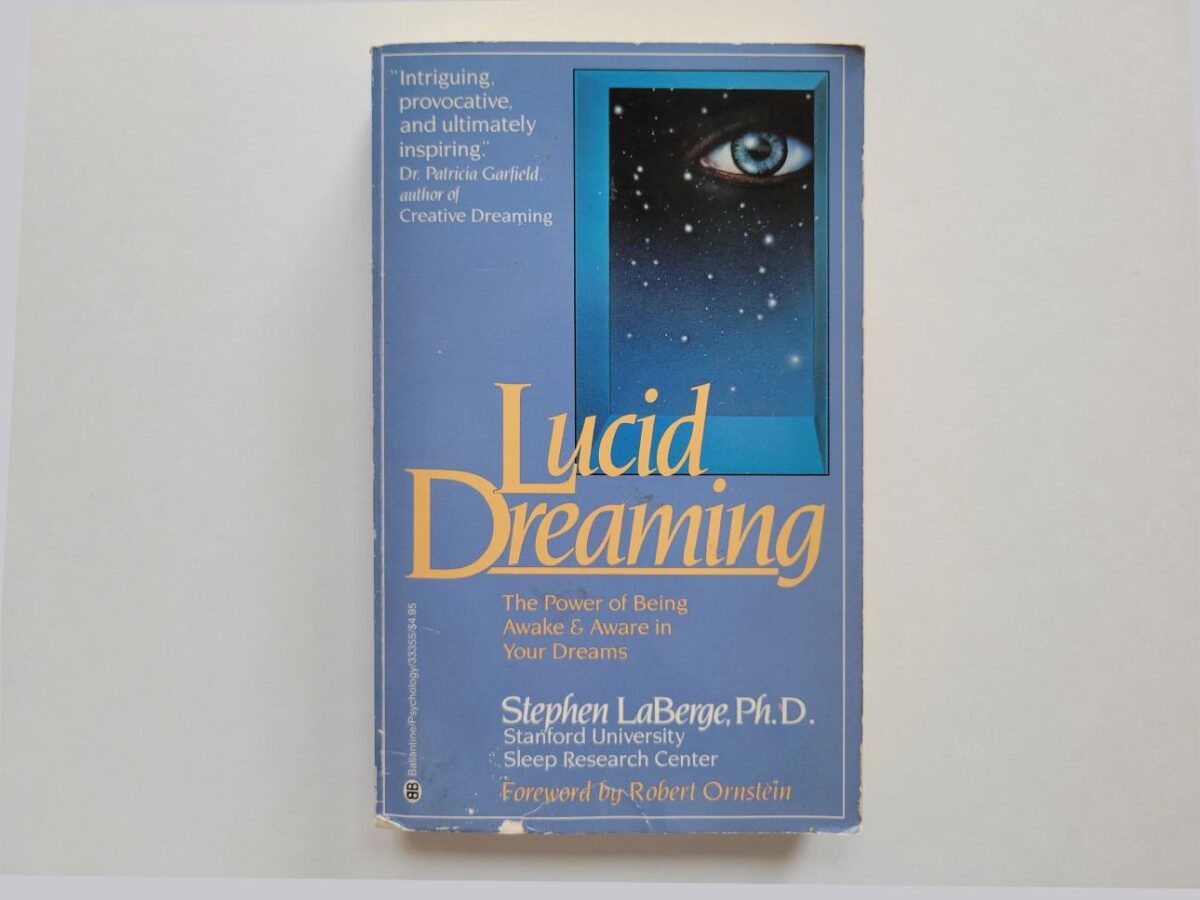
Lucid Dreaming Book by Stephen LaBerge

Lucid Dreaming Mask — Practice Effectively Lucid Dreaming App — Dream Journal, Dream Tracker & Lucid Dreaming Community The mystery of lucid dreams is hidden deep within human consciousness. Questions about their origin have been pondered by hundreds of people, including distinguished scientists. Therefore, it would be a mistake to assume that this topic is […]

MORE

Stephen LaBerge and Lucid Dreaming

Lucid Dreaming Mask — Practice Effectively Lucid Dreaming App — Dream Journal, Dream Tracker & Lucid Dreaming Community Dreams are an area that captivates many people. Even if only unintentionally, every second person has asked themselves, “What do my dreams mean?” Scientists are no exception to this. Lucid dreaming — a state during which a […]

MORE

The Art of Dreaming – Carlos Castaneda

Lucid Dreaming Mask — Practice Effectively Lucid Dreaming App — Dream Journal, Dream Tracker & Lucid Dreaming Community History provides many outstanding names, and Carlos Castaneda has firmly taken his place among them. His personality is full of mysteries, and his philosophy and worldview are multifaceted. The books he wrote, such as “The Art of […]

MORE

Robert Monroe: “Journeys Out of the Body” and Lucid Dreaming

Lucid Dreaming Mask — Practice Effectively Lucid Dreaming App — Dream Journal, Dream Tracker & Lucid Dreaming Community Robert Monroe was an engineer by profession who worked as a scriptwriter and director for radio stations. He later founded his own radio station, which, under his leadership, achieved tremendous success in a short time. Starting in […]

MORE

Lucid Dreaming Movies – Top 20 Most Popular Movies

Lucid Dreaming Mask — Practice Effectively Lucid Dreaming App — Dream Journal, Dream Tracker & Lucid Dreaming Community There are more films about lucid dreaming than you might think. Some fully explore the concept, while others just touch upon it. Experienced lucid dreamers have compiled a list of films that, although often classified as science […]

MORE

Transmitting Music from Lucid Dreams

This is how we transmitted a simple melody from lucid dreams about a year and a half ago. The paper has been published recently. Next year, anyone will be able to find brilliant melodies in lucid dreams and then record or even stream them online. Join the waiting list for the device Details about the […]

MORE
Other news
😴 LucidMe — lucid dreaming mask