blog - Part 52
Categories
Teaching

Working with Different Types of Students

The instructor needs to have a basic understanding of what kind of person attends his seminars and why those people chose the given seminar format. Most of the information given out can be gleaned from books or various videos that are freely available in great number online or can be bought in stores. Meanwhile, people sometimes fly in from the other side of the country and spend a lot of money and time to take part in a live seminar. Why? Knowing the answers to this question will help you to better meet the needs of your audience. Reasons might include:

– they want to be in a down-to-earth atmosphere with like-minded people

– they want to obtain more motivation and desire, as well as be psychologically jolted into action by the instructor

– they want personal help from the instructor

– many dislike reading books

– it’s easier and simpler for them to learn the techniques from somebody else than to spend a lot of time learning something on their own

– it allows for quicker progress since fewer mistakes will be made during attempts

– they want new information instead of antiquated material from books and videos

– somebody wants to meet you and talk with you personally

– many people simply like to go to various seminars as a form of entertainment and personal development

– somebody wants to get first-hand experience of a seminar before holding his own

– somebody just happened to tag along or is taking the place of a friend who couldn’t go

– some people simply don’t know that all this information is freely available

As you can see, people rarely attend for learning’s sake alone. They need something else, and the instructor should always keep that in mind. Don’t be surprised when a very experienced practitioner who knows the techniques better than the instructor himself still attends seminars and obtains much satisfaction from doing so.

Most attendees are no problem at all to teach. However, there are some typical characters who are nearly always encountered in the audience and who you should know how to deal with so as not to harm the general atmosphere or make things difficult for yourself or those characters themselves.

The Skeptic The skeptic will try to cast doubt on almost everything you say. He will often do this in a way so that everybody or at least his neighbors can hear him. It’s never, ever worth it to get into a discussion with him. You should politely ask him to keep quiet and hold his questions for the question-and-answer session. He will quiet down on his own if you ignore him after that. His neighbors will often help him to do so.

The Gullible Some people are so open to new information that they will take every word of yours to be the God-given truth. The problem is that it’s hardly likely that it’s your personal powers of suggestion that are so convincing. What’s more likely is that they approach everything in a similar manner, and so their heads might be full extraneous garbage that would seriously interfere with their practice. All of their "knowledge" will usually mix together with the unadulterated procedures you give them, and no good will come as a result. You usually have to talk to them one-on-one to warn them of the problems that they might run into.

The Know-It-All This type of student attends lessons and yet for some unclear reason stubbornly does everything in the way that seems right to him, which is often the exact opposite of the instructions he was given. Politely ask a know-it-all to follow your instructions, and only your instructions, during the seminar, and then do things any way he wants after the lesson. Let him know that you can’t help him until he follows the procedure he was taught when making attempts.

The Motor-Mouth You need to be very careful when asking this type of student a question and even more careful when giving him the floor. Instead of a clear answer, you might get a 5 to 10 minute speech about everything and nothing. Immediately nip it in the bud. There usually isn’t enough time during the lesson for what’s most important. Moreover, other attendees don’t really want to listen to motor-mouths either, as they came to listen to you.

The Wallflower If you notice people who sit as far back in the room as they can and participate as little as possible in everything, put them in the front row on day two. Involve them in the process and ask them more questions, as otherwise there’s the risk of them ruining your rate-of-success due to lackluster and unfocused attempts.

If somebody constantly gets sidetracked, simply ask him questions more often during the lesson. In critical situations you can always ask a disruptive person to leave the classroom so that he doesn’t interrupt the lesson. You should do so politely and give him a full refund if it happens on the first day. However, such situations are quite infrequent.

Categories
Teaching

Paper the Town

When resources are limited, people often put up letter – or poster-size fliers without prior authorization. Instructors and/or organizers might either do this themselves or hire people to do it for them. Implementing such a campaign involves creating a simple mockup, making copies of it at a print shop or at home using a computer printer, and then putting them up wherever possible: apartment-building entrances, multi-unit houses, columns, bus stations, free community advertisement boards, paid commercial advertisement boards, fences, trees, etc. Highly-trafficked areas are chosen in order to maximize results. Since advertisements don’t stay up for long in visible places (people will take them down or tape their own advertisements on top of them), the same places have to be papered over multiple times. If you have your own car, you can put fliers up on its windows and the car body itself.

You might recruit a pretty large group if your aim is to paper entire neighbors or even towns with a few thousand fliers. However, you should keep in mind that you might be risking a fine by pursuing such an advertising campaign. You alone are responsible for the consequences of whichever path you choose.

It’s quite effective and perfectly legal to put up such fliers and posters in special personal development centers and schools, esoteric bookstores, and so on. There will be some cost involved, but your advertisement will be on display to a key audience for an agreed-upon period of time.

Categories
Teaching

The Name of Your Organization

Names for Branches of the School of Out-of-Body Travel

If the instructor is operating under the aegis of the School of Out-of-Body Travel, then he can and should use that brand name. If you are operating in Chicago, then your name should be “School of Out-of-Body Travel. Chicago Branch,” or, “Chicago Branch of the School of Out-of-Body Travel.” If you already have your own organization and want to provide instruction in out-of-body experiences and lucid dreams as a side activity, that instruction will still have to be carried out under the name and brand of the branch of the School.

Categories
Teaching

Disclaimer 2

Choosing to act on any of the information presented in this book upon reading it is up to the personal discretion of the reader. As the author is unable to personally supervise everyone’s implementation of the methodologies discussed herein, he bears no responsibility for how successfully they are adhered to. This especially applies for those operating outside of the School of Out-of-Body Travel. If view of the foregoing, all liability for any adverse situations (including legal and financial ones) lies solely with the instructor and/or organizer implementing the educational methods and modes laid out in this book. No conflicts are to be brought forward to the author, as being fully independent means being fully responsible.

If a minor wishes to attend a training session, it’s preferable to obtain the written permission of both his parents. This avoids serious problems if one of them turns out to have an objection. Without knowing much about the phenomenon, many immediately and stubbornly associate it with fraudsters and cult leaders. This is something to be always ready for.

Categories
Teaching

The Psychology of Teaching and the Rules of Rhetoric

Starting From a Fresh Slate

Assuming that the instructions you give out are taken from this book, half the battle is already won if you can get your students to follow them carefully. The more exactly everything is performed, the better the results. This clear truth bears repeating often to the audience. You should start each lesson off by doing so. To bring this point home, hold up a blank sheet of paper and ask your students to make their minds as clear as that sheet by suspending everything they know about out-of-body travel and lucid dreaming for the duration of the lesson. What most people “know” about this phenomenon is nearly entirely based on false expectations and conceptualizations, as well as a lack of understanding of how to get results. Their minds are usually filled with murky techniques for anything and everything at once instead of procedures.

Unless you let the audience know that they won’t get far without starting from a blank slate, not getting far is exactly what they’ll do. People will stir your instructions into the mishmash already inside their heads, and the result will be a poor rate of success. However, responsibility for this always will always lie squarely with the instructor. Your task is not only to provide techniques, but also to properly instill and reinforce them in people’s minds.

Our posts


Staying Awake in Dreams?

ES | PT | FR | DR | IT | ND | CN | JP | KR | RU | UA | PL | BL | CZ | TH | VN | TR | AR | PR | RM | HU | IL | AM | GR Lucid Dreaming and REM sleep technologies Love lucid dreaming, REM sleep, and sleep paralysis? Here, we share cool tech and methods with you Our new mask Lucid Dream Tonight? A perfect […]

MORE

REMspace Forecast for 2026: Top 10 Dream Abilities We May Gain This Year

At REMspace, we believe that 2026 will mark a turning point for sleep technologies. According to our CEO, Michael Raduga, a new era is emerging – one that opens an entirely new experiential space within sleep

MORE

LucidMe Mask Reviews | Real Lucid Dreaming Experiences

People using the LucidMe mask say it really helps them notice when they’re dreaming. Many describe clear signals, sudden moments of lucidity, and vivid dream experiences — flying, meeting people, exploring strange places. Not every attempt works, and sometimes lucidity fades fast, but users feel the mask pushes them closer to stable lucid dreams. It’s […]

MORE

The Indirect Method: Step-by-Step Instructions

Lucid Dreaming Mask — Practice Effectively Lucid Dreaming App — Dream Journal, Dream Tracker & Lucid Dreaming Community So, you have decided to experience out-of-body sensations and want to achieve this as quickly as possible. To that end, here we present a brief description of the easiest method – cycles of indirect techniques. This is […]

MORE

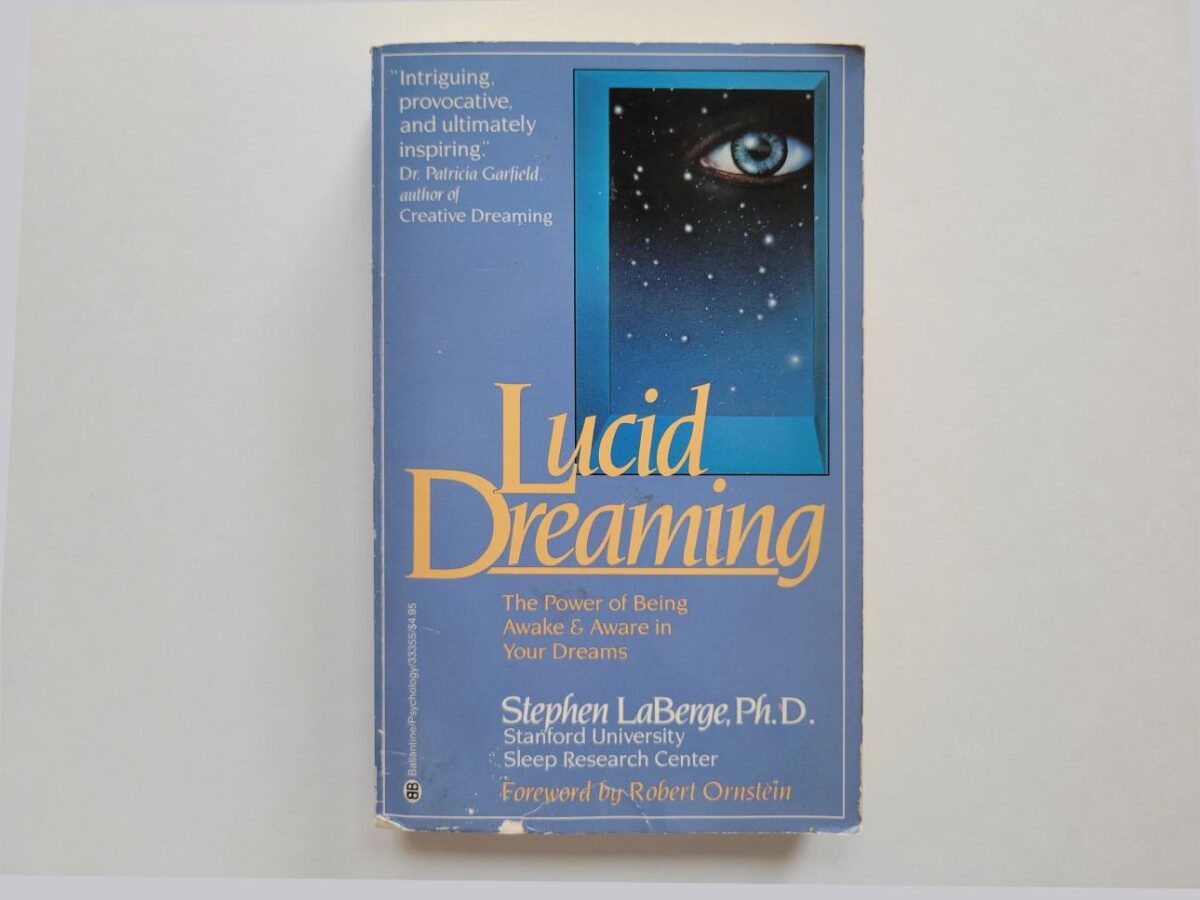
Lucid Dreaming Book by Stephen LaBerge

Lucid Dreaming Mask — Practice Effectively Lucid Dreaming App — Dream Journal, Dream Tracker & Lucid Dreaming Community The mystery of lucid dreams is hidden deep within human consciousness. Questions about their origin have been pondered by hundreds of people, including distinguished scientists. Therefore, it would be a mistake to assume that this topic is […]

MORE

Stephen LaBerge and Lucid Dreaming

Lucid Dreaming Mask — Practice Effectively Lucid Dreaming App — Dream Journal, Dream Tracker & Lucid Dreaming Community Dreams are an area that captivates many people. Even if only unintentionally, every second person has asked themselves, “What do my dreams mean?” Scientists are no exception to this. Lucid dreaming — a state during which a […]

MORE

The Art of Dreaming – Carlos Castaneda

Lucid Dreaming Mask — Practice Effectively Lucid Dreaming App — Dream Journal, Dream Tracker & Lucid Dreaming Community History provides many outstanding names, and Carlos Castaneda has firmly taken his place among them. His personality is full of mysteries, and his philosophy and worldview are multifaceted. The books he wrote, such as “The Art of […]

MORE

Robert Monroe: “Journeys Out of the Body” and Lucid Dreaming

Lucid Dreaming Mask — Practice Effectively Lucid Dreaming App — Dream Journal, Dream Tracker & Lucid Dreaming Community Robert Monroe was an engineer by profession who worked as a scriptwriter and director for radio stations. He later founded his own radio station, which, under his leadership, achieved tremendous success in a short time. Starting in […]

MORE

Lucid Dreaming Movies – Top 20 Most Popular Movies

Lucid Dreaming Mask — Practice Effectively Lucid Dreaming App — Dream Journal, Dream Tracker & Lucid Dreaming Community There are more films about lucid dreaming than you might think. Some fully explore the concept, while others just touch upon it. Experienced lucid dreamers have compiled a list of films that, although often classified as science […]

MORE

Transmitting Music from Lucid Dreams

This is how we transmitted a simple melody from lucid dreams about a year and a half ago. The paper has been published recently. Next year, anyone will be able to find brilliant melodies in lucid dreams and then record or even stream them online. Join the waiting list for the device Details about the […]

MORE

Two-way control of a virtual avatar from lucid dreams

Lucid Dreaming Mask — Practice Effectively Lucid Dreaming App — Dream Journal, Dream Tracker & Lucid Dreaming Community Researchers at REMspace have achieved the first two-way control of a virtual object from a lucid dream. The results of the experiment were approved for publication in the scientific journal International Journal of Dream Research.

MORE
Other news
😴 LucidMe — lucid dreaming mask