blog - Part 58
Categories
Techniques

Flight

Taking flight in lucid dreaming is a simple matter of remembering past dreams of flight. Nothing needs to be tensed, no word needs to be said. Attempting flight with closed eyes produces a high rate of success, but presents an increased probability of inadvertent translocation.

If a flight attempt is unsuccessful, a practitioner may try jumping from a high elevation or from a window. The natural instinct of dream flight takes over and the fall becomes a controlled flight. However, jumping from windows or other elevations is advisable only to practitioners with experience, since novices may not always be able to determine whether they are in lucid dreaming or in reality.

In case of difficulties with take-off, you can also try to jump up and stay airborne for as long as you can. It’s better to do it in incremental bounds, as that keeps you more active – which is safer in terms of maintaining lucid dreaming.

When flying in a deep lucid dreaming, another problem besides taking-off may arise: maintaining lucid dreaming state. In order to avoid a return to the body or sleep, flying has to be as energetic and sensation-infused as possible. To that end you can also keep up vibrations, as well as periodically rub together and scrutinize your hands. In certain conditions, flying in lucid dreaming can not only keep the state stable, but also even deepen it. This happens during aggressive flight with sharp turns and constantly flying close-by various objects in order to visually inspect them.

The most important thing is to try not to fly in a relaxed, laid-back manner or take in the scenery, as this will quickly lead to the end of lucid dreaming.

Categories
Techniques

Techniques Involving Hearing

Technique of listening-in

lucid dreamingr listens inside his head, trying to hear if there is any noise or background static. If sound is heard, one must try to amplify it as much as possible through the same passive listening in.

Technique of forced listening-in

lucid dreamingr tries actively, and even strainingly, to hear sounds inside his head or background static with all his might. If this works, he tries to amplify those sounds as much as possible using the same active listening in.

Technique of imagining sounds

lucid dreamingr tries to hear some specific sound inside his head. Someone’s voice, familiar music, and the sound of one’s own name being called work best of all. If such sound arises, then the practitioner tries to make it as loud as possible.

Categories
Techniques

Aggressive Action

This technique may be used as an alternative to any other deepening technique since it can be used at any moment. Practicing this technique only requires aggressive action of the perceived body. A practitioner may run, roll on the floor, perform gymnastics, or move the arms and legs. Maximum activity and aggression are paramount to the successful use of this technique.

If the practitioner is stuck in a dark space, waving the arms and legs from side to side is appropriate. If the practitioner is in water, swimming with determined, powerful strokes would be suitable recourse. The type of action very much depends on the specific situation along with an aggressive desire on the part of the practitioner.

As a rule, the effect of such movements and relocations comes quite quickly, especially if attention is focused on all the accompanying sensations.

Categories
Techniques

Hyper-Concentration

Since the cessation of lucid dreaming experience may be simulated and no different in terms of perception from a real exit, differences between the physical world and lucid dreaming world must be actively discerned. In other words, a practitioner must know how to determine whether a genuine lucid dreaming exit has occurred.

At present, only one experiment is known almost to guarantee an accurate result. lucid dreaming space cannot withstand prolonged close visual attention to the minute details of objects. Within several seconds of acute examination, shapes begin to distort, objects change color, produce smoke, melt, or morph in other ways.

After exiting lucid dreaming, look at a small object from a distance of four to six inches, and remain focused on it for 10 seconds. If the object does not change, a practitioner can be assured that the surroundings are reality. If an object is somehow distorted or askew, a practitioner knows that lucid dreaming is intact. The simplest option is to look at the tip of the finger since it is always close at hand. It is also possible to take a book and examine its text. Text in lucid dreaming will either blur or appear as alphabetical gibberish, or be full of incomprehensible symbols.

Categories
Techniques

THE BEST TIME TO PRACTICE 2

The issue of time is not important with indirect techniques since the major prerequisite is that they are performed immediately after awakening occurs. In the case of direct techniques, the issue of timing is much more critical.

Naturally, the best method for finding the right time to perform direct techniques is the same as indirect techniques – the deferred method. However, there are some serious differences here. First of all, one may interrupt one’s sleep at practically anytime of the night or early morning. Second, after having woken up (5-15 min.), one should not fall back asleep, but should immediately proceed to the techniques.

Direct techniques are many times more effective with the deferred method than at any other time. This is due to the fact that with the deferred method, the mind does not have time to become 100% alert, and it is easy to fall into the altered state of consciousness that will allow results.

When it comes to specific steps, one should awaken in the middle of the night either on one’s own or with the help of an alarm clock. Then, one should get up and do something for 3 to 10 minutes, and then lie down again in bed and perform the techniques. If it is probable that the practitioner will wake up in too alert a state, and thus not even be sleepy, then the interval between awakening and performing the direct technique should be shortened, and fewer things should be done during that period of time. It should be noted that with this setup, a free-floating state of mind plays a far lesser role that with other procedures.

The second most effective window of time is before falling asleep at night, when the practitioner goes to bed. During this period of time, the brain needs to shut down the body and mind in order to renew its strength, which has been expended over the course of the day. This natural process can be taken advantage of by introducing certain adjustments to it.

Attempts at performing direct techniques during the day are less effective. However, if fatigue has already had a chance to build up by this time, this can be taken advantage of because the body will try to fall into sleep. This is especially suited for those who are accustomed to napping during the day.

Generally, other windows of time produce a substantially worse result, which is why one should start with performing direct techniques in the middle of the night, or before a night’s sleep. Only after such techniques have been mastered will it be possible to experiment with daytime attempts.

Our posts


Staying Awake in Dreams?

ES | PT | FR | DR | IT | ND | CN | JP | KR | RU | UA | PL | BL | CZ | TH | VN | TR | AR | PR | RM | HU | IL | AM | GR Lucid Dreaming and REM sleep technologies Love lucid dreaming, REM sleep, and sleep paralysis? Here, we share cool tech and methods with you Our new mask Lucid Dream Tonight? A perfect […]

MORE

REMspace Forecast for 2026: Top 10 Dream Abilities We May Gain This Year

At REMspace, we believe that 2026 will mark a turning point for sleep technologies. According to our CEO, Michael Raduga, a new era is emerging – one that opens an entirely new experiential space within sleep

MORE

LucidMe Mask Reviews | Real Lucid Dreaming Experiences

People using the LucidMe mask say it really helps them notice when they’re dreaming. Many describe clear signals, sudden moments of lucidity, and vivid dream experiences — flying, meeting people, exploring strange places. Not every attempt works, and sometimes lucidity fades fast, but users feel the mask pushes them closer to stable lucid dreams. It’s […]

MORE

The Indirect Method: Step-by-Step Instructions

Lucid Dreaming Mask — Practice Effectively Lucid Dreaming App — Dream Journal, Dream Tracker & Lucid Dreaming Community So, you have decided to experience out-of-body sensations and want to achieve this as quickly as possible. To that end, here we present a brief description of the easiest method – cycles of indirect techniques. This is […]

MORE

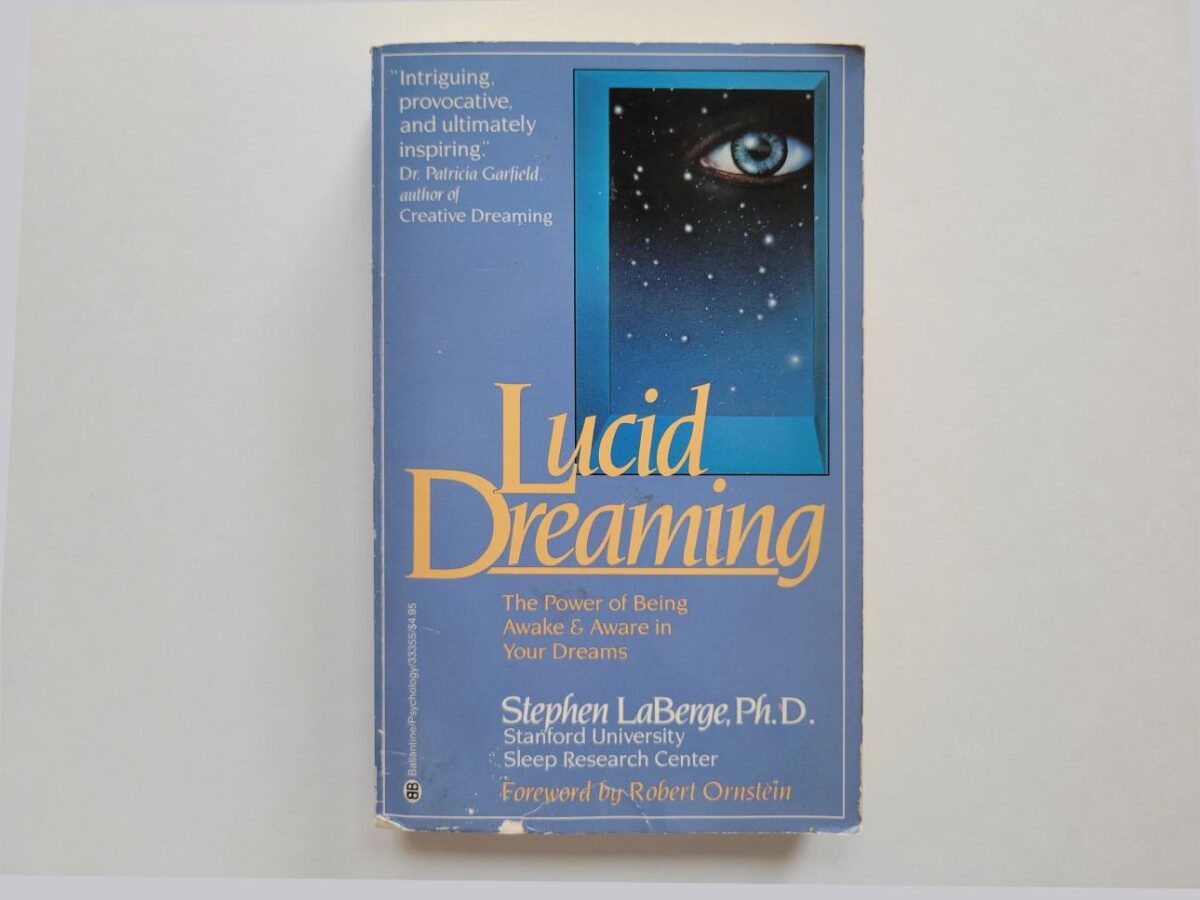
Lucid Dreaming Book by Stephen LaBerge

Lucid Dreaming Mask — Practice Effectively Lucid Dreaming App — Dream Journal, Dream Tracker & Lucid Dreaming Community The mystery of lucid dreams is hidden deep within human consciousness. Questions about their origin have been pondered by hundreds of people, including distinguished scientists. Therefore, it would be a mistake to assume that this topic is […]

MORE

Stephen LaBerge and Lucid Dreaming

Lucid Dreaming Mask — Practice Effectively Lucid Dreaming App — Dream Journal, Dream Tracker & Lucid Dreaming Community Dreams are an area that captivates many people. Even if only unintentionally, every second person has asked themselves, “What do my dreams mean?” Scientists are no exception to this. Lucid dreaming — a state during which a […]

MORE

The Art of Dreaming – Carlos Castaneda

Lucid Dreaming Mask — Practice Effectively Lucid Dreaming App — Dream Journal, Dream Tracker & Lucid Dreaming Community History provides many outstanding names, and Carlos Castaneda has firmly taken his place among them. His personality is full of mysteries, and his philosophy and worldview are multifaceted. The books he wrote, such as “The Art of […]

MORE

Robert Monroe: “Journeys Out of the Body” and Lucid Dreaming

Lucid Dreaming Mask — Practice Effectively Lucid Dreaming App — Dream Journal, Dream Tracker & Lucid Dreaming Community Robert Monroe was an engineer by profession who worked as a scriptwriter and director for radio stations. He later founded his own radio station, which, under his leadership, achieved tremendous success in a short time. Starting in […]

MORE

Lucid Dreaming Movies – Top 20 Most Popular Movies

Lucid Dreaming Mask — Practice Effectively Lucid Dreaming App — Dream Journal, Dream Tracker & Lucid Dreaming Community There are more films about lucid dreaming than you might think. Some fully explore the concept, while others just touch upon it. Experienced lucid dreamers have compiled a list of films that, although often classified as science […]

MORE

Transmitting Music from Lucid Dreams

This is how we transmitted a simple melody from lucid dreams about a year and a half ago. The paper has been published recently. Next year, anyone will be able to find brilliant melodies in lucid dreams and then record or even stream them online. Join the waiting list for the device Details about the […]

MORE

Two-way control of a virtual avatar from lucid dreams

Lucid Dreaming Mask — Practice Effectively Lucid Dreaming App — Dream Journal, Dream Tracker & Lucid Dreaming Community Researchers at REMspace have achieved the first two-way control of a virtual object from a lucid dream. The results of the experiment were approved for publication in the scientific journal International Journal of Dream Research.

MORE
Other news
😴 LucidMe — lucid dreaming mask