As noted above, 50% of success with indirect techniques is immediate due to the fact that the first seconds after waking up are the most useful for entering lucid dreaming. The less time that has elapsed after awakening, the better. Conversely, if one lies down expecting something to happen, chances quickly dissipate.
Thus, upon awakening, preferably without first moving, a practitioner should immediately try various separation techniques, like rolling out, getting up, or levitation. If a technique has suddenly started to yield results for approximately for 3-5 seconds, then separation from the body should be attempted up to full separation. Sometimes inertia, difficulty, or a barrier will arise during a separation attempt. No attention should be given to these problems. Instead, resolve to separate – decidedly and aggressively climb out of the body.
Keep in mind that trying to immediately separate upon awakening is a skill of the utmost importance; one that is worth honing from the very beginning, never forgotten.
Interesting Fact!
For some practitioners having trouble reaching lucid dreaming, one motivation for separating without using any techniques is an unwillingness to “bang their heads against techniques” any further. This forces them to catch the right moment of awakening much earlier on and push themselves much harder during it. The result is that they are practically always able to achieve lucid dreaming upon that first step.
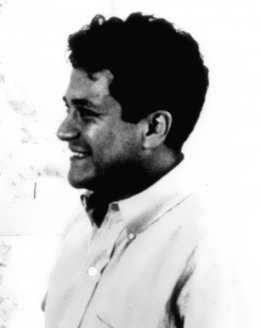 ue to Carlos Castaneda’s desire to follow the spiritual practice of the Warrior’s Path, which entails erasing one’s personal history, the details of his biography are unclear. As far as Castaneda’s early years are concerned, it can only be stated that he was born outside of the United States sometime between 1925 and 1935. He enrolled at the University of California, Los Angeles (UCLA) in the 1960s, where he received a Ph.D. in anthropology on the basis of his books.