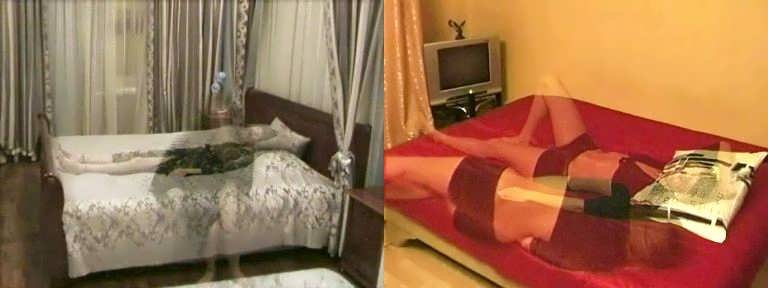
In the section on deepening and maintaining, it was noted that the more active a practitioner is while in lucid dreaming, the better. Conversely, if there is less activity, the quality of lucid dreaming declines, allowing for an easy exit. Thus, in order to leave lucid dreaming, the practitioner only needs to completely relax and ignore any perceived sensations, actions, or thoughts. A practitioner may also recite a prayer, mantra, or rhyme, since that helps the consciousness to be distracted from the situation more quickly. Of course, one needs to calm down and try to get rid of the fear, which in and of itself is capable of keeping such a state going. Periodically, the practitioner should try to move a finger in order to check whether attempts at relaxation have had an effect.
Let us begin with a totally shocking fact: during 50%(!) of successful indirect entries into lucid dreaming, it is not necessary to perform any specific lucid dreaming entry techniques, as separation techniques are immediately successful… This has been statistically proven at School of Out-of-Body Travel seminars and in the analyses of other sources. Conversely, an incorrect understanding of separation techniques may lead to undesirable consequences. It is possible for a practitioner to enter lucid dreaming state and be unable to separate from the body. Therefore, it is very important to understand how separation techniques work since they are often a key to success.
Interesting Fact!
Relatively often, a practitioner will try to employ separation techniques to no effect. However, he will later unexpectedly understand that he had been lying in a different position than he sensed that he was in, and in fact, it had only been necessary for him to stand up. This happens mostly among beginners and is indicative of an incorrect understanding of separation techniques.
At times a practitioner need only think about separation, and it happens. This is a rarity, which explains the existence of a whole series of auxiliary techniques. The most important separation techniques are rolling out, getting up, climbing out, and levitation.
Rolling out
While awakening, attempt to roll over to the edge of the bed or the wall without using any muscles. Don’t worry about falling out of bed, hitting the wall, or be concerned with the details of how this technique should feel. Just roll.
Getting up
Upon awakening, attempt to get out of bed without physical exertion. This should be performed in a way that is most comfortable for the practitioner.
Climbing out
While awakening, try to climb out of the body without using any muscles. This technique generally comes to mind when a partial separation has been achieved through the use of other techniques, or one part of the body has completely separated.
Levitation
Upon awakening, attempt to levitate upward, parallel to the bed. While attempting to levitate, do not wonder how it should be accomplished; everyone intuitively knows how to levitate from their experiences in dreams.
Falling out
Practically the same as levitation: upon awakening, try to sink down through the bed.
Pulling out
Here, upon awakening, try to exit the body through the head, as if escaping from a lidded cocoon.
Backwards roll
After awakening, try to perform a backwards somersault over the head without using any physical muscles.
Bulge the eyes
Upon awakening, bulge out or widen the eyes without opening them. Frontal movement toward separation may result.
Imagining Yourself Already Separated
You can imagine yourself already separated and inside your room, trying to feel your separated body as intensely as possible. Your sensations will gradually flow into your subtle body from your physical one, and become just as realistic.
Translocation
You can try to employ the translocation technique without first separating, which will lead to both translocation and separation occurring at once. Teleportation with eyes closed works best for this.
Flight
You can try to feel yourself flying at high speed.
Separation techniques are united by a singular idea: nothing should be imagined, movement should be attempted without the use of physical muscles. The techniques produce the same sensations of movement felt in real life. If nothing happens immediately after trying, then the technique is not going to work, though it may deliver results at a later time. A practitioner will instantly be able to recognize if the technique has worked. However, people are often unprepared for the realness of the sensations and think that they are making a physical movement instead of realizing that a part or all of the body has separated. After this unfortunate failure, careful analysis helps to understand what happened and plan for a successful retry.
If separation was incomplete or took place with some difficulty, this is a signal that the technique is being performed correctly, but that strength and aggressive effort are required from this point to achieve complete separation. For example, if some movement began and then stopped after having made some progress, then one should go back and move even harder once again in the same direction.
In order to practice separation techniques, lie down with the eyes closed and attempt all of them over the course of several minutes. A separation attempt has likely been accomplished if no muscles twitch or strain and a sensation of movement occurs. There will be a strong, almost physically palpable internal effort to perform a movement. Naturally, no physical movement actually occurs and the practitioner remains prone and immobile; however, at the right moment, these actions will lead to an easy entrance into lucid dreaming.
Interesting Fact!
Approximately 1% to 3% of the time that lucid dreaming is practiced, one realizes immediately upon awakening that one has already separated. This means that one may already go somewhere and stand, lie down, sit down, etc. This is not however becoming conscious in a dream, but an actual awakening.
It is also worth discussing how to conduct yourself upon separation if one of lucid dreaming creation techniques starts working. In such a situation, it’s important to realize that separation should be done with the same body and same sensations that were obtained when performing the technique. For example, when rotating, you need to stand up using the same sensations of rotating, and when observing images you need to separate using the same body that sees the images, etc.
Additionally, it’s important not to completely return back to the body if your lucid dreaming creation technique involves the sensation of partial separation from the body. For example – if rotation worked, then before trying to separate, there is no need to fully turn back into the body and merge with it. Separation would immediately become much more difficult. It’s better to do it on the fly after halting rotation in a position perpendicular to your physical body. The same temptation can arise during phantom wiggling, when separation should begin from the arm that began to move – i.e. do not move it back into the physical body. The same goes for all of the partial separation techniques.
If a novice has learned through practice what phantom wiggling is and how it feels, then he may proceed to separation like he would to phantom wiggling, but this time moving his entire body. That is, this is an attempt to move with the perceived (i.e. subtle) body; not a muscle is to be moved in the physical one.
The most important thing is to immediately realize that logically speaking, if indirect techniques have worked or awakening has just occurred, then the practitioner is already in lucid dreaming. All of his sensations are no longer coming from his physical body, although it may seem that they do. All that remains is to stand up, roll out, and levitate, as if doing so with the physical body.
Novices and the inexperienced often try to discover some tell-tale sign of separation, and expect to encounter it in practice. Actually, there are a whole variety of sensations that occur during this process. Those who do not know this often waste a large number of experiences when they encounter unexpected situations. That’s why it’s good to always be prepared for any eventuality and know the primary separation scenarios observed in 99% of all cases.
Types of lucid dreaming Entrances (Separations) Listed by Sensation:
– Ordinary movement
Here, separation usually seems like a completely ordinary movement, as if it were made with the physical body. The practitioner simply stands up, rolls out, or levitates as if he were doing so in reality.
– Separation
Actual direct separation of the subtle body from the physical one, as if the practitioner were actually exiting something. Despite the fact that this sensation gave its name to the entire process of entering lucid dreaming (“separation”), direct separation occurs quite rarely and the term is inaccurate in terms of sensation.
– Pulling
A feeling of a mass of gummy rubber stretching from every part of your subtle body and pulling it back into your physical one. Forcefully overcome that feeling of being pulled in, and it will dissipate.
– Sluggishness
The subtle body becomes quite heavy, as if it weighed several times more. The sluggishness will dissipate in proportion to the counteracting force applied.
– Awakening to Separation
The practitioner awakens or surfaces from a lapse in consciousness in an already separated state, and does not need to separate or use a lucid dream creation technique. Simply get up and go forth.
– Stuck Body Parts
Some parts of the subtle body can become stuck in a physical stencil during the process of separation. For example, this often occurs with the legs, trunk, head, and pelvis. In such situations you need to fully break free with all your might by changing the direction of your exertion.
– Being in Two Bodies at Once
A feeling arises of not really being in lucid dreaming and not really lying in bed, but of truly being in lucid dreaming and also truly lying in bed at the same time. You need to try to press on through with the situation, transferring all of your sensations into your lucid dreaming body, which will become the only one perceived.
– Spontaneous Full Separation (When Performing Techniques)
When performing any technique, you may spontaneously find yourself having already fully separated into your room or into any other place in lucid dreaming. There’s no need to return back into your physical body in order to “properly” separate.
– Being Pulled Out by Someone or Something
In this case, separation occurs not fully by one’s own will, but due to help from a lucid dream object. For example, someone starts pulling at your legs or lifting up your entire body. The important thing in this situation is not to relax, but to start moving on your own as soon as possible. Such a situation often occurs with so-called “"alien abductions”, which are actually spontaneous and unrecognized lucid dreaming experiences the majority of the time.
– Suction
When performing techniques like observing images or visualization, practitioners are often completely sucked in to the imagery being observed, with all the accompanying sensations. This imagery then becomes a full-fledged lucid dreaming space of its own. There’s no need to return back into your physical body in order to “properly” separate.
– Putting Your All into a Technique
When performing sensory-motor visualization and several other techniques, a convergence between separation and the technique itself occurs. This leads to there no longer being a need for separation in the traditional sense. For example, during sensory-motor visualization, the practitioner initially begins by actively imagining that he is walking about a room, but that imagined perception gradually morphs into the real sensation of actually being in the room. Meanwhile, when phantom wiggling it only remains to stand up from the body in which wiggling is felt, and so on. There’s no need to return back to the physical body in order to separate “properly”.
– Dream Consciousness
Becoming fully consciousness while dreaming with full cognizance of what is occurring is also a separate lucid dreaming entrance method, but one that does not involve direct or indirect techniques. There’s no need to return back to the body in order to separate “properly”, although many do so in order to obtain more vivid sensations.
If indicators of a foul appear, the practitioner should start rotating around the head-to-feet axis. Unlike lucid dreaming entry technique of the same name, the movement does not have to be imagined. This is an absolutely real rotation in lucid dreaming. After several revolutions, depth will be restored and actions may be continued. If indicators of a foul persist, rotation should continue until proper depth is achieved.
Actions. Whenever it is necessary to solve problems related to psychological or psychosomatic illnesses, using lucid dreaming for psychological impact is the most effective, clear, and proven way to influence the organism. It’s not for nothing that science has documented its effectiveness in studies on lucid dreaming.
The operational principles of this technique are simple:
-The physical body adapts to events experienced in lucid dreaming;
-Re-experiencing negative events of the past erases the impression made by them at the physiological level;
It would serve well to start by noting that practicing lucid dreaming, even outside the context of self-healing, in and of itself has a powerful, positive, and favorable effect that will manifest itself in any individual pursuing it. The point is that once someone has experienced lucid dreaming and realized the true expanse and endlessness of the world’s horizons, he or she begins to relate to real life in a different way. He becomes more open, has fewer issues with himself and the world, and more sociable. Moreover, practical mastery of lucid dreaming builds inner centeredness – though it’s real work. Practicing lucid dreaming cannot but have a beneficial effect on the individual, as it is a real form of self-actualization in and of itself. It is both authentic and lasting self-actualization – unlike other practices that verge on delusion and conjecture.
Therapeutic indications. The following types of problems may be acted upon with the help of psychological impact in lucid dreaming: mental illnesses and other problems (including phobias, fears, complexes, indecision, depression, social anxiety, and much more). This technique for self-healing in lucid dreaming is ill suited for conditions that are not of a psychological nature. The exceptions to that rule are illnesses caused by factors of a psychosomatic nature (according to some reports, up to 50% of all diseases fall into this category, but such distinctions are difficult to categorize on a case-by-case basis).
Example. A person is afraid to travel by airplane (aerophobia). To solve this problem, the person should enter a deep lucid dreaming, and, by employing the technique of translocation, find himself in an airplane going through rough turbulence. Despite the fact that all this is not really happening in the physical world, the fear experienced will be 80 to 120 percent that of a similar real-life situation, as the realism of lucid dreaming state is extremely elevated. There is practically no difference between sensations experienced in lucid dreaming and those of real life. However, there is no actual threat to life and limb in lucid dreaming – the practitioner understands this subconsciously, and tries to stay in the airplane as long as possible, getting used to its swaying, shaking, and sudden dips. Only a couple of such riveting simulations are usually enough to at least take any phobia out of the forefront of one’s mind and stop it from causing further distress, if not indeed banish it.
The next example to be considered is a scenario where a person had a very stressful experience while still a child: the death of a favorite puppy. In such cases, an age-old method works quite well – communicating with the geist of the departed (this also works with human beings). This is quite a sure method, especially considering that there is nothing difficult about it from a technical point of view. One need only enter a deep lucid dreaming and apply the technique for finding objects. The exact same puppy remembered from childhood will appear. It will also lick one’s face, play, bark, and look at its owner with loyal eyes, wagging its little tail all the while. The practitioner will be able to once again pick it up, pet it, touch its fur, and feel its weight and warmth. The puppy will be just the same as if encountered in real life. Even when it playfully nips at the hand, the owner will feel it. The first such meeting will naturally cause some sadness and tears, but from then on, once one realizes that one can continue to meet with this pet in lucid dreaming, sadness will quickly recede to the background (as will all psychosomatic complications caused by the death of the beloved animal). The practitioner will begin to feel that the puppy is really alive. After all, perception arises from sensory input, and not deductive reasoning.
Effectiveness. The instruments for psychological impact in lucid dreaming are quite effective. As psychology is being discussed, it is difficult to compare the effectiveness of this technique with other methods of treatment. Nonetheless, even for beginners the rate of success reaches 100% during the very first applications. That’s something that really stands out.
Difficulties. As it is the psyche and the mind that are being impacted by these techniques for self-healing, a certain amount of internal effort is necessary to achieve results. For example, if a person is trying to overcome claustrophobia, then real fear will arise when he finds himself in enclosed spaces while in lucid dreaming. He will still have to confront his phobia on his own. lucid dreaming here only provides a springboard for working on oneself. It should never be assumed that the incredible effectiveness of this method comes out of thin air, without effort on the part of the practitioner.
Accessibility. Self-healing in lucid dreaming using the technique of psychological impact is readily accessible to beginners, starting from their first lucid dreaming entrances. This is because it does not require any special skills except the ability to translocate, and so this course can be taken right from the outset.
I took a nap from 10:40 am to 11:20 am. I tried to fall asleep so I could practice upon awakening. I was having difficulties in falling asleep so I thought nothing was going to happen. After awhile I must have fallen asleep as I noticed a floating type of sensation. I then decided to separate however I felt like nothing was happening. Then I noticed I was looking down at some drinking glasses that are on the top shelf. I realized I was out of the body.
Things were not very clear so I tried to start looking at objects and feeling them. I told myself to go see aliens. The next scene I was near a mountain in a clearing with trees around it. There was a space ship. There were two aliens with helmets on. They also had a type of robot with them. It was about 7 ft tall and was silver in color. The aliens did not appear to be friendly. When the alarm went off I felt like I was 100 miles away and it was difficult to come back to the physical body.
ES | PT | FR | DR | IT | ND | CN | JP | KR | RU | UA | PL | BL | CZ | TH | VN | TR | AR | PR | RM | HU | IL | AM | GR Lucid Dreaming and REM sleep technologies Love lucid dreaming, REM sleep, and sleep paralysis? Here, we share cool tech and methods with you Our new mask Lucid Dream Tonight? A perfect […]
At REMspace, we believe that 2026 will mark a turning point for sleep technologies. According to our CEO, Michael Raduga, a new era is emerging – one that opens an entirely new experiential space within sleep
People using the LucidMe mask say it really helps them notice when they’re dreaming. Many describe clear signals, sudden moments of lucidity, and vivid dream experiences — flying, meeting people, exploring strange places. Not every attempt works, and sometimes lucidity fades fast, but users feel the mask pushes them closer to stable lucid dreams. It’s […]
Lucid Dreaming Mask — Practice Effectively Lucid Dreaming App — Dream Journal, Dream Tracker & Lucid Dreaming Community So, you have decided to experience out-of-body sensations and want to achieve this as quickly as possible. To that end, here we present a brief description of the easiest method – cycles of indirect techniques. This is […]
Lucid Dreaming Mask — Practice Effectively Lucid Dreaming App — Dream Journal, Dream Tracker & Lucid Dreaming Community The mystery of lucid dreams is hidden deep within human consciousness. Questions about their origin have been pondered by hundreds of people, including distinguished scientists. Therefore, it would be a mistake to assume that this topic is […]
Lucid Dreaming Mask — Practice Effectively Lucid Dreaming App — Dream Journal, Dream Tracker & Lucid Dreaming Community Dreams are an area that captivates many people. Even if only unintentionally, every second person has asked themselves, “What do my dreams mean?” Scientists are no exception to this. Lucid dreaming — a state during which a […]
Lucid Dreaming Mask — Practice Effectively Lucid Dreaming App — Dream Journal, Dream Tracker & Lucid Dreaming Community History provides many outstanding names, and Carlos Castaneda has firmly taken his place among them. His personality is full of mysteries, and his philosophy and worldview are multifaceted. The books he wrote, such as “The Art of […]
Lucid Dreaming Mask — Practice Effectively Lucid Dreaming App — Dream Journal, Dream Tracker & Lucid Dreaming Community Robert Monroe was an engineer by profession who worked as a scriptwriter and director for radio stations. He later founded his own radio station, which, under his leadership, achieved tremendous success in a short time. Starting in […]
Lucid Dreaming Mask — Practice Effectively Lucid Dreaming App — Dream Journal, Dream Tracker & Lucid Dreaming Community There are more films about lucid dreaming than you might think. Some fully explore the concept, while others just touch upon it. Experienced lucid dreamers have compiled a list of films that, although often classified as science […]
This is how we transmitted a simple melody from lucid dreams about a year and a half ago. The paper has been published recently. Next year, anyone will be able to find brilliant melodies in lucid dreams and then record or even stream them online. Join the waiting list for the device Details about the […]