Дата публикации:
Lucid Dreaming Mask – Improve the Quality of Your Practices
Lucid Dreaming App – Dream Diary, Social Network and Monitoring of Your Dreams
Some people search for prophetic dreams in their nightly visions, while others are certain that every dream they have is prophetic. Judging by the popularity of dream books, the latter significantly outnumber the former. Humanity has always delighted in any opportunity for lucid dream interpretation because it provides a glimpse into the future — though not necessarily a real one. Nevertheless, the possibility is intriguing to almost everyone.
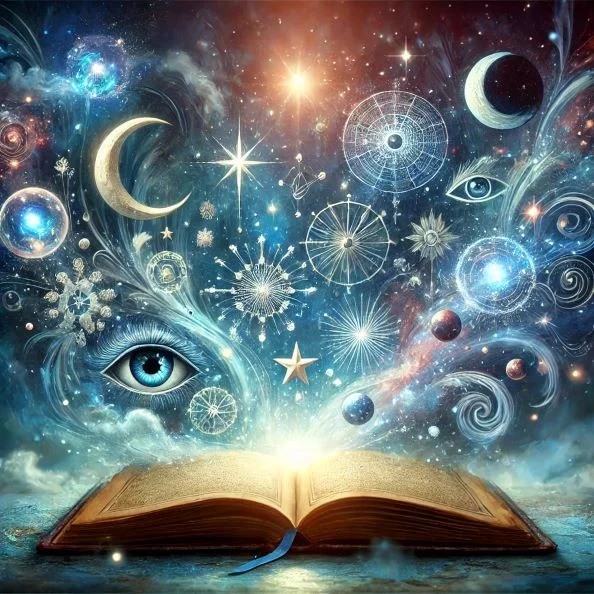
In principle, when considering typical theories about the high informational content of dream narratives, it’s impossible to rule out the possibility that almost every dream could carry at least a partial prophetic character. Undoubtedly, this is a point in favor of dream interpretation books. However, there are also many significant arguments against them.
For example, how appropriate is it to evaluate the future or present based solely on dream interpretation? In 95% of cases, a dream shows us only a reflection of our thoughts. In a way, a dream processes everything we’ve experienced during the day. During REM sleep, which is when dreams occur, our partial and severely distorted consciousness undergoes a unique transformation. An entirely malleable sphere arises before our senses that is capable of taking on any real external appearance with millions of details. On what principle are these details formed? They are usually based on our wandering thoughts and, less frequently (5% of the time), on principles of calculation or problem-solving. However, our mind in a dream is practically devoid of adequacy and long-term conscious memory, so we resemble madmen. Our daily experiences and inner emotions are directly reflected in the modeling of ongoing events because these experiences continue to act on the brain, though in a slightly different form that is often unrecognizable to us and contains highly unusual nuances.
But here’s a counterargument: how can we predict the future or understand the present when almost everything seen in a dream is merely a reflection of the past?
Which specific elements from dreams should be interpreted using dream books?
Recall any fleeting image from a dream. Look at it as if it’s a photograph, and try to count how many elements it includes. For example, if you were in a room, you might see sunlight from the window, birds singing, a table, a chair, a cup, a plate, an apple, a bed, a knife, a door, a pen, a notebook, a shelf, a wardrobe, a painting, a lamp, a curtain, shoes, a carpet, and clothing — and these are just the most general elements. Now try to interpret all this using a dream interpretation book… Is there a problem here? You bet!
Many say you need to choose the core, the most vivid and significant element. But what rules should be followed when doing this, and how can you determine this element precisely? For some reason, no one says anything about that. Moreover, if you remember all your dreams from the night, which last about an hour, there may be dozens of “main” details. With this in mind, it’s a wonder that people use dream books at all. It turns out that practicing dream interpretation from books is not such a simple task.
However, there are dream books based not on interpretations of individual motifs but on plots and events. This partly applies to the most popular dream interpretation book by Miller.
Dream Interpretation: Choosing Dream Books
Many people think there are many dream books. However, this is not quite true. In 90% of cases, humanity uses only a few, whose use is influenced by their structure and the names of their authors. For example, how can a lover of the unknown (and the majority of us are lovers of the unknown, at least to some degree) not trust a dream book based on the prophecies of Vanga or Nostradamus?
Let’s examine each of the five most popular dream interpretation books and assess their adequacy. These five books were written by the following authors: Gustavus Hindman Miller, Sigmund Freud, David Loff, Michel Nostradamus, and Vanga. Naturally, Vanga couldn’t write or even dictate a complete dream book herself — her book was created based on her prophecies.
The most well-known dream book is Miller’s dream interpretation book. In some cases and on specific points, his work makes much more sense than a simple “translation” of a seen object. This is not surprising given that Miller didn’t write this work from scratch. Instead, he used the works of the best authors who came before him (about 11 of them) and extracted their best ideas, refining them into the new principles he obtained.
People have been using this work since it was first published in the mid-19th century, and it is still popular today. It’s believed that this dream book’s advice was followed in the practices conducted by our great-grandparents. The full version of Miller’s dream interpretation book contains a fantastic number of words and interpretations (about 10,000 of them). No other authors have presented half as many interpretations in their books. An abridged version containing about 3,000 dream interpretations has also become widespread.
Undoubtedly, this is one of the most valuable dream books. Not a single word is considered an isolated element; it necessarily has plot variants, five to six of which are created for each designation. Thus, the same word can have opposing meanings, depending on the situation. However, this dream interpretation book has become outdated over its nearly two-century history. The fact is that a dream book based on stereotypes cannot avoid becoming obsolete due to changes in stereotypes and life. Luck, for example, is associated with completely different things today than when this book was written.
In terms of adequacy and novelty, the dream interpretation book by Sigmund Freud, the founder of psychoanalysis, is of great interest. As expected, the author approached dream interpretation exclusively from the standpoint of repressed desires that are expressed in the uncontrolled space of dreaming. These interpretations are psychological and often, if not always, hinge on sexual elements. Thus, this dream book is commonly called “erotic.”
It’s no surprise that Freud based all his reasoning on concepts like the Oedipus complex (the desire to exclusively possess the parent of the opposite sex), maternal and paternal complexes (the strong influences of the mother and father), and the fear of death. As such, his dream interpretation book takes on an intimate character, especially considering that the dreams of women, men, girls, and boys are often separated in the book.
It’s hard to surmise the accuracy of Freud’s claims. His early views on the surrounding world were formed under the influence of an extremely late loss of virginity, at 28 years old. Most likely, constant preoccupation made him think that all human thoughts are based on sex. Perhaps if he had known the delights of fully satisfying his sexual desires 10 years earlier, he would have noticed that people can be driven by aspirations other than sexual ones.
Freud’s dream interpretation book is unique in that it mainly provides specific examples of dreams rather than unambiguous interpretations of objects and short plots. Perhaps this nuance should significantly affect the truthfulness of dream interpretation meanings. However, the obvious one-sidedness (from the sexual point of view) of such interpretations repels me because they imply that there’s nothing in your head besides libido, but my dreams are often formed under the influence of entirely different aspirations, albeit not without sin, of course.
If Miller’s dream book has become outdated over a couple of centuries, then the situation is even worse for Michel Nostradamus’s work, which he created in the 16th century. Moreover, from a common-sense standpoint, this dream interpretation book lags significantly behind the others described so far since it is based on symbols that were obvious in a different time and to such a peculiar person as Nostradamus.
In general, there’s little point in discussing this author’s dream book. We all know about his prophecies, which are so strangely universal that people have adjusted them to themselves as needed across all eras. Even Hitler did this. Therefore, there’s great doubt about the seriousness of his works. There’s even doubt about his authorship. Many theories suggest that his dream interpretation book could have been written well after his death.
Describing Bulgarian prophetess Vanga’s dream book is very difficult. As already mentioned, she couldn’t have created it because she was blind, uneducated, and essentially considered a blessed one. That is, someone else wrote the book based on her words and prophecies, of which there are many thousands. However, at the moment, I have all the dream books of the described authors before me, and Vanga’s dream book bears a strange resemblance to other works (some passages are almost word-for-word duplicates). This makes it difficult to comment on this work. Most likely, the information was largely borrowed from other sources — often Nostradamus’s works — and doesn’t have an independent basis.
Finally, the work of contemporary author David Loff is the most complete, sensical, and relevant to our time. This author takes the best approach to dream interpretation. Though his book is based on the same stereotypes as others, it is the most modern and applicable to our world.
It is up to each person to decide which dream book is best for them, but one must always take into account that dream interpretations based on stereotypes have both temporal and geographical limits of effectiveness. No one would argue that a black aborigine in a loincloth from Africa has a completely different perception of things than a resident of Switzerland. Something in a dream that signifies death for the former might signify happiness for the latter. If there are such diametrically opposed meanings, then contradictions must exist on smaller scales as well. What is entirely relevant for Americans may not be relevant for residents of the Russian hinterland, especially the countryside. However, the information revolution is increasingly smoothing out such differences.
The Main Problem with Dream Books
One of the main problems with dream books is undoubtedly the differences in their interpretations of particular phenomena that may occur in a dream. If you compare dream books, the same meaning of a dream object has numerous formulations and interpretations, which raises questions. Moreover, it is very difficult to find any identical interpretations across books, meaning that some authors, if not all of them, are mistaken on some matters.
On the other hand, people often deceive themselves. Thus, people can use differences in dream interpretation among authors to find the most favorable meaning for themselves. I propose that you see for yourself how the interpretation of the same image can differ radically in various dream books:
Being on a cliff in a dream:
- Loff: There is greatness and danger in a person’s life, and they need to understand which is more prevalent and draw conclusions.
- Miller: Signifies failures; climbing cliffs means changing your unsatisfactory life.
- Freud: Since the cliff symbolizes the phallus, being on one indicates an increased interest in one’s sexual organs; for a woman climbing a cliff, it may reflect a desire to have a child, while in a man, it shows homosexual tendencies.
Your own death in a dream:
- Vanga: A happy and long life.
- Loff: One should understand how the person died and who was to blame; no specific explanation is given.
- Miller: Someone is plotting against you, and the dream warns of some danger.
Eating an apple in a dream:
- Vanga: Gaining wisdom and meeting an older, intelligent person who can teach you much.
- Miller: Mainly speaks about apples on trees; only eating rotten apples is a bad omen.
- Nostradamus: Meeting a beautiful woman or a woman coming to power in some country.
- Freud: The apple symbolizes the female breast, with all ensuing consequences; if you’re a man, you greatly love large breasts (who doesn’t?); if you’re a woman, you may have hidden homosexual tendencies.
Counting money in a dream:
- Vanga: You’re a very petty person and should reconsider your views on life and material values in particular.
- Loff: Money in a dream is always a harbinger of luck and prosperity.
- Miller: Counting and finding a shortage leads to misfortune; counting a large amount brings wealth.
- Freud: Money symbolizes sexual energy, so what happens with money reflects that energy.
Drawing water from a well in a dream:
- Miller: Experiencing troubles caused by the misuse of your unbridled strength.
- Nostradamus: A person will satisfy their curiosity.
- Freud: The well symbolizes female genitalia, so obtaining water from it indicates sexual intercourse.
Seeing fire or flames in a dream:
- Vanga: Burning fields and forests signify a global catastrophe or great disaster.
- Loff: Fear, anxiety about losing something; attachment to the burning object.
- Miller: Fighting flames predicts difficulties in accumulating necessary capital.
- Nostradamus: Extinguishing a fire indicates major political unrest; fire in a room suggests marital infidelity.
- Freud: Fire symbolizes male genitalia and power; what you do with the fire can be transferred to reality concerning the male organ.
Seeing an angel in a dream:
- Vanga: A good omen of happiness, luck, and peace.
- Loff: Receiving a message and fulfilling a wish.
- Miller: Impressions that will confuse and disturb the soul.
- Nostradamus: A sign of tranquility and peace; everyone will be happy.
- Freud: A symbol of death.
Eating food in a dream:
- Loff: You should analyze how others eat, what they do, and how.
- Miller: If you eat alone, it foretells losses; if in good company, everything will be fine.
- Freud: Food symbolizes sexual desires, so pay attention to how you eat.
Tying a knot in a dream:
- Vanga: A symbol of problems; if you tie the knot alone, you’re worsening the situation.
- Miller: You behave as an independent person striving to be self-reliant and not rely on others’ opinions.
Meeting your mother in a dream:
- Vanga: Always foretells the future and imminent changes in life.
- Loff: You need to carefully assess how you interacted and communicated with your mother.
- Miller: Encouraging results in any endeavor, unless she is crying.
- Freud: Presence of an Oedipus complex (and the interpretation of the mother is almost entirely of a sexual nature).
Conclusion: Of course, dream interpretation using dream books is quite possible if you use modern and competent authors. Don’t forget to make adequate assessments and exercise caution.
Are lucid dreams possible and how to get into them
FAQ
Recommended reading
Top 5 Best Books on Lucid Dreaming
Сarlos Сastaneda and Lucid Dreaming