
blog - Part 105
Categories
Techniques

Obtaining information 2

Actions. The essence of this technique is to obtain useful information in lucid dreaming that can be applied to self-healing. The information obtained may pertain not only to actions to be implemented in real life, but also to actions to be performed directly while in lucid dreaming. It’s possible to learn how to help another person, or learn what that other person needs to do to in order to overcome his illness. For example, if the practitioner has some illness or other health-problem, he can learn in lucid dreaming which medicines would have the best effect in the physical world, or which actions taken in lucid dreaming could help him to recover from his illness or affliction.

Therapeutic indications. The therapeutic indications are endless. As the technique concerns obtaining information and knowledge, it can be used for any self-healing case, no matter what its gravity or variety, and no matter whether the intent is to heal in reality or while in lucid dreaming.

Example. For example, a practitioner has hurt his leg while at work. There’s a bad painful bruise, and it’s taking a long time to heal. And so the question arises as to how to get the bruise to start healing faster and become less painful. The practitioner enters lucid dreaming and employs the technique for obtaining information through animate objects, and to that end summons a surgeon. He briefly describes the problem and asks for advice. The surgeon recommends that the practitioner first go for a short run in lucid dreaming in order to get rid of the pain or simply stop feeling it, and then, before returning to reality, smear some cooling-agent onto the bruise and inject a large dose of novocaine into it. lucid dreaming surgeon might also advise him to apply a compress using ingredients that he had never even thought of, or take a specific medicine. The result is that all of the above is implemented both in lucid dreaming and in reality, achieving a result commensurate with the quality of those actions.

Effectiveness. Effectiveness (in this context: the accuracy of knowledge obtained through lucid dreaming) is highly dependent on one’s level of mastery – that is, on the ability of the practitioner himself to obtain information from lucid dreaming. For a novice, no more than 20 to 40 percent of advice obtained may be accurate, but with experience that number may reach 70 or even 100 percent. Considering this, it is vital to use the techniques for verifying obtained information.

Difficulties. The main difficulty with this type of healing using lucid dreaming lies in the fact that the practitioner must posses an additional skill: the ability to obtain correct information from lucid dreaming and, by corollary, the ability to verify that information. It’s usually necessary to simply enter lucid dreaming, deepen it, and then perform the actions one planned to do, all the while maintaining lucid dreaming. But in this case, everything is much more difficult.

The very accuracy of knowledge obtained is highly dependent on how impartial the practitioner is to the information he is receiving, and how confident he is that he will be able to obtain accurate information. He should not make the source of information feel pressured to say what he wants to hear. By doing so, the practitioner would choke off the flow of accurate information. It’s hard for the average person to “turn-off” habits like this without serious training, as everyone is accustomed to contemplating something in the back of one’s mind, or having some desired outcome for a conversation.

Accessibility. Of course, obtaining information in lucid dreaming for the purpose of healing is one of the most difficult processes of all, and so the novice is better off shying away from it if he doesn’t have a pressing need to go through with the process. Unlike many other methods for healing through lucid dreaming, it is necessary here to master the separate and difficult technique of obtaining information.

Categories
Techniques

Vibrations

lucid dreaming is often accompanied by an unforgettably unusual sensation that may be used successfully to enter, deepen or maintain it. It is difficult to describe it better than the sensation of a heavy current passing through the entire body without causing any pain. It may also feel like the whole body is contracting, or a tingling sensation similar to numbness. Most often, the sensations are similar to high-frequency vibrations of the body, which explains the origin of the term “vibration”.

If the practitioner is not sure whether or not he experienced vibrations, then there is a good method to solve his problem: realize that if he really did, he will not have any doubts about it. In all other cases, when there are doubts and uncertainty, the practitioner is definitely not dealing with vibrations, or is dealing with another form thereof.

If you have experienced vibrations at least once, the recollection of these sensations helps greatly during the simultaneous application of indirect techniques. Vibrations are created, supported and strengthened by straining the brain or tensing the body without using the muscles. For vibrations to appear, it often suffices merely to think about them. During the first experience, one should experiment with them for a while by rolling them around the body and its parts, as well as strengthening and weakening them.

However, one should not think that the presence of vibrations is a necessary condition for being in lucid dreaming. Many novices often strive not for lucid dreaming but for vibrations, after which the former must supposedly follow. That should not be the case. There are indeed specific techniques that make it possible to get into lucid dreaming by creating vibrations, but in all other cases they are not necessary and some practitioners may never have them at all.

Categories
Techniques

CUEING TECHNOLOGIES

Of all non-autonomous assistance methods, cueing technologies yield the best results. The operating principle behind cueing technologies is quite simple: a device detects rapid eye movement (REM) and sends signals to a sleeping practitioner, prompting dream consciousness or an awakening that may be followed by indirect techniques. Cueing programs or devices may also send indicators over specific intervals of time; these are received during REM sleep and are meant to cause a sleeping practitioner to awaken and attempt indirect techniques.

More sophisticated REM-detecting technologies may be purchased at specialized stores or through online merchandisers. REM-detecting technologies work by virtue of special night mask equipped with a motion sensor that detects the frequency of specific eye movements that occur during REM sleep. When the eye movements reach REM quality, the device sends discreet signals to the practitioner through light, sound, vibrations, or a combination of these. In turn, the practitioner must discern the signal and react to it while sleeping with the goal of lucid dreaming entry through dream consciousness.

The effectiveness of REM-detecting devices is more plausible in theory than in practice. The mind quickly develops a tolerance for these types of external stimuli and stops reacting, and, as a result, such technologies are hardly used more than one or two nights per week. Secondly, a practitioner will detect only a small portion of the signals, and conscious reaction occurs in even fewer instances.

Cueing technologies are best used to send signals that allow a practitioner to awaken without moving during REM sleep, which facilitates a high probability of lucid dreaming entrance through indirect techniques.

Pricing of these “mind-machines” (the common moniker of any device that purports to produce altered consciousness) widely varies and is determined by quality of REM detection and signaling. Available models include: DreamStalker, DreamMaker (NovaDreamer), REM-Dreamer, Astral Catapult, among many others. Since the use of these devices does not guarantee increased success in practice, investing money in the technology is not recommended. If a practitioner is curious about cueing technologies, similar devices may be constructed at home using a special computer program and a run-of-the-mill optical mouse. Designs for a homegrown setup are easily located on the Internet.

Another do-it-yourself way of experimenting with cueing is through the use of a computer, a music player, or even the alarm clock function on a mobile phone. The practitioner saves short sounds or phrases, played as an alarm every 15 to 30 minutes while sleeping. These sounds will signal the practitioner to wake up and attempt indirect techniques.

If the practitioner decides to use cueing technology, several fundamental principles should be considered as results will be less likely if they are ignored. First, mind-machines should be used no more than twice a week. Otherwise, too high a tolerance will be built up, rendering the machines ineffective. Second, use cueing technology in combination with the deferred method, which was covered in the section on indirect techniques. It is better to sleep for six hours without distraction and then, after sleep has been interrupted, put on a sleep-mask or earpiece and continue sleeping. Sleep will be light for the remaining two to four hours as there will be more REM sleep, making it easier for the mind to detect cueing signals. Finally, master indirect techniques before making use of cueing technologies to attain dream consciousness and subsequent lucid dreaming entrance.

Categories
Techniques

Step 1: Sleep 6 Hours and Then Wake Up with an Alarm Clock

On a night before a free day when you won’t have to wake up early, go to bed at your usual time and set your alarm so that you’ll only sleep for about 6 hours. When the alarm goes off, you must get up to drink a glass of water, go to the bathroom, and read these instructions once again. Do not attempt any techniques before going to bed the night before, no matter what the case. You just need to lie down and get some sound sleep. The sounder you sleep over these 6 hours, the better your chances of getting results.

Categories
Techniques

Listening in 2

If there are any background sounds similar to those heard while entering lucid dreaming – rumbling, whistling, ringing, buzzing, or sizzling – these sounds may be used to prolong duration of lucid dreaming by aggressive attempts at listening in, hearing the entire range of internal sounds. The forced listening in technique may also be used for lucid dreaming maintenance.

Our posts


Staying Awake in Dreams?

ES | PT | FR | DR | IT | ND | CN | JP | KR | RU | UA | PL | BL | CZ | TH | VN | TR | AR | PR | RM | HU | IL | AM | GR Lucid Dreaming and REM sleep technologies Love lucid dreaming, REM sleep, and sleep paralysis? Here, we share cool tech and methods with you Our new mask Lucid Dream Tonight? A perfect […]

MORE

Protected: Email

There is no excerpt because this is a protected post.

MORE

REMspace Forecast for 2026: Top 10 Dream Abilities We May Gain This Year

At REMspace, we believe that 2026 will mark a turning point for sleep technologies. According to our CEO, Michael Raduga, a new era is emerging – one that opens an entirely new experiential space within sleep

MORE

LucidMe Mask Reviews | Real Lucid Dreaming Experiences

People using the LucidMe mask say it really helps them notice when they’re dreaming. Many describe clear signals, sudden moments of lucidity, and vivid dream experiences — flying, meeting people, exploring strange places. Not every attempt works, and sometimes lucidity fades fast, but users feel the mask pushes them closer to stable lucid dreams. It’s […]

MORE

The Indirect Method: Step-by-Step Instructions

Lucid Dreaming Mask — Practice Effectively Lucid Dreaming App — Dream Journal, Dream Tracker & Lucid Dreaming Community So, you have decided to experience out-of-body sensations and want to achieve this as quickly as possible. To that end, here we present a brief description of the easiest method – cycles of indirect techniques. This is […]

MORE

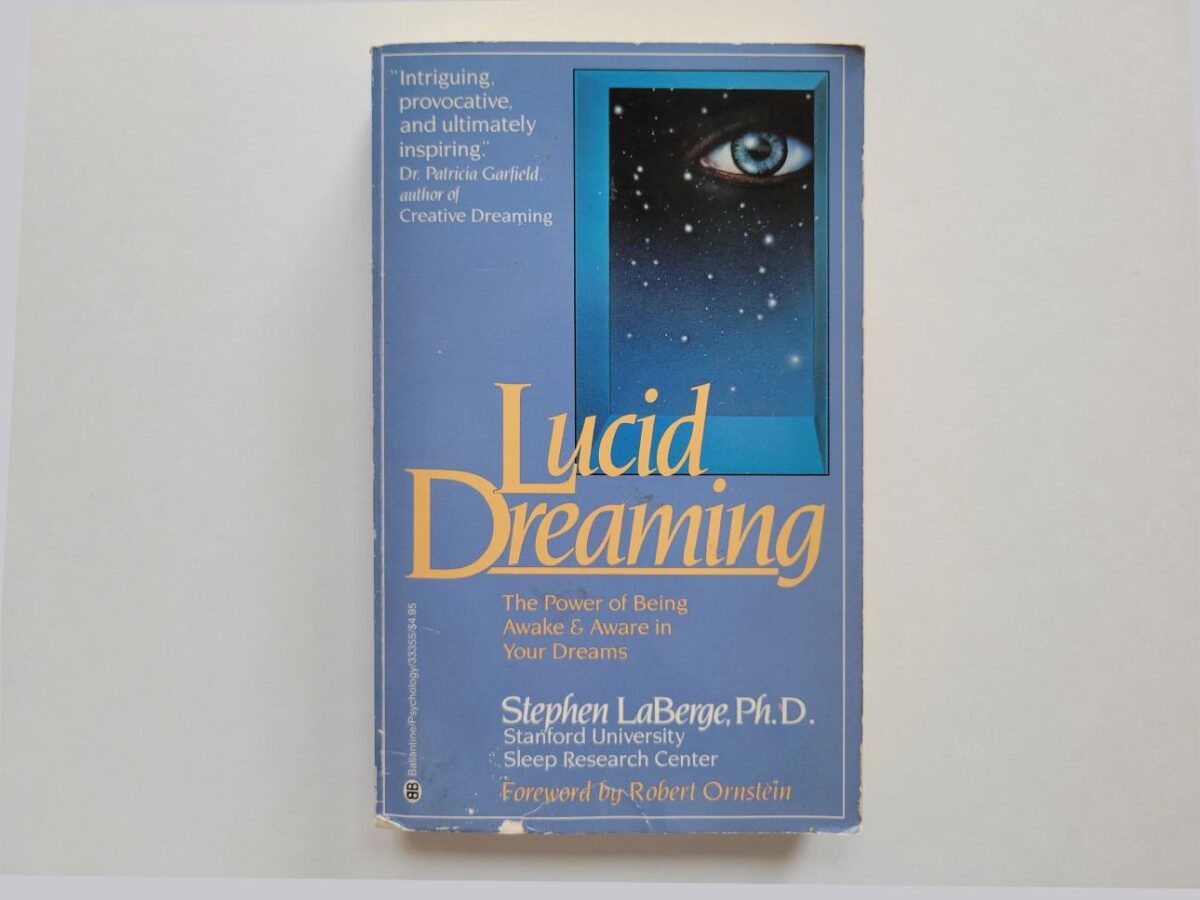
Lucid Dreaming Book by Stephen LaBerge

Lucid Dreaming Mask — Practice Effectively Lucid Dreaming App — Dream Journal, Dream Tracker & Lucid Dreaming Community The mystery of lucid dreams is hidden deep within human consciousness. Questions about their origin have been pondered by hundreds of people, including distinguished scientists. Therefore, it would be a mistake to assume that this topic is […]

MORE

Stephen LaBerge and Lucid Dreaming

Lucid Dreaming Mask — Practice Effectively Lucid Dreaming App — Dream Journal, Dream Tracker & Lucid Dreaming Community Dreams are an area that captivates many people. Even if only unintentionally, every second person has asked themselves, “What do my dreams mean?” Scientists are no exception to this. Lucid dreaming — a state during which a […]

MORE

The Art of Dreaming – Carlos Castaneda

Lucid Dreaming Mask — Practice Effectively Lucid Dreaming App — Dream Journal, Dream Tracker & Lucid Dreaming Community History provides many outstanding names, and Carlos Castaneda has firmly taken his place among them. His personality is full of mysteries, and his philosophy and worldview are multifaceted. The books he wrote, such as “The Art of […]

MORE

Robert Monroe: “Journeys Out of the Body” and Lucid Dreaming

Lucid Dreaming Mask — Practice Effectively Lucid Dreaming App — Dream Journal, Dream Tracker & Lucid Dreaming Community Robert Monroe was an engineer by profession who worked as a scriptwriter and director for radio stations. He later founded his own radio station, which, under his leadership, achieved tremendous success in a short time. Starting in […]

MORE

Lucid Dreaming Movies – Top 20 Most Popular Movies

Lucid Dreaming Mask — Practice Effectively Lucid Dreaming App — Dream Journal, Dream Tracker & Lucid Dreaming Community There are more films about lucid dreaming than you might think. Some fully explore the concept, while others just touch upon it. Experienced lucid dreamers have compiled a list of films that, although often classified as science […]

MORE

Transmitting Music from Lucid Dreams

This is how we transmitted a simple melody from lucid dreams about a year and a half ago. The paper has been published recently. Next year, anyone will be able to find brilliant melodies in lucid dreams and then record or even stream them online. Join the waiting list for the device Details about the […]

MORE
Other news
😴 LucidMe — lucid dreaming mask