blog - Part 106
Categories
Techniques

RELAXATION

By nature, one should clearly understand that direct techniques are in and of themselves relaxation methods, inasmuch as no lucid dreaming can occur without one being relaxed. Accordingly, one can go immediately into lucid dreaming without any prior relaxation.

Since the most effective window of time for using direct techniques occurs before sleep and at night, and lasts only 10 to 20 minutes in any case, additional time should not be wasted on trying to relax, nor should time for relaxation be subtracted from the requisite 10 to 20 minutes.

Correct and quality relaxation is a difficult pursuit and many go about it in their own way, producing an effect opposite to that of natural relaxation. For example, many endeavor to relax their bodies to such a degree that in the end the mind is as active as it would be while trying to solve a difficult mathematical equation. In this type of situation, entering lucid dreaming is impossible.

The body automatically relaxes when the mind is relaxed. The body, in turn, will never relax if the mind is active. Therefore, it is better for beginners refrain from the trouble of the nuances of relaxation and save their energies for more elementary matters.

Instead of forcing a technical relaxation, a practitioner should simply lie down for several minutes and this will provide the best relaxation. Lying down activates natural relaxation processes; the most powerful kind.

Complete, peaceful relaxation may only be coerced by those with specialized, in-depth experience. Generally, these are people who have spent a great amount of time and effort mastering trance and meditative states. Relaxation in these cases should take no more than 1 to 3 minutes and no longer, as when a practitioner is expert at relaxation it is sufficient to just think about it, and it occurs.

All quality relaxation techniques may well serve as direct techniques, if a free-floating state of mind occurs while they are exercised. After gaining the necessary experience with trance and meditation, a practitioner of these mental arts may proceed to mastering lucid dreaming.

Categories
Techniques

Independent Analysis

If a practitioner is only interested in having lucid dreaming experiences, then the simple study of this guidebook and other materials may suffice. However, if a practitioner wants to achieve the best results, ample focus must be given to individual thought and formation of opinion based on personal analysis.

Until all questions are answered through a search for answers in various sources of information, no real progress should be expected. Many things cannot be described or explained. The resolution of many issues will always remain up to individual judgment and understanding. Finding all of the answers is impossible. Moreover, trying to possess all of the answers is a serious inhibitor to real progress because the practitioner would have to digress into dubious literature and conversation aside from real, formative practice.

The advice and experiences of others may lead to error. In no case should there be any authorities or unachievable ideals. A logical, even skeptical approach should be taken during research and practice. The goal of this guidebook is to provide the reader with linear, factual information sufficient for the development of independent analysis.

Each time a practitioner encounters some incomprehensible phenomenon or problem when performing lucid dreaming techniques, an independent analysis of the phenomenon should be formed before looking elsewhere for the cause. If a seeker looks for answers outside of personal reasoning, there is a high risk of assimilating and acting upon a fallacy.

Many practitioners are not willing to analyze personal successes and failures, and instead search all sorts of books, which often contradict one another. Using a hodge-podge of extraneous, unverified information can only lead one to further, and quite infectious, fallacy.

Scale for Discovering and Analyzing Mistakes in lucid dreaming Entrance Methods and lucid dreaming Experiences

Indirect method

Becoming consciousness while dreaming method

Direct method

1

Have an attempt upon awakening

Have a firm intention

Have lapses in consciousness

2

Have any technique work when alternating through techniques

(already in lucid dreaming!)

Have a dip into sleep

Have a deep lapse in consciousness

(already in lucid dreaming!)

3

Have a separation

Have an episode of consciousness while dreaming (already in lucid dreaming!)

Have a separation

4

Have a deepening of lucid dreaming

5

Have a plan of action realized

6

Have a lucid dream maintained for a long time

7

Have a secondary exit from the body

In case of problems entering lucid dreaming or controlling it, steps that were skipped or not completed should be determined using the scale.

Categories
Techniques

CREATION OF VISION

Vision is often available at the very beginning of a lucid dream, especially when the practitioner uses image observation and visualization techniques to enter. Sometimes vision appears within the first few seconds. Other times, it manifests during the deepening process. However, there are cases where vision is not available and must be created quickly, at any cost. Vision may arrive as soon as it is thought about, but if this does not occur, a special technique is necessary.


To create vision, a practitioner needs to bring the hands four to six inches in front of the eyes and try to detect them through the grayness or darkness. Peering aggressively and attentively at the minute details of the palms will cause them to become visible, much like if they were being developed on Polaroid film. After several seconds, vision will become clear, and along with the palms, the surroundings will also become visible.

Under no circumstances should the physical eyelids be opened. Vision will appear on its own and will not differ from that of reality; meanwhile, the physical sensation of opened eyes will emerge. It is possible to shut the eyes in lucid dreaming an infinite number of times, even without having opened them at all, since the latter is not needed for creating vision. However, the eyelids may only be opened while experiencing a very deep lucid dreaming, as opening the eyes will cause a return to wakefulness during a shallow lucid dreaming.

The practitioner must also keep in mind that vision should only be created after a complete separation from the body and a subsequent translocation has been achieved. Attempting to view the hands during flight or while hovering in an unidentified space leads to arbitrary translocation.

Categories
Techniques

Concentration on Possible Movements

The physiology of sleep paralysis, lucid dreaming state, and dreams are such that when the practitioner is in one of these states, some actions are always associated with movements made in the real body. This is true when moving the eyeballs, the tongue, or while breathing. If the practitioner concentrates attention on these processes, it is possible counteract inhibitions to physical movement; as a result, a sleep-paralyzed practitioner will become able to move in reality.

Categories
Techniques

Constant Sensory Amplification

The same sensory amplification described in the chapter on deepening (Chapter 6) also applies to “maintaining”. In essence, having achieved the necessary depth of lucid dreaming, one should not stop to actively agitate his or her perception, but should keep on doing this all the while, albeit not as actively as during deepening.

The idea is that during the entire duration of lucid dreaming, all action should be focused on experiencing the maximum possible amount of tactile-kinesthetic and visual perceptions. This entails constantly touching and examining everything in minute detail. For example, if passing by a bookcase, touch and examine some of the books in it, including their pages and corners. Tactile observation should be performed on every encountered object.

Palpation may be applied separately as a background sensation. This is done in order not to overload the sense of sight. The hands should be touching something all the time, or better still, rubbing each other.

Our posts


Staying Awake in Dreams?

ES | PT | FR | DR | IT | ND | CN | JP | KR | RU | UA | PL | BL | CZ | TH | VN | TR | AR | PR | RM | HU | IL | AM | GR Lucid Dreaming and REM sleep technologies Love lucid dreaming, REM sleep, and sleep paralysis? Here, we share cool tech and methods with you Our new mask Lucid Dream Tonight? A perfect […]

MORE

Protected: Email

There is no excerpt because this is a protected post.

MORE

REMspace Forecast for 2026: Top 10 Dream Abilities We May Gain This Year

At REMspace, we believe that 2026 will mark a turning point for sleep technologies. According to our CEO, Michael Raduga, a new era is emerging – one that opens an entirely new experiential space within sleep

MORE

LucidMe Mask Reviews | Real Lucid Dreaming Experiences

People using the LucidMe mask say it really helps them notice when they’re dreaming. Many describe clear signals, sudden moments of lucidity, and vivid dream experiences — flying, meeting people, exploring strange places. Not every attempt works, and sometimes lucidity fades fast, but users feel the mask pushes them closer to stable lucid dreams. It’s […]

MORE

The Indirect Method: Step-by-Step Instructions

Lucid Dreaming Mask — Practice Effectively Lucid Dreaming App — Dream Journal, Dream Tracker & Lucid Dreaming Community So, you have decided to experience out-of-body sensations and want to achieve this as quickly as possible. To that end, here we present a brief description of the easiest method – cycles of indirect techniques. This is […]

MORE

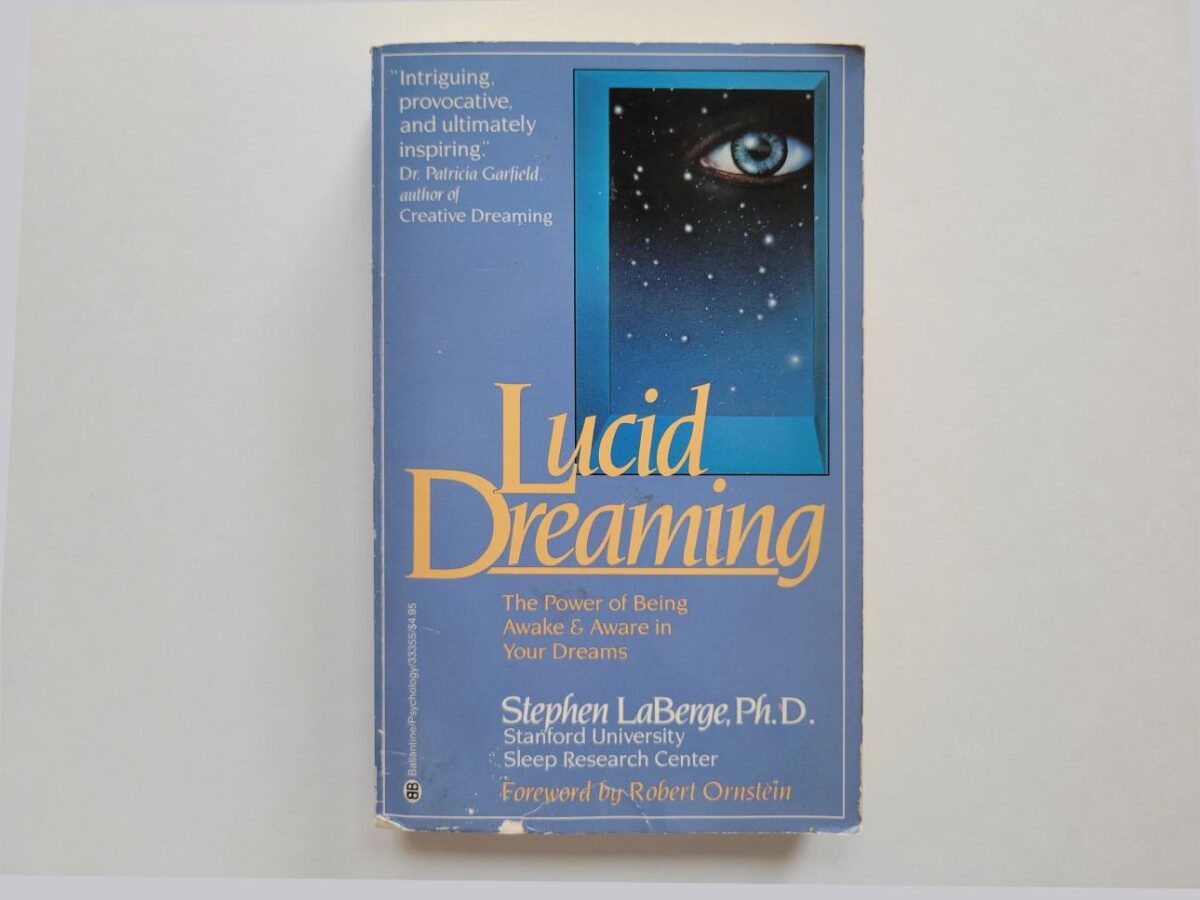
Lucid Dreaming Book by Stephen LaBerge

Lucid Dreaming Mask — Practice Effectively Lucid Dreaming App — Dream Journal, Dream Tracker & Lucid Dreaming Community The mystery of lucid dreams is hidden deep within human consciousness. Questions about their origin have been pondered by hundreds of people, including distinguished scientists. Therefore, it would be a mistake to assume that this topic is […]

MORE

Stephen LaBerge and Lucid Dreaming

Lucid Dreaming Mask — Practice Effectively Lucid Dreaming App — Dream Journal, Dream Tracker & Lucid Dreaming Community Dreams are an area that captivates many people. Even if only unintentionally, every second person has asked themselves, “What do my dreams mean?” Scientists are no exception to this. Lucid dreaming — a state during which a […]

MORE

The Art of Dreaming – Carlos Castaneda

Lucid Dreaming Mask — Practice Effectively Lucid Dreaming App — Dream Journal, Dream Tracker & Lucid Dreaming Community History provides many outstanding names, and Carlos Castaneda has firmly taken his place among them. His personality is full of mysteries, and his philosophy and worldview are multifaceted. The books he wrote, such as “The Art of […]

MORE

Robert Monroe: “Journeys Out of the Body” and Lucid Dreaming

Lucid Dreaming Mask — Practice Effectively Lucid Dreaming App — Dream Journal, Dream Tracker & Lucid Dreaming Community Robert Monroe was an engineer by profession who worked as a scriptwriter and director for radio stations. He later founded his own radio station, which, under his leadership, achieved tremendous success in a short time. Starting in […]

MORE

Lucid Dreaming Movies – Top 20 Most Popular Movies

Lucid Dreaming Mask — Practice Effectively Lucid Dreaming App — Dream Journal, Dream Tracker & Lucid Dreaming Community There are more films about lucid dreaming than you might think. Some fully explore the concept, while others just touch upon it. Experienced lucid dreamers have compiled a list of films that, although often classified as science […]

MORE

Transmitting Music from Lucid Dreams

This is how we transmitted a simple melody from lucid dreams about a year and a half ago. The paper has been published recently. Next year, anyone will be able to find brilliant melodies in lucid dreams and then record or even stream them online. Join the waiting list for the device Details about the […]

MORE
Other news
😴 LucidMe — lucid dreaming mask