
blog - Part 111
Categories
Techniques

DEEPENING THROUGH SENSORY AMPLIFICATION

The more a lucid dream is experienced by the sensory faculties, the deeper and longer lucid dreaming will be. Sensory amplification in lucid dreaming is the most effective deepening technique precisely because it allows the activation of primary internal sensations during the transition from reality to lucid dreaming. There are several ways to perform sensory amplification.

Palpation is the first deepening technique that should be recalled when entering lucid dreaming.
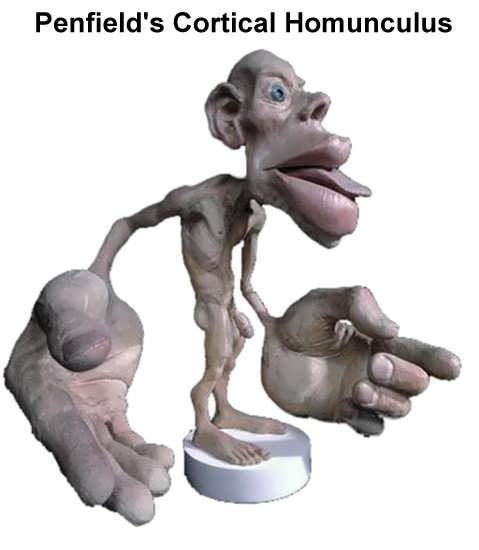

Vision may be absent at the beginning of a lucid dream experience, but the sensation of occupying a defined space is almost always present. In the case of a completely absent sense of sight, only tactile-kinesthetic perception is possible. That is, movement throughout a space and touching objects there is the only option when vision is absent. The sense of touch plays a key role in the perception of everyday reality. This is eloquently demonstrated by Penfield’s cortical homunculus featuring the parts of the body that correspond to cortices of the brain responsible for their operation. It demonstrates how our actual self-perception is completely disproportional to the size of parts of the body. Accordingly, if the sense of touch is actively used in lucid dreaming space, it is only natural that lucid dreaming will deepen and reach its maximum potential.
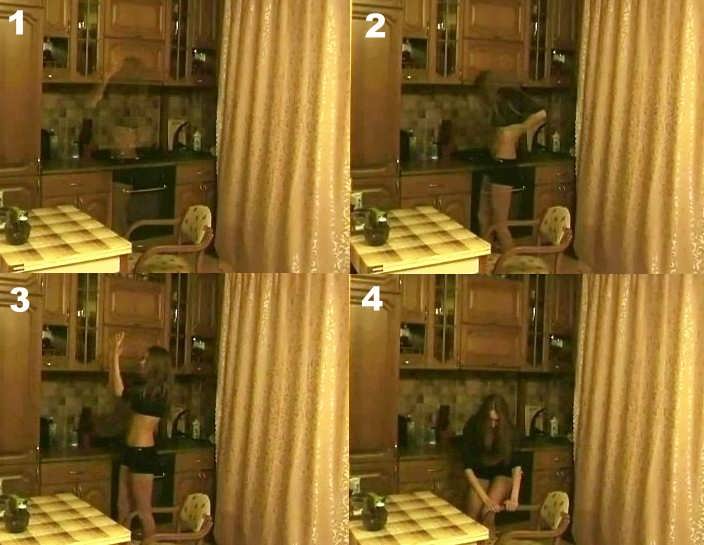

Palpation is performed by fleetingly touching anything that may be found in the immediate surroundings. This should be done by quickly but carefully perceiving the feel of surfaces and shapes. Hands should not remain on a particular place for more than one second, remaining constantly in motion to locate new objects. The goal of palpation is to touch and also to learn something about encountered objects or shapes. For example, if one feels a mug, one may touch it not only from the outside, but also from the inside. Once a practitioner has rolled out of the body, the bed may be touched, as well as the floor, the carpet, nearby walls, or a bedside table.

Another palpation technique is performed by rubbing the palms against each other as if trying to warm them on a cold day. Blowing on the palms also produces sensations that will help deepen lucid dreaming. Since tactile perception of the world is not limited to the palms, the hands should be moved over the entire body while in lucid dreaming to excite and fully activate the sense of touch.

As soon as palpation begins, the feeling that lucid dreaming is deepening and becoming fixed soon follows. Usually, it takes five to 10 seconds of palpation exercises to reach the maximum level of deepening. After performing this technique, the pseudo-physical sensations will be indistinguishable from those of everyday reality. If vision is absent on lucid dreaming entry, it quickly emerges during palpation.

Peering is the primary technical variation of sensory amplification. However, it is not always initially accessible since it requires vision, which may begin as absent in lucid dreaming. Once vision appears or has been created using special techniques (see Chapter 8), peering may begin. The effectiveness of this technique originates in the fact that vision is the human’s primary instrument of perception. Therefore, by exciting vision to its maximum potential within lucid dreaming, it is possible to attain a fully immersive lucid dreaming state that is completely apart from normal reality.

Peering should be done at a distance of four to six inches from objects within lucid dreaming. A practitioner should glance over the minute details of objects and surfaces to bring definition to lucid dreaming space while increasing the quality of vision. When looking at hands, the lines of the palm or the fingernail and cuticles should be examined. If observing a wall, study the texture of its wallpaper. When looking at a mug, one should look carefully at its handle, the curve of its rim, or any inscriptions. Attention should not remain on one area of an object for more than half a second. Active observation should constantly move to new objects and their minute details, approaching objects or picking them up to draw them nearer. It’s best when objects are near one another; otherwise, too much time is spent moving around.
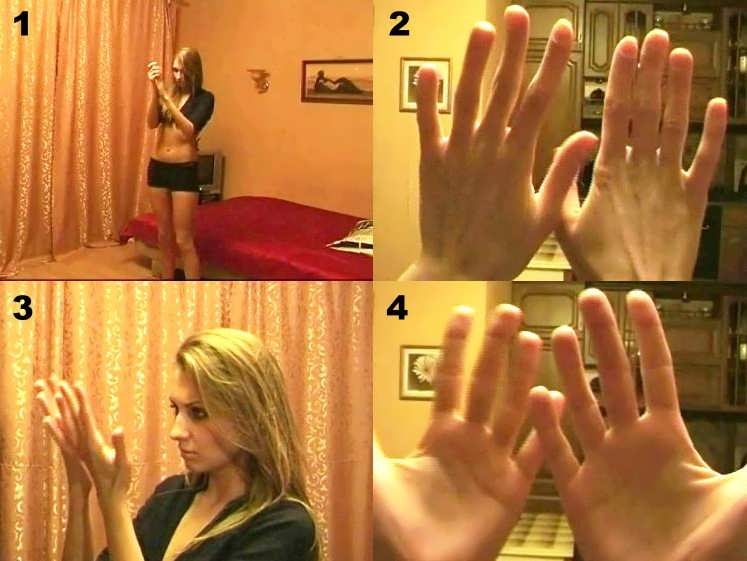

Peering brings quick and clear results. Usually, if vision is blurry and there is a yearning to return into the physical body, with just 3-10 seconds of peering all of this will be gone without a trace. After peering, vision adjusts as quickly and clearly as if a camera lens was correctly installed in front of the eyes, capturing the image in the sharpest of focus.

Simultaneous peering and palpation provide the maximum possible deepening effect in lucid dreaming. This method of sensory amplification engages the two most important perceptions, thus the effect is twice greater than when the two actions are separately performed. If vision is present in lucid dreaming, simultaneous peering and palpation is an absolute necessity because it facilitates good lucid dreaming depth in the quickest and simplest manner.

The combination of palpation and peering must not only be performed simultaneously, but also upon the same objects. For example, a practitioner may look at his hands and simultaneously rub them against each other; or while looking at a coffee mug, all of its parts may be observed and touched at the same time. It is necessary to maintain dynamism of action, remembering that feelings should be experienced not half-heartedly, and remembering that full concentration on sensory amplification is an excellent means to a deep, quality lucid dreaming.

Sensory amplification comes intuitively when you remember a simple rule: if some sensations are lacking or if one of the five senses is dull and vague, then that sense needs to be heightened as much as possible using lucid dreaming space. The previously lacking sensation will become intense and highly-charged. In case of dim vision, for example, one ought to scrutinize something more and more fixedly from a close distance. When experiencing weak bodily perception, palpate your body and move it in as many different ways as you can.

Categories
Techniques

EMERGENCY RETURN. Paralysis

Statistics show that in one-third of initial lucid dreaming experiences, a practitioner is faced with a degree of fear that forces a return to the body. Periodically, even experienced practitioners face situations that require an abrupt return to wakefulness. This presents a number of concerns.

In and of itself, returning to the body is almost always unproblematic; remembering and thinking about the body often suffices and within moments the practitioner is returned to the body from whatever location in lucid dreaming. Admittedly, it is advisable during this type of situation to shut the eyes and abstain from touching anything. As a rule, when these actions are performed, simply standing up in the physical world is all that is required to complete a return; however, this is not always simply achieved.

Sometimes after reentering the body, the practitioner suddenly realizes that physical functionality has ceased due to the onset of sleep paralysis, or the sensation that the body has been switched off. During sleep paralysis, it is impossible to scream, call for help, or even move a finger. In the majority of cases, it is also impossible to open the eyes. From a scientific point of view, this is a case of an abrupt, unnatural interruption of the rapid eye movement (REM) lucid dreaming of sleep, during which this paralysis is always present, and it can persist for some time after lucid dreaming is interrupted.

This is where it gets interesting. People in the physical world are accustomed to an important rule: if you wish to achieve something, then do it, and do it as actively as possible. This rule, though good, is not always applicable to certain conditions linked to lucid dreaming, and applies least of all to exiting lucid dreaming. Sometimes extreme effort makes it possible to break through sleep paralysis and resume movement, though most of these efforts tend to exacerbate immobility.

Due to the unusual nature of a negative situation following a deliberate, fear-induced return to the body, the depth of lucid dreaming may greatly increase because of the body’s natural, protective inhibition of functions originating in the cerebral cortex; this results in even greater agitation and greater fear. The paralysis grows stronger. This is a vicious circle that leads to unpleasant feelings and emotions, which may evaporate any desire to practice lucid dreaming.

Ignorance of correct procedures has led to the widespread opinion that such adverse situations may make it impossible to come back from lucid dreaming at all. These opinions suppose that it is, therefore, dangerous to get involved with the practice. However, the solution to this problem rests in very simple actions and procedures that can prevent a large number of negative experiences:

Categories
Techniques

Evaldas 4

Lithuania

The alarm clock on my phone broke (don’t ask how that happened), so lately I’ve been trying to wake up after 6 hours of sleep without any kind of device to help me. And I succeeded today. I woke up, went to the bathroom and went back to sleep. The thought of conscious awakening was going through my head as I drifted into a dream. I managed to exit that dream, and so I woke up without moving (M.R.: no separation). And then I had to face my biggest difficulty – loud noises (my family was up very early preparing to go to work and they were shouting for no good reason). I decided not to let this chance slip away and performed observing images. It worked immediately and there was no need to perform separation technique. I ended up in lucid dreaming.

After successfully entering lucid dreaming, I immediately performed deepening. I also performed mainitaing throughout lucid dreaming. My plan was to try shapeshifting and turn into a wolf. I tried imagining myself becoming one and started running on my hands and legs like a dog, but I failed, and so I tried again. After a few unsuccessful tries, I started hearing loud noises and thought that it was my parents, so I had to do something. I performed deepening, but to no end… I lost control and woke up. I tried to re-enter, but failed.

Categories
Techniques

Translocation during Separation

The easiest way to translocate is to do so while separating from the body. Employing this technique is extremely simple and convenient. It may be combined with almost any separation technique and is performed by focusing on the image and feel of a desired location during the initial stages of exiting the body. It is even better to imagine that lucid dreaming entry will occur and separation will complete in a chosen location.

Interesting Fact!

After having changed place of residence, the practitioner will very often continue for some time to separate from the body in the same house where he was used to doing this previously.

A drawback of this technique is that separation occurs only in the beginning of lucid dreaming experience and, therefore, can only be used once. Other options should be considered after the first translocation.

Categories
Techniques

Techniques Based on Intention and Feelings

Technique of forced falling asleep

lucid dreamingr mimics natural sleep while maintaining control of his conscious mind, and then either employs techniques or immediately tries to leave his body at the last second before fading out. This technique can be used either on its own, or in parallel with any other technique.

Technique of intention

The practitioner enters lucid dreaming only through an intense and focused intention of immediately experiencing lucid dreaming. Alternatively, this may also be a calm but constant desire felt over the course of the day. Intention is especially effective not only during an attempt or long before one, but also every time you fall asleep, as this moment can be taken advantage of using the direct or indirect method.

Technique of recalling the state

When attempting lucid dreaming entrance with or without techniques, the practitioner tries to recall – and thus induce – the sensations of a previously had lucid dreaming experience.

Technique of recalling vibrations

In order to induce vibrations, lucid dreamingr tries to simply recall the sensation of them in as much detail as possible. Intensely desiring vibrations can also induce them.

Technique of translocation

The practitioner immediately tries to employ the translocation technique in a stubborn and self-assured manner without using a lucid dream creation or separation technique.

Technique of motivation

In order to have a lucid dream entrance occur spontaneously or get techniques work better, the practitioner creates a most interesting and important a plan of action for lucid dreaming that he wants to carry out no matter what.

Technique of fear

lucid dreamingr tries to recall something as scary, awful, or graveyard-like as possible, and imagines it right next to him – this is meant to evoke pure terror and horror, which will elevate to a phasic state at the right moment. The main deficiency of the technique is that fear can linger on into lucid dreaming, and the practitioner might subsequently try to get out of the state.

Technique of flight

Without using a lucid dream creation or separation technique, the practitioner tries to conjure the sensation of flying right from the start.

Technique of counting

In order to enter lucid dreaming, the practitioner counts down from 100 to 1. Depending on lucid dreaming entrance method to follow, he should either try to keep his attention focused on counting, or, conversely, try to achieve lapses in consciousness.

Technique of dotting

The practitioner moves his attention to points on the skin atop of the largest joints of the body, or moves his awareness to inside the joints themselves. You should pause at each point for several seconds or breaths, trying to feel them as distinctly as you can.

Our posts


Staying Awake in Dreams?

ES | PT | FR | DR | IT | ND | CN | JP | KR | RU | UA | PL | BL | CZ | TH | VN | TR | AR | PR | RM | HU | IL | AM | GR Lucid Dreaming and REM sleep technologies Love lucid dreaming, REM sleep, and sleep paralysis? Here, we share cool tech and methods with you Our new mask Lucid Dream Tonight? A perfect […]

MORE

Protected: Email

There is no excerpt because this is a protected post.

MORE

REMspace Forecast for 2026: Top 10 Dream Abilities We May Gain This Year

At REMspace, we believe that 2026 will mark a turning point for sleep technologies. According to our CEO, Michael Raduga, a new era is emerging – one that opens an entirely new experiential space within sleep

MORE

LucidMe Mask Reviews | Real Lucid Dreaming Experiences

People using the LucidMe mask say it really helps them notice when they’re dreaming. Many describe clear signals, sudden moments of lucidity, and vivid dream experiences — flying, meeting people, exploring strange places. Not every attempt works, and sometimes lucidity fades fast, but users feel the mask pushes them closer to stable lucid dreams. It’s […]

MORE

The Indirect Method: Step-by-Step Instructions

Lucid Dreaming Mask — Practice Effectively Lucid Dreaming App — Dream Journal, Dream Tracker & Lucid Dreaming Community So, you have decided to experience out-of-body sensations and want to achieve this as quickly as possible. To that end, here we present a brief description of the easiest method – cycles of indirect techniques. This is […]

MORE

Lucid Dreaming Book by Stephen LaBerge

Lucid Dreaming Mask — Practice Effectively Lucid Dreaming App — Dream Journal, Dream Tracker & Lucid Dreaming Community The mystery of lucid dreams is hidden deep within human consciousness. Questions about their origin have been pondered by hundreds of people, including distinguished scientists. Therefore, it would be a mistake to assume that this topic is […]

MORE

Stephen LaBerge and Lucid Dreaming

Lucid Dreaming Mask — Practice Effectively Lucid Dreaming App — Dream Journal, Dream Tracker & Lucid Dreaming Community Dreams are an area that captivates many people. Even if only unintentionally, every second person has asked themselves, “What do my dreams mean?” Scientists are no exception to this. Lucid dreaming — a state during which a […]

MORE

The Art of Dreaming – Carlos Castaneda

Lucid Dreaming Mask — Practice Effectively Lucid Dreaming App — Dream Journal, Dream Tracker & Lucid Dreaming Community History provides many outstanding names, and Carlos Castaneda has firmly taken his place among them. His personality is full of mysteries, and his philosophy and worldview are multifaceted. The books he wrote, such as “The Art of […]

MORE

Robert Monroe: “Journeys Out of the Body” and Lucid Dreaming

Lucid Dreaming Mask — Practice Effectively Lucid Dreaming App — Dream Journal, Dream Tracker & Lucid Dreaming Community Robert Monroe was an engineer by profession who worked as a scriptwriter and director for radio stations. He later founded his own radio station, which, under his leadership, achieved tremendous success in a short time. Starting in […]

MORE

Lucid Dreaming Movies – Top 20 Most Popular Movies

Lucid Dreaming Mask — Practice Effectively Lucid Dreaming App — Dream Journal, Dream Tracker & Lucid Dreaming Community There are more films about lucid dreaming than you might think. Some fully explore the concept, while others just touch upon it. Experienced lucid dreamers have compiled a list of films that, although often classified as science […]

MORE

Transmitting Music from Lucid Dreams

This is how we transmitted a simple melody from lucid dreams about a year and a half ago. The paper has been published recently. Next year, anyone will be able to find brilliant melodies in lucid dreams and then record or even stream them online. Join the waiting list for the device Details about the […]

MORE
Other news
😴 LucidMe — lucid dreaming mask