blog - Part 18
Categories
Deepening

Deepening

Deepening refers to techniques that induce realistic perception and awareness in the phase state(OOBE, astral projection and lucid dreaming).

The phase is not an exact, fixed state where a practitioner is present or not. It is a realm of states characterized by a transition from the usual perception of the physical body to a complete alienation from it, while maintaining consciousness and reality of perception, albeit in a different frame of space. The transition begins with perception of the natural, physical body followed by a moment of ambiguity where a clear experience of body is intermingled with a sense of the perceived body. Afterward, the perceived body enters the phase space, while the physical body becomes a memory. At this point, the perceived senses may be quite dull; for example, vision may be blurred or completely absent. Deepening techniques solve the problem of diminished or absent sensory perception in the phase.

Sensory experiences within a fully realized phase experience are as realistic as those in everyday reality. In almost one-half of all cases, practitioners observe that reality-based surroundings pale in comparison to vibrant detail and color of the phase space. To this end, after entering the phase, a practitioner must perform deepening techniques to enhance and solidify the degree and quality of phase reality.

Full spatial perception in the phase only occurs after deepening techniques have been applied. There would be no point to remaining in the phase without deepening. For example, what is the point in finding a person in phase, if it is not even possible to discern his or her eyes there?

In a considerable number of cases, deepening is not necessary, since the phase experience is completely realistic, if not hyper-realistic. In cases like these, deepening may be bypassed.

Deepening is also related to the length of time a practitioner may remain in the phase. If an action is taken without a deep, realistic phase, the experience will always be several times shorter in duration than a phase where deepening techniques had been applied. The properties of the phase space very much depend on its depth. When surroundings are blurry and unclear, the stability of objects is very weak.

There is a direct correlation between the realism of a phase and a practitioner’s level of awareness, so it is extremely important to ensure a deep phase in order to promote maximum awareness.

Deepening should only be performed following complete separation from the body. If initiated before separation, the phase may end prematurely. If complete separation does not occur, primary deepening should be used. As regards the deepening techniques themselves, there is one main one and there are several subsidiary ones. The main technique, which does not present any difficulties, is sufficient for having a successful practice.


PRIMARY DEEPENING TECHNIQUES

The goal of primary deepening is to achieve complete separation from the body, allowing further actions within the phase. Primary deepening entails achieving two principal objectives: complete separation from the physical body and anchoring the perceived body within the phase space.

When separation from the body occurs through the use of a separation technique, a posture must be assumed that completely different from the posture of the real, physical body. The greater the degree of postural similarity between the physical and perceived bodies, the more shallow and brief the phase will be. For example, in the case of horizontal levitation, a 180′ turn must immediately performed, arms and legs spread, adopting a vertical posture. Under no circumstances should a practitioner in the phase remain in a posture identical to that of the physical body.

If a practitioner is pulled back toward the body after separation, anchoring should be initiated that facilitates standing or sitting in the phase. Resisting the gravity of the physical body is paramount to remaining in the phase. The result of willful resistance is directly proportional to the degree of applied effort. It will help to grab hold of surrounding objects and hold on to them; any means of anchoring the perceived body within the phase are appropriate. It is possible to start rotating around an axis; not simply imagining the rotation, but performing it with the perceived body as well.

DEEPENING THROUGH SENSORY AMPLIFICATION

The more a phase is experienced by the sensory faculties, the deeper and longer the phase will be. Sensory amplification in the phase is the most effective deepening technique precisely because it allows the activation of primary internal sensations during the transition from reality to the phase. There are several ways to perform sensory amplification.
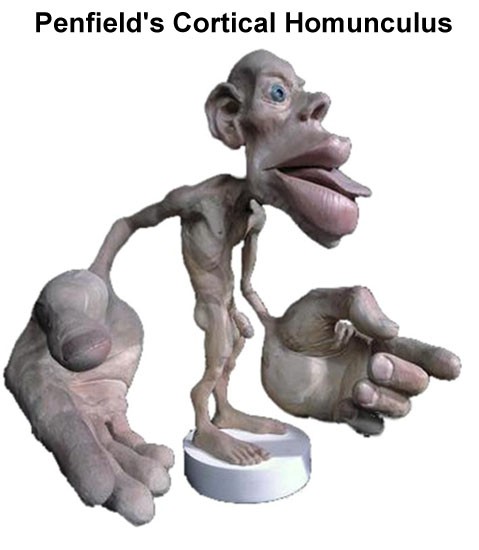
Palpation is the first deepening technique that should be recalled when entering the phase.

Vision may be absent at the beginning of a phase experience, but the sensation of occupying a defined space is almost always present. In the case of a completely absent sense of sight, only tactile-kinesthetic perception is possible. That is, movement throughout a space and the touching objects there is the only option when vision is absent. The sense of touch plays a key role in the perception of everyday reality. Accordingly, if the sense of touch is actively used in the phase space, it is only natural that the phase will deepen and reach its maximum potential.

Palpation is performed by fleetingly touching anything that may be found in the immediate surroundings. This should be done by quickly but carefully perceiving the feel of surfaces and shapes. Hands should not remain on a particular place for more than one second, remaining constantly in motion to locate new objects. The goal of palpation is to touch and also to learn something about encountered objects or shapes. For example, if one feels a mug, one may touch it not only from the outside, but also from the inside. Once a practitioner has rolled out of the body, the bed may be touched; the physical body lying in bed may be touched, as well as the floor, the carpet, nearby walls, or a bedside table.

Another palpation technique is performed by rubbing the palms against each other as if trying to warm them on a cold day. Blowing on the palms also produces sensations that will help deepen the phase. Since tactile perception of the world is not limited to the palms, the hands should be moved over the entire body while in the phase to excite and fully activate the sense of touch.

As soon as palpation begins, the feeling that the phase is deepening and becoming fixed soon follows. Usually, it takes five to 10 seconds of palpation exercises to reach the maximum level of deepening. After performing this technique, the pseudo-physical sensations will be indistinguishable from those of everyday reality. If vision is absent on phase entry, it quickly emerges during palpation.

Peering is the primary technical variation of sensory amplification. However, it is not always initially accessible since it requires vision, which may begin as absent in the phase. Once vision appears or has been created using special techniques (see Chapter 8), peering may begin. The effectiveness of this technique originates in the fact that vision is the human’s primary instrument of perception. Therefore, by exciting vision to its maximum potential within the phase, it is possible to attain a fully immersive phase state that is completely apart from normal reality.

Peering should be done at a distance of four to six inches from objects within the phase. A practitioner should glance over the minute details of objects and surfaces to bring definition to the phase space while increasing the quality of vision. When looking at hands, the lines of the palm or the fingernail and cuticles should be examined. If observing a wall, study the texture of its wallpaper. When looking at a mug, one should look carefully at its handle, the curve of its rim, or any inscriptions. Attention should not remain on one area of an object for more than half a second. Active observation should constantly move to new objects and their minute details, approaching objects or picking them up to draw them nearer. It’s best when objects near one another; otherwise, too much time is spent moving around.

Peering brings quick and clear results. Usually, if vision is blurry and there is a yearning to return into the physical body, with just 3-10 seconds of peering all of this will be gone without a trace. After peering, vision adjusts as quickly and clearly as if a camera lens was correctly installed in front of the eyes, capturing the image in the sharpest of focus.

Simultaneous peering and palpation provide the maximum possible deepening effect in the phase. This method of sensory amplification engages the two most important perceptive, thus the effect is twice greater than when the two actions are separately performed. If vision is present in the phase, simultaneous peering and palpation is an absolute necessity because it facilitates good phase depth in the quickest and simplest manner.

The combination of palpation and peering must not only be performed simultaneously, but also upon the same objects. For example, while a practitioner may look at the hands and simultaneously rub them against each other; or while looking at a coffee mug, all of its parts may be observed and touched at the same. It is necessary to maintain dynamism of action, remembering that feelings should be experienced not half-heartedly, remembering that full concentration on sensory amplification is an excellent means to a deep, quality phase.

SECONDARY DEEPENING TECHNIQUES

Diving Headfirst

Diving headfirst is used if sensory amplification techniques do not work, or when the practitioner in the phase is located in an undefined space where there is nothing to touch or look at. This technique works thanks to the unusual vestibular sensations that it causes, which help to enhance perception. This technique is performed with the eyes shut if vision is available and the practitioner literally dives headfirst into the floor or space at the feet. A feeling of movement away from the physical body will immediately arise during the flight down, and the dive itself will be experienced as if it is really happening. Simultaneously, the surrounding space may darken and become colder. Agitation or fear may also appear. After five to 15 seconds of flight, the practitioner is either arrives in an undetermined place in the phase or hits a dead end, like a wall. In the case of a dead end, a translocation technique should be used. Translocation may also be attempted if deepening does not occur during the flight, if sense perception stops improving, or if a good degree of realism has already been achieved. An alternative to the translocation technique: hold the hands about four to six inches in front of the face and try to observe them without opening the eyes; this will move the practitioner to another random location.

When falling headfirst, do not think about the floor; assume that it will be penetrated. This very effective if the phase has not reached a fullness of depth.

A desire to not simply fall down observing one’s perceptions, but instead race swiftly downward while trying to move away from the body is extremely important. In case of failure to do so, instead of deepening, such a fall may lead to a return to the state of being awake, i.e. to a foul.

Vibration

Like falling headfirst, the vibration technique should be used if sensory amplification techniques do not work, or when the practitioner in the phase is located in an undefined space where there is nothing to touch or look at. This technique works thanks to the unusual vestibular sensations that it causes, which help to enhance perception.

After separating from the body, it is normally quite easy to create vibrations by thinking about them, by straining the brain, or by straining the body without using muscles. The occurrence of vibrations provides a significant opportunity to deepen the phase. An advantage of this technique is that it does not require any preliminary actions and thus may be practiced at any moment.

The brain is strained to the maximum extent possible, which cause vibrations that may be intensified and managed through spasmodic or prolonged straining.

If this technique does not produce deepening after five to 10 seconds, the technique has to be changed or action should be taken at the practitioner’s current depth in the phase.

Aggressive Action

This technique may be used as an alternative to any other deepening technique since it can be used at any moment. Practicing this technique only requires aggressive action of the perceived body. A practitioner may run, roll on the floor, perform gymnastics, or move the arms and legs. Maximum activity and aggression are paramount to the successful use of this technique.

If the practitioner is stuck in a dark space, waving the arms and legs from side to side is appropriate. If the practitioner is in water, swimming with determined, powerful strokes would be suitable recourse. The type of action very much depends on the specific situation along with an aggressive desire on the part of the practitioner.

As a rule, the effect of such movements and relocations comes quite quickly, especially if attention is focused on all the accompanying sensations.

Imagining reality

This interesting technique should be used by experienced practitioners, or if all other deepening techniques fail.

A practitioner aggressively imagines being located in the physical world, experiencing its intrinsic reality of perception, and not in the phase. This should be done while in a state of separation from the body with a sense of vision present. If successful, the surrounding phase space will immediately brighten and sensory perception of the phase will exceed the normal experience of reality.

If this technique produces no clear results after a few seconds, another technique should be used.

GENERAL ACTIVITY

All deepening techniques should be practiced with a high level of aggression, with no pauses, only continuous, deliberate action. If techniques are practiced in a calm, relaxed manner, then deepening attempts will most often result in falling asleep or returning to the body.

(the phase = out-of-body travel + astral  plan + lucid dreams)
Categories
Astral Projection

Complete Inadequacy

In some cases, the behavior of the deceased in the astral plane may resemble that of a deranged person, exhibiting the most diverse manifestations of neuroticism, ranging from inability to comprehend the situation to inarticulate speech. The subject may also be fairly aggressive.

It’s worth noting once again that, especially in the early stages of one’s practice, the behavior of the deceased in the astral plane can greatly depend on how they passed away. It also depends on how specifically involved the practitioner was with all of the events involved in the process (funerals, for example). Therefore, if the deceased displayed some symptoms of delirium before passing on, this could very easily be reflected in the astral plane space.

If that happens, it is naturally unlikely that the situation could be resolved in a positive manner by trying to restore the subject’s inadequate behavior to normalcy. The techniques for re-achieving contact should be immediately employed. Afterwards, the strange behavior is unlikely to reoccur.

Case Studies

October 2006

Don’t watch the morning news and eat at the same time. I vomited all today’s breakfast into the toilet after watching the news report that someone I knew, far from a passing acquaintance, had been brutally killed that night. He had he tried to call me a couple of weeks before, but I hadn’t been in the mood to accompany him on another one of his drinking bouts. For my own peace of mind, I decided to somehow try to make amends.

I lay down. With great difficulty, I calmed down and began to focus my attention on phantom wiggling with my arm. No wiggling occurred at first, but once it came, it started quickly increasing in amplitude. A short lapse in consciousness occurred after about 10 minutes, and I was able to easily get up out of bed.

I didn’t need to deepen. After closing my eyes, I immediately focused my attention on the image of my friend. Then, something picked me up and moved me in an unknown direction. After several seconds, I was literally thrown into the kitchen of his apartment. As usual, he sat in a chair at a table cluttered with cognac. He didn’t pay any attention to me. He didn’t look good, with many bruises and cuts on his face and arms. Although there was almost no blood, it was all awful to look at due to the hyper-realism, and I began to feel nauseated again. When I came closer, he turned to me and sobbed… I tried to ask him what had happened, because they didn’t say exactly what had occurred on the news. It turned out that his lifestyle lay at the cause of it all. He started shouting that he wanted to live, and that he would no longer act like that if he could only live again. I apologized for not having picked up the phone. I looked at him for the last time. And, acting against my beliefs, I returned to my body.

By evening, his explanation of what had happened was confirmed. As for his behavior and external appearance, they were understandably triggered by my still raw emotions. I think that if I meet him in several months, he’ll look and act differently.

Categories
Astral Projection

Confidence

At nearly every seminar I get to enjoy a different student telling the same funny story. A bewildered student attends the second or third session and relates his experience: the usual story is that he abruptly wakes up in the morning, in a fully conscious state, and starts to try to separate from his body. And nothing happens. He then tries to employ the techniques. Still nothing happens. In a bout of frustration, he then thinks to heck with everything, gives up, and decides to go back to sleep. Then, he gradually starts to realize that his body is lying in a different position than when he woke up. For example, he woke up lying on his back and performed the techniques in that position. But a minute later, it turns out that he’s lying on his stomach! All the while he has sure as day not moved at all physically.

What does all this mean? Friend, if you’re going to doubt whether or not any of this will work for you, then even when you are in the astral plane, you may simply be unable to get out of bed, which is what needs to be done in such a situation. Any doubt will keep you in your body, and peg you to it.

And just the opposite, in most cases, especially when it comes to indirect techniques, it is sufficient to simply be confident and completely certain that you’re going to get with it and just do it! I’m not trying to psych you up, and I’m not exaggerating. That’s exactly how it is. Sometimes it is enough simply to want it, to believe in it, and to act.

Over the course of several months, I conducted a study at each seminar on the effect of confidence on effectiveness. It turned out that 90% of those who get results do everything confidently, knowing that they will be successful in either the current attempt or a following one. It also turned out that 90% of those who were still unable to achieve anything were making their attempts without confidence, without belief in themselves or in their ability to enter the astral plane. Draw your own conclusions, my friend.

In this book, you’ll read about a large number of experiences, not only those of my own, but also those of other practitioners. This should bolster your confidence so that you’ll go on and do it.

Categories
Astral Projection

The One and Only Way to Meet with the Deceased

By using the technologies for finding objects in the astral plane, one will be able to meet with any person, whether still living or not. In practice, this practical application of the astral plane is mainly used to meet with deceased relatives, and not, for example, famous historical figures – the reasons why would be a topic for another discussion.

Naturally, nothing brings greater sorrow than death. Both one’s own death in the future and that of loved ones in the present. This is natural, since no one has managed to escape biological death as of yet. People are used to the idea of losing loved ones forever, and any idea of continuing to communicate with them is often dismissed as silly, paradoxical, and fantastic. Some believe in the resurrection of the dead or that souls are sometimes able to visit from beyond the grave. Nevertheless, due to the absence of any specific techniques that would make this accessible to everyone, there is nothing but skepticism among the masses on this issue. But is it all so hopeless? Is everyone’s belief that the loss occurs forever correct? And, if there is a specific method for achieving contact with a deceased person, then how to relate it to everything else in this life?

No-one is yet able to say exactly what kind of phenomenon the astral plane is, or what it’s true nature is. But one thing is known: it can be applied to many spheres of human existence, including to meeting with the deceased. This is possible, tested, and there are step-by-step technical instructions for doing so. Irrespective of whether you’re a materialist or pragmatist, it can be said without exaggeration that humanity loses a lot by not paying attention to the very real opportunity offered by the astral plane.

However, this is the only truly real opportunity to consciously and directly contact a deceased person, whether personally familiar or not – something that is often strongly yearned for, but has long seemed impossible. And everyone can experience this for himself. A student who applies the skills learned in this book will soon be able to once again meet with those whom he had never hoped to see again for the rest of his days. Is there anything comparable to this?

Moreover, a person met in the astral plane will be just as real in terms of sensory perception as he would be if encountered in the day-to-day world. Such people can be touched. One may converse with them, and hear the timbre of their voice. Family members can be hugged. Even their habitual perfume will be recognized… This is not imagination, nor some faint picture – this can be even more vivid than the world in front of you right now. Of course, the metaphysical nature of people encountered there is a discussion for another day. For some, it’s the actual souls of the departed. Some may not believe in the soul as such. People in the physical world look at the same things and see them differently. Should that situation be any simpler in the astral plane? Of course not. It is mainly for that reason that there’s no point at all in getting held up on this. The important thing is that this can be done. And even more importantly, there is no other way to do it. The algorithm (procedure) is simple: entering the astral plane, deepening, finding objects. And then just be brave enough…

Categories
Astral Projection

My Scientific Research and Books

Not to worry, my friend! Stress and shock are not inevitable features of an astral projection state experience. Thus, your first entry into a deep astral travel does not necessary have to be accompanied by all of the discomfort that it brought me.

That first occurrence, which unequivocally showed me that life is not as dull and gray as it had already been starting to seem for me, would have been just a brief respite from day-to-day humdrum had it never recurred. While after the first experience I could not sleep for a long time, and indeed feared going to bed for a long time, afterwards everything occurred again in a much milder form. This ease was due to the absence of those putative aliens. I simply awoke in that very same stupor. I already knew that I could simply get up and levitate in some phantom body, but I was still afraid to do so.

I gradually started trying each time to get up and go just a little further into the process than the time before. Such a strategy increasingly lessened the feeling of fear, which had ceased to predominate. I was subsequently struck by the fact that I was doing everything myself, even if not in a very controlled way. If at first little green men were supposedly yanking me out of my body, then now there wasn’t even a trace of them. It turned out that this was some kind of skill that could be developed.

Of course, being interested in extra-sensory perception (ESP), I couldn’t escape the thought that this ability to control the experience could have a direct implication for physic powers. Moreover, this phenomenon is one most interesting subjects in that field. And most importantly – this was reality, and not merely a stubborn attempt to believe in something barely tangible and ambiguous. Unsurprisingly, I started to immerse myself in all of the available literature in an attempt to find useful information. After all, everything can be found in books and they contain nothing but the truth – right, friend?

It’s enough to say that I was quite quickly able to discard all of the literature that I could get my hands on. The reason was that with each week, I was becoming more and more familiar with the new experience in practice, and was easily able to verify whether the statements made and facts cited in books were accurate. It turned out that very little in those books was based on reality, and that they were mostly filled with long passed-down hearsay. There was no sense in starting off from those "works". I had to find my own way.

The understanding that only I myself could find answers to each of my questions served as an impetus for self-development, an impetus that many are lacking, especially those who try to make absolute authorities out of some authors. Understanding this, I always advise people to approach this topic as skeptically as I did.

I began to literally storm this incredible state all on my own. I lived and breathed it, and nothing else, from the age of 16 to 20. I was already out on my own, and nobody could get in my way. I naturally become somewhat antisocial, but conducted so many experiments each day that their results made such sacrifice on my end worth it. Moreover, this was simply the most interesting thing in the world for me.

That hands-on charge brought many valuable results. First, I gradually caught on to how to enter this strange stage deliberately, and not just spontaneously. Second, I came to the realization that no aliens had abducted me. So, dear friend, there is no reason to worry for my well-being. Third, I began to understand the properties of the space that I had arrived in.

It is of no small importance that I developed a theoretical framework during this time: working out the techniques for maintaining this state, the necessity of deepening it, interacting with the astral plane space, translocation and finding objects in it, and much more. To that end, I was able to classify all of the technicalities that had so far been lacking for anyone wishing to have a structured practice.

The practical side of things deserved special attention. It was that very aspect that convinced me to throw out all of the books I had found. For example, the books described how it was possible to fly up to somebody while in this state and injure him in a way that would leave a bruise in real-life. God knows how many desperate attempts I made to try to verify this. Sure, on the other side you can find someone you know and sucker-punch him, but he won’t remember this when he’s awake, and no bruises or even red marks will appear on his skin. You know, friend, I am the author of over a dozen books, all of them pretty thick, and I can tell you that only my conscious, and nothing else, attests to the veracity of their contents. Even if someone writes something with a clear conscious, he can still be mistaken, and you might read his work as if it were the God-given truth. That’s why I keep telling you not to pay attention to theories. The only way to know the world is to experience it.

After some time, I built several fundamental advantages into my techniques. One of them is that through hands-on experience, I was able to "grind out" a long list of practical uses for this phenomenon. They can be used by any person entering the astral plane for the first time, regardless of his worldview.

Looking back now, I’m not surprised that I wrote my first book on this topic at the age of 20. Though it may have been a bit folksy, a lot of people liked it, and no-one guessed at the age of its author. But most importantly, the techniques described in it did indeed help people to obtain a new body, one beyond the confines of the physical world. Then followed more books on various practical aspects of the astral plane. The 10th book, "A Practical Guidebook", is the best so far – being on the drier, academic side, it resembles more of a physics textbook than a personal development course. Its one shortcoming is that it is difficult to read if you are not already up to speed, a gap filled in by the book that you are holding in your hands. It’s a symbiosis of interesting explanatory text and material from that textbook.

Our posts


Staying Awake in Dreams?

ES | PT | FR | DR | IT | ND | CN | JP | KR | RU | UA | PL | BL | CZ | TH | VN | TR | AR | PR | RM | HU | IL | AM | GR Lucid Dreaming and REM sleep technologies Love lucid dreaming, REM sleep, and sleep paralysis? Here, we share cool tech and methods with you Our new mask Lucid Dream Tonight? A perfect […]

MORE

REMspace Forecast for 2026: Top 10 Dream Abilities We May Gain This Year

At REMspace, we believe that 2026 will mark a turning point for sleep technologies. According to our CEO, Michael Raduga, a new era is emerging – one that opens an entirely new experiential space within sleep

MORE

LucidMe Mask Reviews | Real Lucid Dreaming Experiences

People using the LucidMe mask say it really helps them notice when they’re dreaming. Many describe clear signals, sudden moments of lucidity, and vivid dream experiences — flying, meeting people, exploring strange places. Not every attempt works, and sometimes lucidity fades fast, but users feel the mask pushes them closer to stable lucid dreams. It’s […]

MORE

The Indirect Method: Step-by-Step Instructions

Lucid Dreaming Mask — Practice Effectively Lucid Dreaming App — Dream Journal, Dream Tracker & Lucid Dreaming Community So, you have decided to experience out-of-body sensations and want to achieve this as quickly as possible. To that end, here we present a brief description of the easiest method – cycles of indirect techniques. This is […]

MORE

Lucid Dreaming Book by Stephen LaBerge

Lucid Dreaming Mask — Practice Effectively Lucid Dreaming App — Dream Journal, Dream Tracker & Lucid Dreaming Community The mystery of lucid dreams is hidden deep within human consciousness. Questions about their origin have been pondered by hundreds of people, including distinguished scientists. Therefore, it would be a mistake to assume that this topic is […]

MORE

Stephen LaBerge and Lucid Dreaming

Lucid Dreaming Mask — Practice Effectively Lucid Dreaming App — Dream Journal, Dream Tracker & Lucid Dreaming Community Dreams are an area that captivates many people. Even if only unintentionally, every second person has asked themselves, “What do my dreams mean?” Scientists are no exception to this. Lucid dreaming — a state during which a […]

MORE

The Art of Dreaming – Carlos Castaneda

Lucid Dreaming Mask — Practice Effectively Lucid Dreaming App — Dream Journal, Dream Tracker & Lucid Dreaming Community History provides many outstanding names, and Carlos Castaneda has firmly taken his place among them. His personality is full of mysteries, and his philosophy and worldview are multifaceted. The books he wrote, such as “The Art of […]

MORE

Robert Monroe: “Journeys Out of the Body” and Lucid Dreaming

Lucid Dreaming Mask — Practice Effectively Lucid Dreaming App — Dream Journal, Dream Tracker & Lucid Dreaming Community Robert Monroe was an engineer by profession who worked as a scriptwriter and director for radio stations. He later founded his own radio station, which, under his leadership, achieved tremendous success in a short time. Starting in […]

MORE

Lucid Dreaming Movies – Top 20 Most Popular Movies

Lucid Dreaming Mask — Practice Effectively Lucid Dreaming App — Dream Journal, Dream Tracker & Lucid Dreaming Community There are more films about lucid dreaming than you might think. Some fully explore the concept, while others just touch upon it. Experienced lucid dreamers have compiled a list of films that, although often classified as science […]

MORE

Transmitting Music from Lucid Dreams

This is how we transmitted a simple melody from lucid dreams about a year and a half ago. The paper has been published recently. Next year, anyone will be able to find brilliant melodies in lucid dreams and then record or even stream them online. Join the waiting list for the device Details about the […]

MORE

Two-way control of a virtual avatar from lucid dreams

Lucid Dreaming Mask — Practice Effectively Lucid Dreaming App — Dream Journal, Dream Tracker & Lucid Dreaming Community Researchers at REMspace have achieved the first two-way control of a virtual object from a lucid dream. The results of the experiment were approved for publication in the scientific journal International Journal of Dream Research.

MORE
Other news
😴 LucidMe — lucid dreaming mask