blog - Part 49
Categories
Teaching

Typical Student Questions

– Can I transition to the direct method if the indirect method is not working out for me?

Such a transition would be futile 99% of the time. How can you achieve what’s difficult if you cannot achieve what’s easy? Students’ problems always lie in the mistakes they make. That’s why you should look for your mistakes first.

– When exactly can I try the direct techniques?

As soon as you are able to enter out-of-body experience using indirect techniques on a regular basis.

– Are lapses in consciousness while falling asleep “the normal way” something similar to what needs to be achieved for the free-floating state of mind?

Yes, they’re essentially the same thing. That’s why out-of-body experiences sometimes occur spontaneously while people are falling asleep.

– When coming up from a lapse in consciousness, how will I know that I’m already in out-of-body experience?

It will be obvious, which is why there is no need to think too much about it. It will be immediately apparent.

– Can I change my body position during an attempt?

Yes. As soon as you become uncomfortable, you may change your body position, scratch an itch, etc. Doing so will not make or break the attempt.

– Do I have to make an attempt in the evening if I really want to just go to sleep instead?

Attempts should be enjoyable. Don’t beat yourself up.

– Although I know it’s not recommended, may I perform direct techniques for more than 20 minutes if it won’t interfere with me falling asleep afterwards?

Yes, you may. However, success nevertheless comes much earlier most of the time. Doing direct techniques for so long is going to result in a poor time-and-energy to results ratio. This is especially true in comparison with indirect techniques.

– I fall asleep quickly, no matter what position I am in. What should I do?

In your case, you might try the direct method during the day when you aren’t sleepy. Alternatively, you might try it in uncomfortable positions like sitting in a chair, or sitting anywhere for that matter.

– Do I have to sleep for 6 hours to employ the deferred method for direct techniques?

In this case it’s less important than it is for the indirect method. However, it should be kept in mind that the portion of time spent in REM sleep (which is necessary for out-of-body experience) increases the longer you sleep. That’s why the longer you sleep before an attempt, the better your chances of immediately entering out-of-body experience.

– After several cycles (or lapses in consciousness), I always fall into deep sleep. What should I do?

Assume a more uncomfortable position and try to switch techniques more frequently. Also try to stay resolute and highly motivated.

– My extremities tremble when I come up from lapses in consciousness. Is this normal? What should I do about this?

It is normal. It’s a sign that you’re moving in the right direction with your actions. All that remains is to make the lapses even deeper. This will prevent a complete physiological awakening from occurring.

Categories
Teaching

Success Rate 4

This form of training can yield a high rate of success if comfortable conditions can be ensured for attempts made during the lessons. Such full immersion in the phenomenon greatly increases motivation to take up its practice and the overall desire to carry everything out.

As sessions involving immersion entail more effort on the part of the instructor, more practice, and greater intensity of practical and theoretical instruction, they can command substantially higher admission fees than other training formats, and accordingly, substantially higher return-on-investment. For example, the price of admission might be at least 30% the local average monthly income, which would allow you to obtain net profit in the amount of two months of the local average salary with a group of only 10 people.

Categories
Teaching

Typical Mistakes with the Indirect Method

Constantly awakening to movement instead of remaining still.

Performing indirect techniques in the evening, instead of upon waking up in the morning.

Performing indirect techniques for an extremely long period of time (1 minute or longer). This is a complete waste of time in most cases.

Switching from techniques that have begun to work instead of following them through to the end.

Passively performing techniques instead of being determined and aggressive.

Performing each technique separately for too long a period of time, even if the technique does not work, instead of switching to another technique within several seconds.

Excessive thinking and analysis while performing indirect techniques, which require mental tranquility and inner stillness.

Stopping and concentrating on unusual sensations when they arise versus continuing the technique that brought them about in the first place.

Extremely long anticipation upon awakening instead of immediately performing techniques.

Internal certainty that nothing will happen instead of believing in positive results.

Holding the breath when unusual sensations appear. Be calm instead.

Opening the eyes when the only recommended movement is breathing or moving the eyes behind closed lids.

Being agitated instead of relaxed.

Ceasing attempts to separate even when partial success is met.

Straining the physical muscles while performing the techniques versus remaining physically motionless.

Not practicing after an alert awakening, when techniques are best applied – especially in the event of waking without movement.

Stopping the performance of techniques after an unsuccessful cycle when a minimum of four cycles should be practiced.

Scrutinizing the details of images when using the technique of observing images; the whole image should be observed panoramically lest it disappear.

Intentionally trying to force pictures when observing images, instead of looking for what is naturally presented.

Simply hearing noise when employing the technique of listening in, instead of attentively trying to pay attention, catch something, and listen in.

Visualizing rotation with the technique of rotation, instead of concentrating on vestibular sensations.

Categories
Teaching

Module No. 7: Maintaining the State

Aim

Students learn how to make their stay in out-of-body experience last as long as possible. Otherwise, their experiences will be extremely short and ineffective. This module includes learning how to resist returns to the physical body, normal awakenings, and false awakenings.

Key Concepts

Mandatory: Definition, the duration of out-of-body experience, techniques for resisting returning to the body, techniques for resisting falling asleep, techniques for resisting false awakenings, and general rules for maintaining.

Non-Mandatory: Simulations of maintaining and examples.

Lesson Plan

Definition Maintaining refers to the use of a collection of techniques to remain in out-of-body experience for as long as possible. Without knowledge of how to maintain, phase experiences are usually quite short. This makes it difficult to pursue practical tasks and makes the phenomenon itself less satisfying.

Categories
Teaching

Format 6

The way in which distance learning takes place depends on the instructional sub-format chosen. For one-time webinars, you’ll need to use the same approach as with one-time lectures. Use the procedure for one-on-one instruction for one-on-one distance learning, etc.

Our posts


Staying Awake in Dreams?

ES | PT | FR | DR | IT | ND | CN | JP | KR | RU | UA | PL | BL | CZ | TH | VN | TR | AR | PR | RM | HU | IL | AM | GR Lucid Dreaming and REM sleep technologies Love lucid dreaming, REM sleep, and sleep paralysis? Here, we share cool tech and methods with you Our new mask Lucid Dream Tonight? A perfect […]

MORE

REMspace Forecast for 2026: Top 10 Dream Abilities We May Gain This Year

At REMspace, we believe that 2026 will mark a turning point for sleep technologies. According to our CEO, Michael Raduga, a new era is emerging – one that opens an entirely new experiential space within sleep

MORE

LucidMe Mask Reviews | Real Lucid Dreaming Experiences

People using the LucidMe mask say it really helps them notice when they’re dreaming. Many describe clear signals, sudden moments of lucidity, and vivid dream experiences — flying, meeting people, exploring strange places. Not every attempt works, and sometimes lucidity fades fast, but users feel the mask pushes them closer to stable lucid dreams. It’s […]

MORE

The Indirect Method: Step-by-Step Instructions

Lucid Dreaming Mask — Practice Effectively Lucid Dreaming App — Dream Journal, Dream Tracker & Lucid Dreaming Community So, you have decided to experience out-of-body sensations and want to achieve this as quickly as possible. To that end, here we present a brief description of the easiest method – cycles of indirect techniques. This is […]

MORE

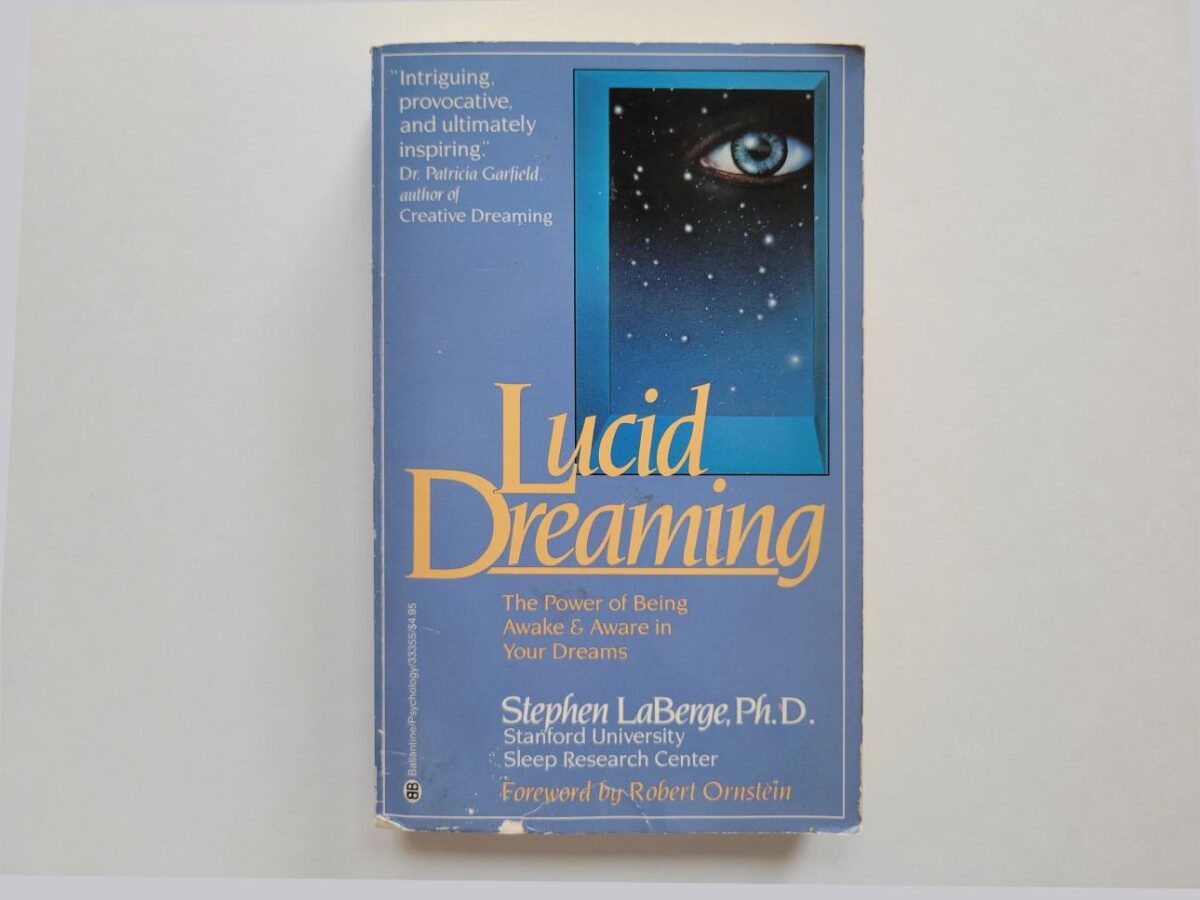
Lucid Dreaming Book by Stephen LaBerge

Lucid Dreaming Mask — Practice Effectively Lucid Dreaming App — Dream Journal, Dream Tracker & Lucid Dreaming Community The mystery of lucid dreams is hidden deep within human consciousness. Questions about their origin have been pondered by hundreds of people, including distinguished scientists. Therefore, it would be a mistake to assume that this topic is […]

MORE

Stephen LaBerge and Lucid Dreaming

Lucid Dreaming Mask — Practice Effectively Lucid Dreaming App — Dream Journal, Dream Tracker & Lucid Dreaming Community Dreams are an area that captivates many people. Even if only unintentionally, every second person has asked themselves, “What do my dreams mean?” Scientists are no exception to this. Lucid dreaming — a state during which a […]

MORE

The Art of Dreaming – Carlos Castaneda

Lucid Dreaming Mask — Practice Effectively Lucid Dreaming App — Dream Journal, Dream Tracker & Lucid Dreaming Community History provides many outstanding names, and Carlos Castaneda has firmly taken his place among them. His personality is full of mysteries, and his philosophy and worldview are multifaceted. The books he wrote, such as “The Art of […]

MORE

Robert Monroe: “Journeys Out of the Body” and Lucid Dreaming

Lucid Dreaming Mask — Practice Effectively Lucid Dreaming App — Dream Journal, Dream Tracker & Lucid Dreaming Community Robert Monroe was an engineer by profession who worked as a scriptwriter and director for radio stations. He later founded his own radio station, which, under his leadership, achieved tremendous success in a short time. Starting in […]

MORE

Lucid Dreaming Movies – Top 20 Most Popular Movies

Lucid Dreaming Mask — Practice Effectively Lucid Dreaming App — Dream Journal, Dream Tracker & Lucid Dreaming Community There are more films about lucid dreaming than you might think. Some fully explore the concept, while others just touch upon it. Experienced lucid dreamers have compiled a list of films that, although often classified as science […]

MORE

Transmitting Music from Lucid Dreams

This is how we transmitted a simple melody from lucid dreams about a year and a half ago. The paper has been published recently. Next year, anyone will be able to find brilliant melodies in lucid dreams and then record or even stream them online. Join the waiting list for the device Details about the […]

MORE

Two-way control of a virtual avatar from lucid dreams

Lucid Dreaming Mask — Practice Effectively Lucid Dreaming App — Dream Journal, Dream Tracker & Lucid Dreaming Community Researchers at REMspace have achieved the first two-way control of a virtual object from a lucid dream. The results of the experiment were approved for publication in the scientific journal International Journal of Dream Research.

MORE
Other news
😴 LucidMe — lucid dreaming mask