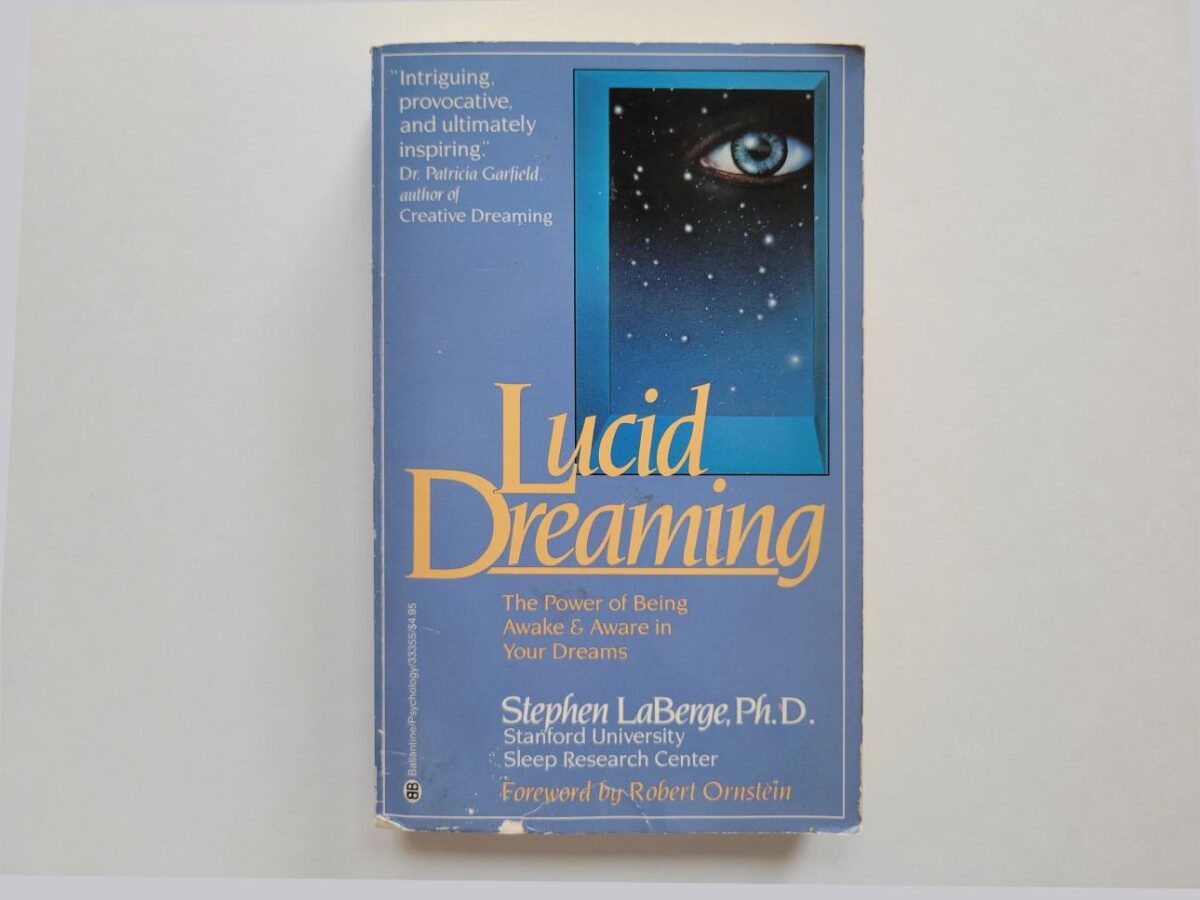
Using the classic three-day seminar format, you can get at least 75% of the group to have the experience of leaving the body or becoming conscious while dreaming. On bad days this figure might drop to 35 or 40%, and on good days it might reach 90% or more, depending on the number of people in the group, the type of training system, and how closely you follow the instructions. In actuality, you only need to make people perform proper attempts, and then every third, fourth, or fifth one will surely result in success. Either way, since this phenomenon is still considered by the masses to be either impossible, a fabrication, extremely difficult to learn, or one requiring many years of training and preparation, even a success rate of 35% is going to be astounding (not to speak of higher ones). When using this book, it will sometimes happen that half of the students have an experience on day two, and this is despite all the biases and incredulity of our society.
Typical Student Questions
– Can I transition to the direct method if the indirect method is not working out for me?
Such a transition would be futile 99% of the time. How can you achieve what’s difficult if you cannot achieve what’s easy? Students’ problems always lie in the mistakes they make. That’s why you should look for your mistakes first.
– When exactly can I try the direct techniques?
As soon as you are able to enter out-of-body experience using indirect techniques on a regular basis.
– Are lapses in consciousness while falling asleep “the normal way” something similar to what needs to be achieved for the free-floating state of mind?
Yes, they’re essentially the same thing. That’s why out-of-body experiences sometimes occur spontaneously while people are falling asleep.
– When coming up from a lapse in consciousness, how will I know that I’m already in out-of-body experience?
It will be obvious, which is why there is no need to think too much about it. It will be immediately apparent.
– Can I change my body position during an attempt?
Yes. As soon as you become uncomfortable, you may change your body position, scratch an itch, etc. Doing so will not make or break the attempt.
– Do I have to make an attempt in the evening if I really want to just go to sleep instead?
Attempts should be enjoyable. Don’t beat yourself up.
– Although I know it’s not recommended, may I perform direct techniques for more than 20 minutes if it won’t interfere with me falling asleep afterwards?
Yes, you may. However, success nevertheless comes much earlier most of the time. Doing direct techniques for so long is going to result in a poor time-and-energy to results ratio. This is especially true in comparison with indirect techniques.
– I fall asleep quickly, no matter what position I am in. What should I do?
In your case, you might try the direct method during the day when you aren’t sleepy. Alternatively, you might try it in uncomfortable positions like sitting in a chair, or sitting anywhere for that matter.
– Do I have to sleep for 6 hours to employ the deferred method for direct techniques?
In this case it’s less important than it is for the indirect method. However, it should be kept in mind that the portion of time spent in REM sleep (which is necessary for out-of-body experience) increases the longer you sleep. That’s why the longer you sleep before an attempt, the better your chances of immediately entering out-of-body experience.
– After several cycles (or lapses in consciousness), I always fall into deep sleep. What should I do?
Assume a more uncomfortable position and try to switch techniques more frequently. Also try to stay resolute and highly motivated.
– My extremities tremble when I come up from lapses in consciousness. Is this normal? What should I do about this?
It is normal. It’s a sign that you’re moving in the right direction with your actions. All that remains is to make the lapses even deeper. This will prevent a complete physiological awakening from occurring.

Success Rate 4
This form of training can yield a high rate of success if comfortable conditions can be ensured for attempts made during the lessons. Such full immersion in the phenomenon greatly increases motivation to take up its practice and the overall desire to carry everything out.
As sessions involving immersion entail more effort on the part of the instructor, more practice, and greater intensity of practical and theoretical instruction, they can command substantially higher admission fees than other training formats, and accordingly, substantially higher return-on-investment. For example, the price of admission might be at least 30% the local average monthly income, which would allow you to obtain net profit in the amount of two months of the local average salary with a group of only 10 people.
Constantly awakening to movement instead of remaining still.
Performing indirect techniques in the evening, instead of upon waking up in the morning.
Performing indirect techniques for an extremely long period of time (1 minute or longer). This is a complete waste of time in most cases.
Switching from techniques that have begun to work instead of following them through to the end.
Passively performing techniques instead of being determined and aggressive.
Performing each technique separately for too long a period of time, even if the technique does not work, instead of switching to another technique within several seconds.
Excessive thinking and analysis while performing indirect techniques, which require mental tranquility and inner stillness.
Stopping and concentrating on unusual sensations when they arise versus continuing the technique that brought them about in the first place.
Extremely long anticipation upon awakening instead of immediately performing techniques.
Internal certainty that nothing will happen instead of believing in positive results.
Holding the breath when unusual sensations appear. Be calm instead.
Opening the eyes when the only recommended movement is breathing or moving the eyes behind closed lids.
Being agitated instead of relaxed.
Ceasing attempts to separate even when partial success is met.
Straining the physical muscles while performing the techniques versus remaining physically motionless.
Not practicing after an alert awakening, when techniques are best applied – especially in the event of waking without movement.
Stopping the performance of techniques after an unsuccessful cycle when a minimum of four cycles should be practiced.
Scrutinizing the details of images when using the technique of observing images; the whole image should be observed panoramically lest it disappear.
Intentionally trying to force pictures when observing images, instead of looking for what is naturally presented.
Simply hearing noise when employing the technique of listening in, instead of attentively trying to pay attention, catch something, and listen in.
Visualizing rotation with the technique of rotation, instead of concentrating on vestibular sensations.
Module No. 7: Maintaining the State
Aim
Students learn how to make their stay in out-of-body experience last as long as possible. Otherwise, their experiences will be extremely short and ineffective. This module includes learning how to resist returns to the physical body, normal awakenings, and false awakenings.
Key Concepts
Mandatory: Definition, the duration of out-of-body experience, techniques for resisting returning to the body, techniques for resisting falling asleep, techniques for resisting false awakenings, and general rules for maintaining.
Non-Mandatory: Simulations of maintaining and examples.
Lesson Plan
Definition Maintaining refers to the use of a collection of techniques to remain in out-of-body experience for as long as possible. Without knowledge of how to maintain, phase experiences are usually quite short. This makes it difficult to pursue practical tasks and makes the phenomenon itself less satisfying.